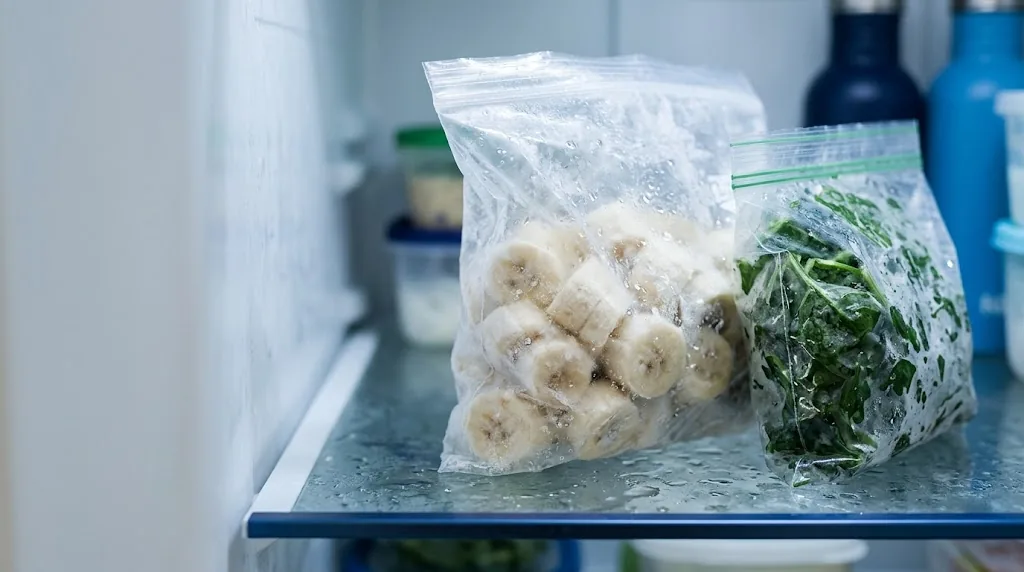
Yes, you can refreeze most food, as long as it thawed in the refrigerator. How it thawed decides whether refreezing is safe. The food decides how much the texture suffers. Here are the rules, food by food.
Food thawed in the fridge can go back in the freezer without cooking. Food thawed in cold water or the microwave must be cooked first. Food left out for more than 2 hours should never be refrozen.
The one rule that matters
Freezing doesn’t kill bacteria. It only pauses them. Once food thaws, any bacteria on it can start growing again, but only if the food warms into the danger zone (40-140°F, or 4-60°C). Food thawed in the refrigerator never gets that warm, so the USDA says it is safe to refreeze. Food thawed any other way may have warmed up on the outside, so it has to be cooked before it goes back in the freezer.
That means refreezing is safe whenever these three things are all true:
- It thawed in the refrigerator at 40°F (4°C) or colder.
- It hasn’t been out of the fridge for more than 2 hours in total (1 hour if the room was above 90°F).
- It is still within its normal fridge life: 1-2 days for ground meat, poultry and fish, 3-5 days for steaks, chops and roasts, and 3-4 days for cooked leftovers.
Refreezing by thawing method
| How it was thawed | Can you refreeze it? |
|---|---|
| In the refrigerator | Yes, raw or cooked, within its fridge life |
| In cold water | Only after cooking it |
| In the microwave | Only after cooking it (cook it right away) |
| On the counter or in warm water | No. This is an unsafe way to thaw, so throw out perishable food |
| Partly thawed, still has ice crystals | Yes, it is treated as still frozen |
| Raw food thawed, then cooked | Yes, freeze the cooked dish within 2 hours |
What refreezing does to food
Refreezing is a quality problem, not a safety problem. Every time food freezes, ice crystals form and tear the cell walls a little. When it thaws, water leaks out through those tears. A second freeze makes the damage worse, so refrozen food is usually softer, wetter and a little blander.
- Hardly matters: bread, baked goods, cooked grains, soups, stews and sauces, and fruit going into smoothies or baking.
- Noticeable: raw meat and fish (they lose more juice when cooked), cooked vegetables, cheese and pies.
- Worst: raw fruit and vegetables you want to eat whole, ice cream, and dishes with custard or cream fillings.
To keep quality loss low, cook raw food before you refreeze it, and next time freeze in small portions so you only thaw what you need.
Can you refreeze it? Food-by-food chart
These answers assume the food was thawed in the refrigerator. Tap a food for the full freezing guide.
| Food | Refreeze? | What to expect |
|---|---|---|
| Ground beef | Yes, within 1-2 days | Slightly drier. Better: cook it, then freeze it |
| Steak | Yes, within 3-5 days | Loses more juice when cooked |
| Turkey and chicken | Yes, within 1-2 days | Drier meat. Cook first if you can |
| Cooked chicken | Yes, within 3-4 days | Fine for soups, casseroles and wraps |
| Salmon and shrimp | Yes, within 1-2 days | Softer, flakier texture |
| Bacon, sausage, ham | Yes | Little change once cooked |
| Bananas | Yes | Mushier. Use them in smoothies and banana bread |
| Strawberries, blueberries, raspberries | Yes | Soft and juicy. Use for smoothies, jam or baking |
| Spinach and kale | Yes | Very soft. Use cooked or in smoothies |
| Broccoli, peas | Yes | Softer. Use them in soups and casseroles |
| Bread, bagels, tortillas | Yes | A bit drier. Toast or warm it |
| Cookie dough | Yes, if fridge-thawed | Bakes almost the same |
| Pumpkin pie and cheesecake | Safe, but not recommended | The custard turns watery and grainy |
| Butter | Yes | Almost no change |
| Cheese | Safe, but not recommended | Very crumbly and dry. Use only melted or in cooking |
| Milk and yogurt | Safe, but not recommended | Separates more. Use only for cooking or smoothies |
| Ice cream | Only if still partly frozen | Fully melted ice cream turns icy. Throw it out if it sat out |
| Soup, chili, spaghetti sauce | Yes, within 3-4 days | Barely changes. Reheat to 165°F |
| Cooked rice and pasta | Yes, within 3-4 days | Softer. Chill rice fast, it is prone to Bacillus cereus |
| Mashed potatoes | Yes | Looser. Stir in butter or milk when reheating |
| Lasagna and casseroles | Yes, within 3-4 days | Softer noodles, still good |
| Pesto | Yes | Flavor fades and the oil separates |
| Gravy | Yes, within 1-2 days | Whisk it smooth while reheating |
Meat, poultry and seafood
Raw meat, poultry and fish thawed in the fridge can be refrozen raw, but only within their normal fridge life: 1-2 days for ground meat, chicken, turkey and seafood, and 3-5 days for beef, pork and lamb steaks, chops and roasts. Each freeze pushes more juice out, so refrozen raw meat cooks up drier.
The better option is to cook it first. Thawed ground beef browned for tacos or turkey roasted and sliced can be cooled quickly and frozen as a cooked dish, with much less quality loss. Never refreeze meat that was thawed on the counter, smells off or feels slimy.
Fruit and vegetables
Thawed fruit and vegetables are safe to refreeze, but they get much softer the second time. That’s fine when they are going into a cooked dish or a blender. Refrozen bananas and berries are great in smoothies and baking. Refrozen spinach and other vegetables work in soups, sauces and casseroles. If thawed vegetables are limp or slimy, or smell sour, throw them out.
Bread, pies and baked goods
Plain bread, bagels, muffins and cookies refreeze well. They just get a little drier each time, so wrap them tightly and toast or warm them before eating. Pies are different. Fruit pies are fine, but custard pies like pumpkin pie and cheesecake turn watery and grainy after a second freeze. They are safe if fridge-thawed, but the texture usually isn’t worth it. Cut them into slices before the first freeze so you only thaw what you’ll eat.
Dairy and ice cream
Butter handles refreezing well. Cheese turns very crumbly after a second freeze, so only refreeze it for melting. Milk, yogurt, cream and soft cheese separate more each time, so save them for cooking. Ice cream that has fully melted shouldn’t go back in the freezer. It turns icy, and if it sat out it isn’t safe. Slightly softened ice cream that still holds its shape can go straight back.
Cooked leftovers
Leftovers thawed in the fridge can be refrozen within 3-4 days, according to the USDA. Soups, stews, chili and sauces barely change. Rice, pasta and casseroles get a little softer. Reheat anything you’ve refrozen to 165°F (74°C) before eating, and don’t keep thawing and refreezing the same container. Divide it into single portions instead.
After a power outage
A full freezer stays frozen for about 48 hours with the door closed, and a half-full one for about 24. Food that still has ice crystals, or reads 40°F (4°C) or colder on a thermometer, can be refrozen safely, though some foods may lose quality. Throw out meat, seafood, dairy and leftovers that were above 40°F for more than 2 hours. When in doubt, throw it out.
Common questions
Is it dangerous to refreeze thawed food?
No, as long as it thawed in the fridge and stayed cold. The risk comes from food that warmed above 40°F while thawing, because bacteria can multiply and freezing again won’t kill them.
How many times can you refreeze food?
There is no safety limit as long as it thaws in the fridge every time, but quality drops with each freeze. In practice, refreeze once and cook it the next time you thaw it.
Can you refreeze meat that was thawed in cold water?
Not raw. Cook it first, then freeze the cooked meat. The same goes for anything thawed in the microwave.
Can you refreeze food that is still partly frozen?
Yes. If it still has ice crystals or is at 40°F or below, it can go straight back in the freezer.
Can you refreeze cooked food that was made from frozen raw food?
Yes. Raw food that was thawed and then cooked is a new dish, so you can freeze it. Cool it quickly and get it into the freezer within 2 hours.
Not sure about a specific food? Ask us, or read the full freezing basics guide.
Sources: USDA FSIS, Freezing and Food Safety; USDA FSIS, The Big Thaw; FoodSafety.gov, Cold Food Storage Chart.