Yes, you can freeze cooked rice easily. It is one of the best batch-cooking items to store in the freezer for quick future meals.
Why
Cooked rice freezes very well because freezing quickly halts the starchy aging process when done right after cooking. However, rice contains a high amount of water, which can expand into ice crystals. If frozen slowly or improperly, the individual grains can become unpleasantly dry or mushy upon thawing. By cooling the rice quickly, packing it tightly to remove air, and reheating it with a splash of moisture, you preserve its fluffy texture and appetizing flavor for months.
What freezing does to cooked rice
- Texture: Can become slightly drier if not packed tightly or stored with enough moisture.
- Flavor: Remains largely unchanged when properly sealed to prevent absorbing other flavors from the freezer.
- Moisture: Loses some surface hydration during freezing, requiring a splash of water when reheating.
Types of cooked rice and how they freeze
- White rice: Freezes exceptionally well and maintains its fluffy individual grains because of its starch composition.
- Brown rice: Contains natural oils in the outer bran layer that can shorten freezer life slightly and may feel slightly chewier after thawing.
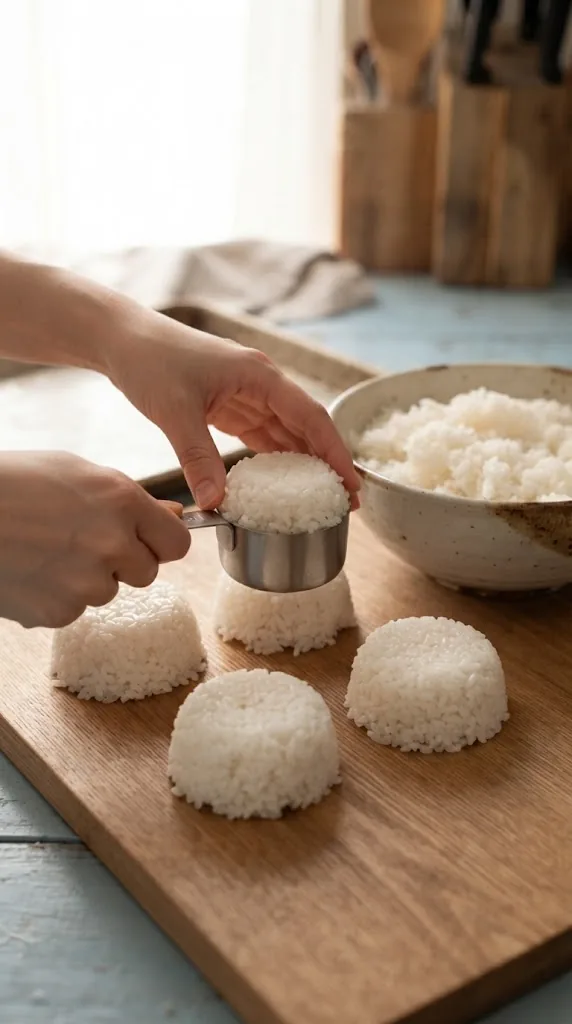
- Sticky or sushi rice: Tends to clump together more tightly when frozen, so portion it into flat discs for even thawing.
How to freeze cooked rice
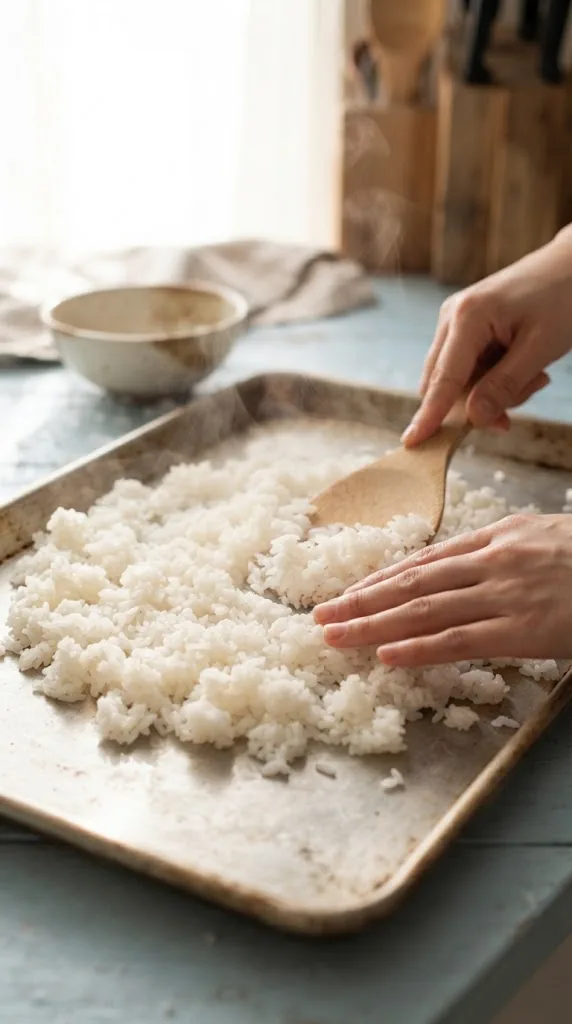
- Spread the cooked rice out on a tray so it cools quickly, and freeze it within an hour of cooking.
- Portion the rice into individual serving sizes or meal-sized portions.
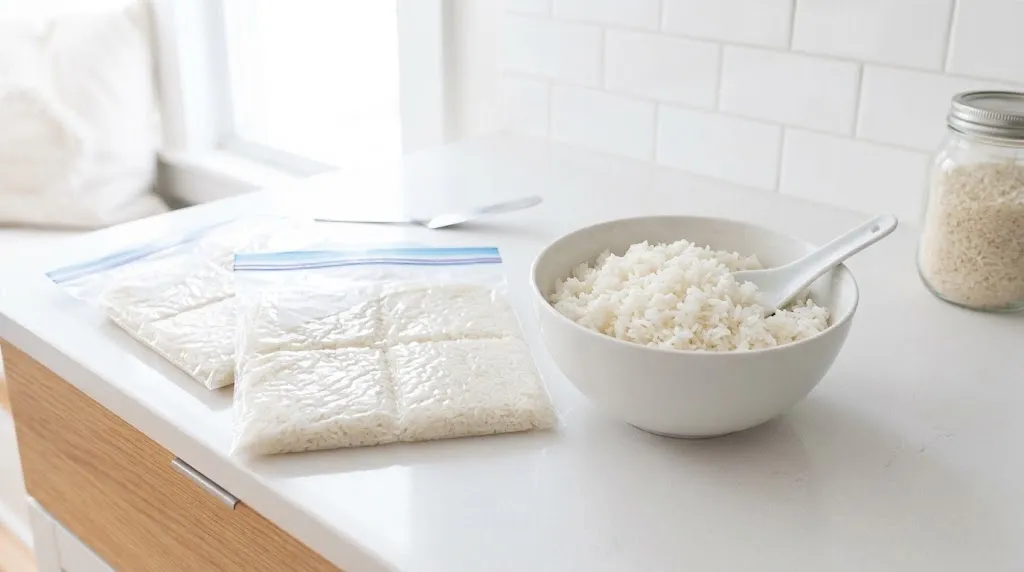
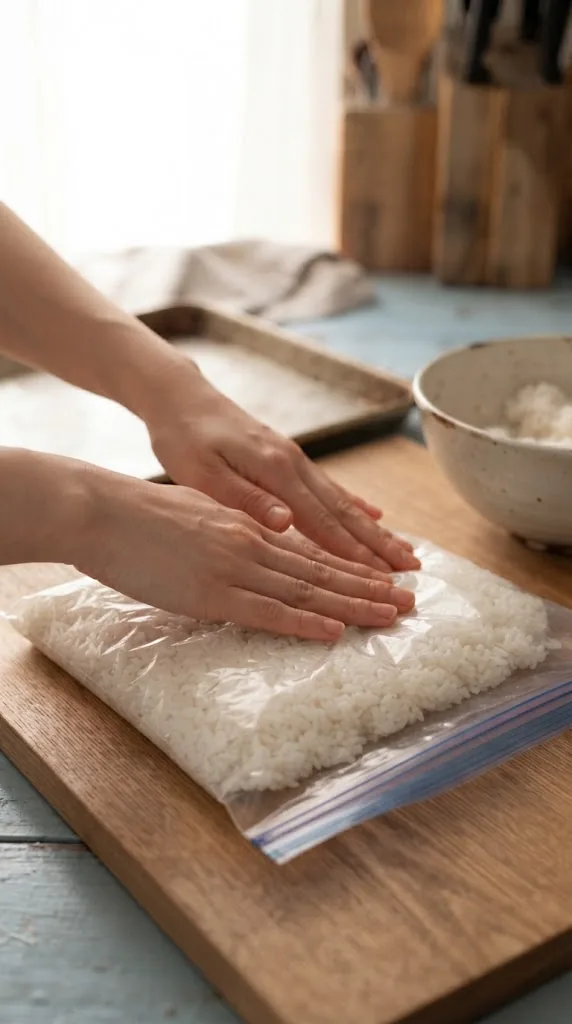
- Pack the rice tightly into freezer-safe containers or heavy-duty freezer bags.
- Press out as much air as possible from the bags to prevent freezer burn.
- Seal tightly, label with the name and date, and place in the freezer.
Best containers for freezing cooked rice
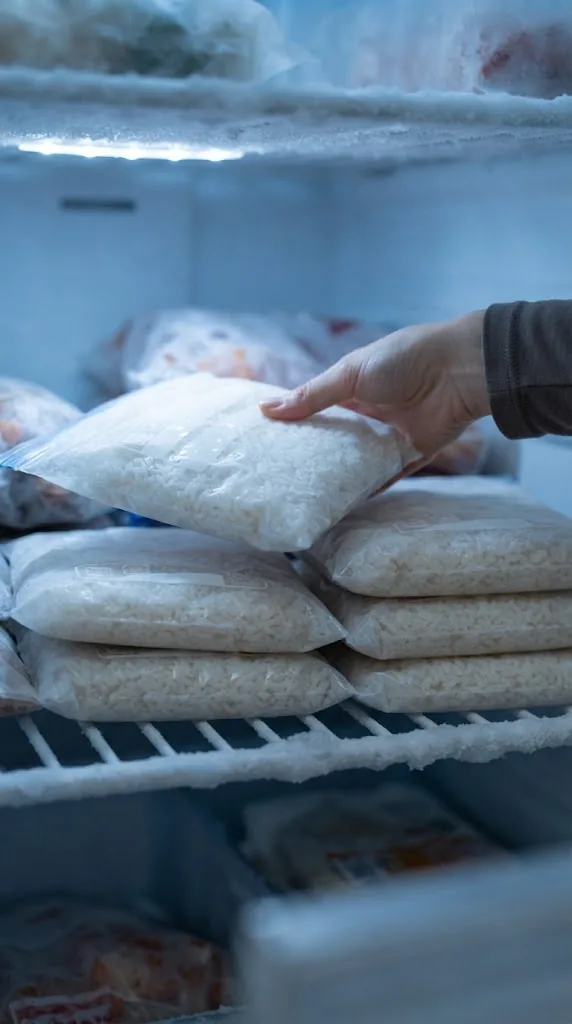
- Freezer bags: press out as much air as you can and freeze them flat so they stack and thaw faster.
- Airtight rigid containers: best for soft or liquid foods. Leave about 1/2 inch of headspace because food expands as it freezes.
- Sheet pan first: freeze pieces in a single layer for an hour or two, then bag them so they don’t clump together.
- Label everything: write the item and the date on every package.
For cooked rice: Heavy-duty freezer bags pressed flat allow for quick freezing and space-saving stacking, while rigid containers prevent the grains from getting crushed.
How to thaw cooked rice
- Use or cook the rice straight from frozen by adding it directly to soups, stir-fries, or casseroles.
- Reheat the rice in the microwave on defrost or medium power with a splash of water added to restore moisture.
- Steam the frozen rice on the stovetop over medium heat, covered tightly with a lid, until steaming hot.
How to reheat cooked rice
- Place the frozen rice in a microwave-safe bowl and add a tablespoon of water per cup of rice.
- Cover the bowl with a microwave-safe lid or damp paper towel to trap steam.
- Heat on high for 1 to 2 minutes, stir thoroughly, and continue heating in 30-second intervals until the rice reaches an internal temperature of 165°F (74°C).
Best ways to use frozen cooked rice
- Great for quick weeknight stir-fries and fried rice dishes
- Works well stirred directly into hearty soups and stews
- Ideal for fast grain bowls and burritos
- Not recommended for delicate rice salads where individual dry grain separation is critical
Fixing the texture: Stir a splash of water or broth into the rice while reheating, and use a fork to gently fluff the grains apart.
How long cooked rice keeps
| Where | How long |
|---|---|
| Freezer (0°F / -18°C) | 4-6 months |
| Refrigerator (40°F / 4°C) | 3-4 days |
| Pantry / counter | Not recommended for cooked rice |
Can you refreeze cooked rice?
Yes, you can refreeze cooked rice safely only if it was thawed in the refrigerator and not left out at room temperature for more than two hours. However, repeated freezing and thawing cycles will significantly degrade the texture of the grains, making them overly dry or mushy.
- Turn thawed rice into a cooked dish like fried rice or a casserole before refreezing it.
- Portion your rice into small quantities so you only thaw what you need for a single meal.
- Always check the thawed rice for off odors or sliminess before deciding to refreeze it.
The rules for every food: Can you refreeze food after thawing?
Watch out for
- Do not leave cooked rice sitting at room temperature for too long before freezing, as Bacillus cereus bacteria can multiply rapidly.
- Ensure containers are sealed tightly to prevent the rice from drying out and developing freezer burn.
- Avoid refreezing rice once it has been fully thawed.
Food safety notes
Cool cooked rice quickly using shallow containers and refrigerate or freeze it within 2 hours of cooking to prevent the rapid multiplication of Bacillus cereus spores. Fully thawed rice should only be refrozen if it was thawed safely in the refrigerator.
Other ways to keep cooked rice
- Store in the refrigerator for up to 4 days in an airtight container.
- Use leftover rice to make fried rice, rice pudding, or arancini right away.
Common questions
Can I freeze uncooked rice instead?
Yes, uncooked dry rice has an almost indefinite shelf life when stored in a cool, dry place, so freezing uncooked white or brown rice is generally unnecessary unless you want to protect it against pantry pests.
Why does my frozen rice smell or taste weird after thawing?
Rice readily absorbs odors and flavors from other foods in the freezer. To prevent this, make sure you use heavy-duty, airtight freezer bags or containers.
Can I refreeze cooked rice if I thaw it?
You can refreeze cooked rice safely only if you thawed it in the refrigerator. However, repeated freezing and thawing cycles will significantly degrade the texture of the grains.
Can I freeze cooked rice that has already been mixed with vegetables and oil?
Yes, mixed dishes like fried rice or seasoned pilafs freeze very well because the added oils help keep the grains from drying out too much.
How can I tell if my frozen cooked rice has gone bad?
Check for a sour smell, visible mold, or an unusually slimy texture after thawing, and discard the rice if any of these signs are present.
Sources
- USDA FSIS: Freezing and Food Safety
- FoodSafety.gov: FoodKeeper storage times
- National Center for Home Food Preservation: Freezing
Freezer times are for best quality. Food kept at 0°F (-18°C) stays safe indefinitely, but always thaw it in the fridge, in cold water or in the microwave, never on the counter. When in doubt, throw it out. See the USDA freezing guide.