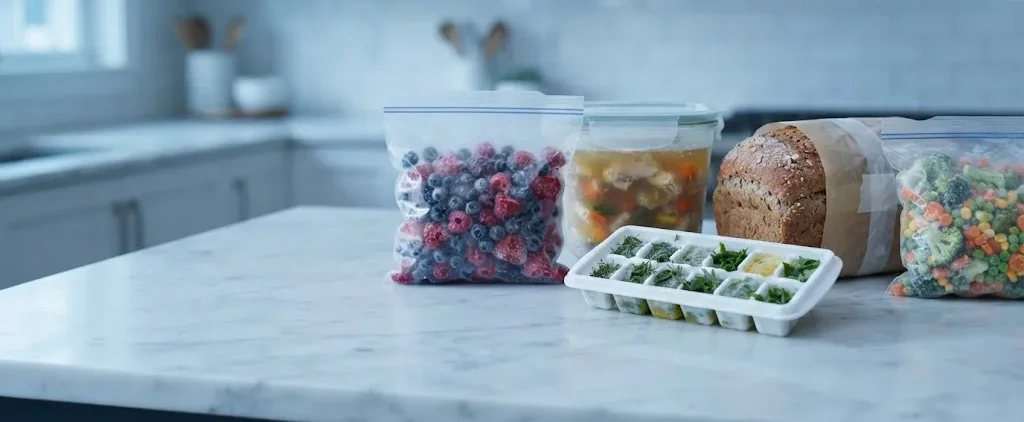
Yes, but cooked pasta tends to become very soft and mushy after freezing because starches absorb moisture as they thaw.
Why
Freezing cooked pasta causes ice crystals to form within the starch molecules, breaking down the structural integrity of the noodles. When the pasta thaws, it releases this trapped water, resulting in a soft and mushy texture. To minimize this, pasta must be cooked slightly underdone, known as al dente, and coated in a small amount of oil to prevent clumping. While it may not taste quite as fresh as a newly boiled batch, it works well when added directly to warm soups, casseroles, or baked dishes.
What freezing does to cooked pasta
- Texture: Becomes significantly softer and more delicate as starches break down.
- Moisture: Releases trapped water upon thawing, creating extra liquid in dishes.
- Structure: Loses firmness and may break apart easily if stirred aggressively.
Types of cooked pasta and how they freeze
- Stuffed pasta (ravioli and tortellini): Flash freeze them in a single layer on a baking sheet before bagging to prevent the delicate fillings from bursting and the pieces from sticking together.
- Homemade pasta: Because it contains eggs and lacks preservatives, it is even more fragile and should be frozen quickly after a very brief boil to preserve its structure.
How to freeze cooked pasta
- Cook the pasta a minute or two short of al dente so it holds up better to freezing.
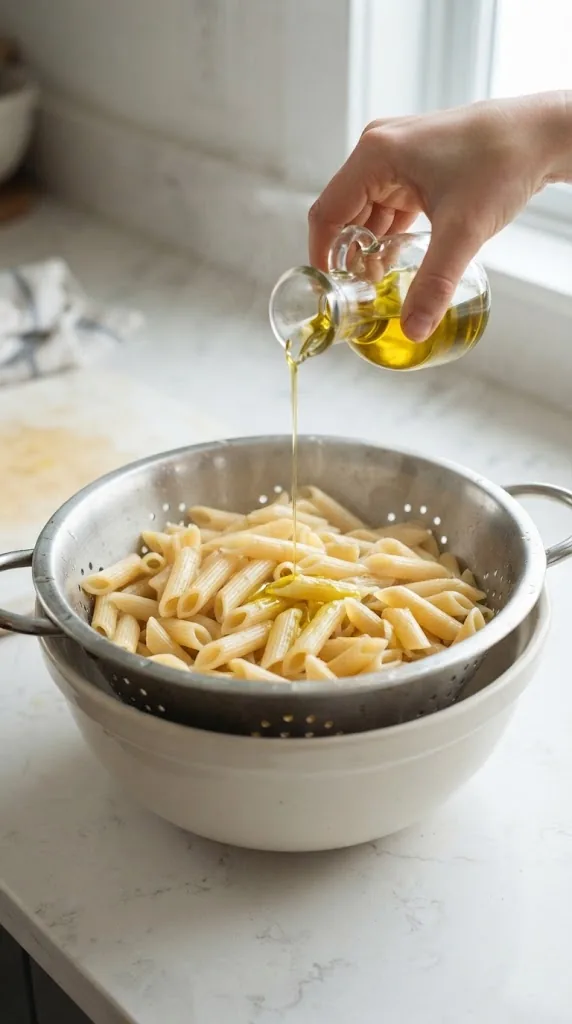
- Drain the pasta thoroughly and toss it with a small drizzle of olive oil to prevent sticking.
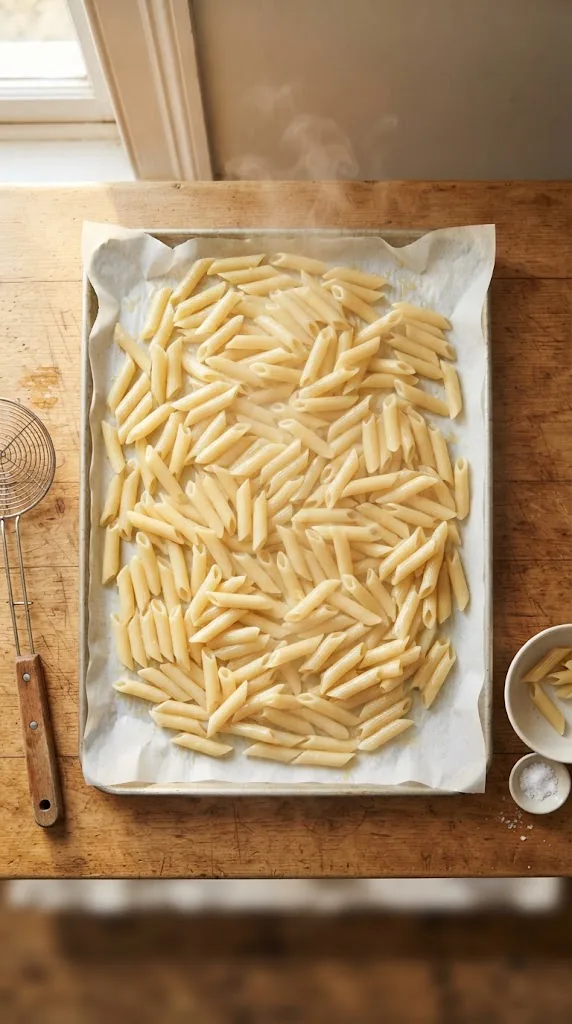
- Spread it out to cool quickly, then freeze it within 2 hours of cooking.
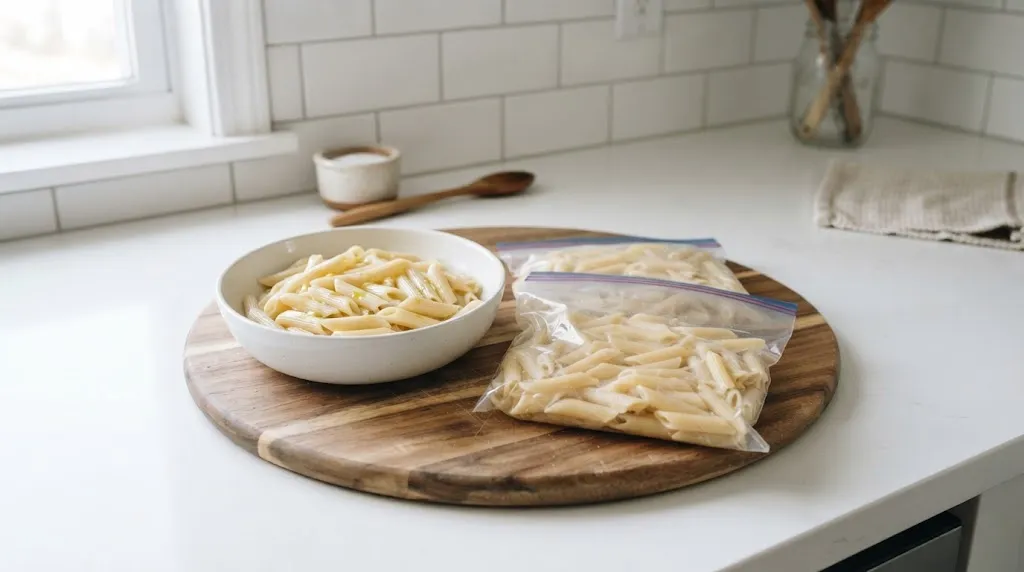
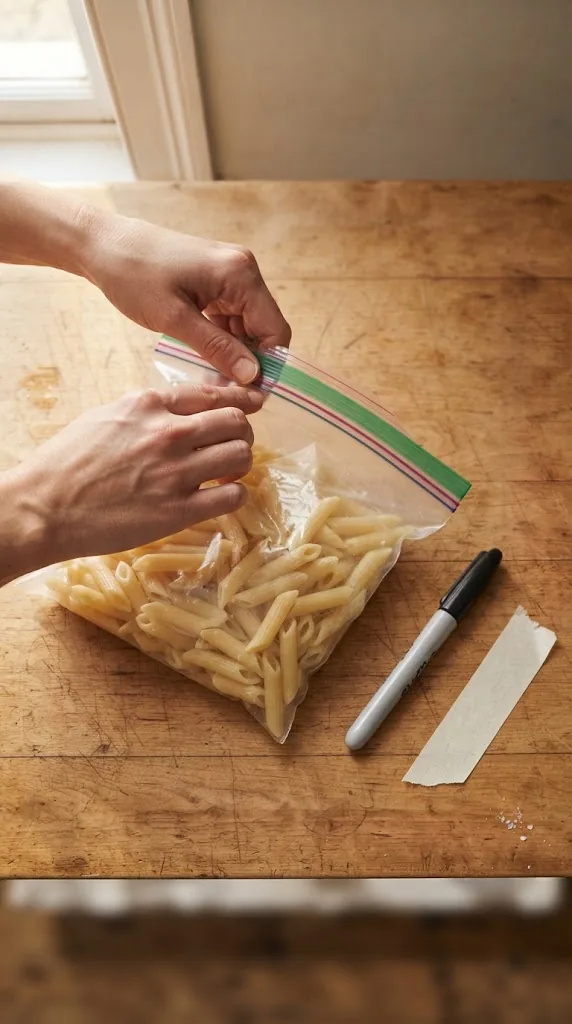
- Portion the pasta into freezer bags or airtight containers.
- Label the package with the date and freeze for up to two months.
Best containers for freezing cooked pasta
- Freezer bags: press out as much air as you can and freeze them flat so they stack and thaw faster.
- Airtight rigid containers: best for soft or liquid foods. Leave about 1/2 inch of headspace because food expands as it freezes.
- Sheet pan first: freeze pieces in a single layer for an hour or two, then bag them so they don’t clump together.
- Label everything: write the item and the date on every package.
For cooked pasta: Portion cooked pasta into heavy-duty freezer bags and press out as much air as possible to prevent freezer burn.
How to thaw cooked pasta
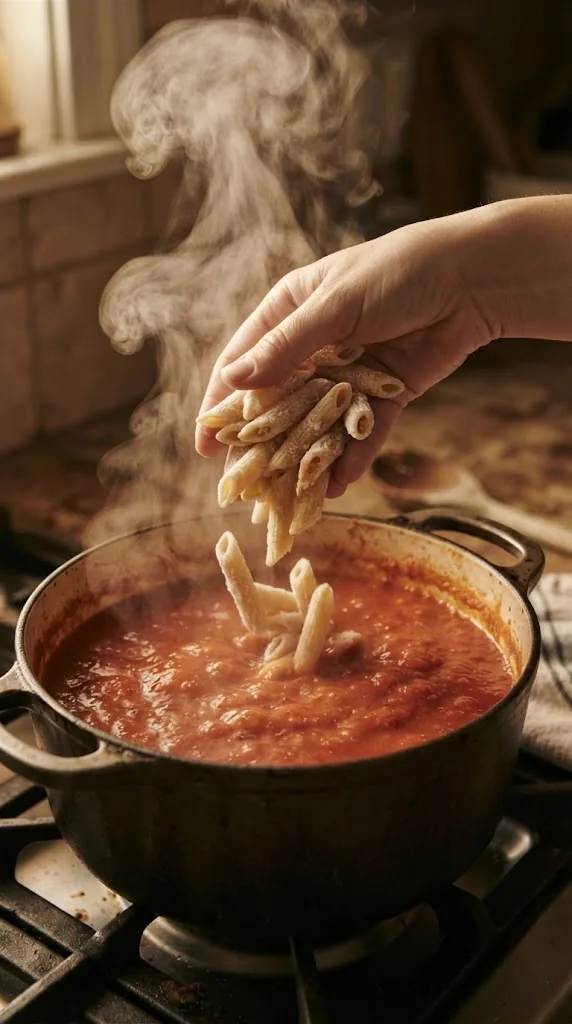
- Add it straight from frozen to hot soups, sauces or casseroles.
- For a quicker thaw, put the sealed bag in cold water, changing the water every 30 minutes.
- Or thaw it in the refrigerator overnight before reheating.
How to reheat cooked pasta
- Drop frozen pasta directly into boiling water for 30 to 60 seconds to warm through.
- Add frozen pasta straight into a simmering soup or casserole until heated to 165 degrees Fahrenheit.
- Microwave in short intervals with a splash of water or sauce, stirring frequently to heat evenly.
Best ways to use frozen cooked pasta
- Great in hearty soups and broths where softness is acceptable
- Works well stirred into baked pasta dishes covered in sauce
- Not suitable for light cold pasta salads or delicate oil-based tosses
Fixing the texture: Stir the pasta gently into a hot sauce or liquid while reheating to help it reabsorb some of the released moisture.
How long cooked pasta keeps
| Where | How long |
|---|---|
| Freezer (0°F / -18°C) | 1-2 months |
| Refrigerator (40°F / 4°C) | 3-5 days |
| Pantry / counter | Not recommended |
Can you refreeze cooked pasta?
Yes, you can refreeze thawed cooked pasta safely only if it was thawed in the refrigerator and not left out over two hours. However, the texture will degrade significantly with each freeze, becoming even softer and mushy.
- Cook or bake the thawed pasta into a new dish before refreezing it rather than freezing the plain noodles again.
- Freeze pasta in small portions so you only thaw what you need and avoid repeated cycles.
- Ensure the pasta stayed safe in the refrigerator and has no signs of spoilage before attempting to refreeze.
The rules for every food: Can you refreeze food after thawing?
Watch out for
- Pasta easily turns mushy if it was overcooked before freezing.
- Uncoated pasta can freeze into a solid, unmanageable clump.
- Freezer burn can dry out exposed noodles if containers are not airtight.
Food safety notes
Ensure reheated pasta dishes reach an internal temperature of 165 degrees Fahrenheit. If thawing in the refrigerator, the pasta can be safely refrozen within the same timeframe, but thawing on the counter is not safe.
Other ways to keep cooked pasta
- Store in an airtight container in the refrigerator for up to five days.
- Keep dry, uncooked pasta in the pantry; it doesn't need freezing.
- Mix the cooked pasta with sauce before storing, as sauce helps protect the texture.
Common questions
Can I freeze pasta mixed with sauce?
Yes, freezing cooked pasta mixed with a tomato or cream-based sauce actually helps protect the noodles from drying out and sticking together.
Should I rinse cooked pasta before freezing?
No, rinsing removes the natural starches that help sauces cling to the noodles, and it adds extra moisture that leads to mushy pasta.
Can I refreeze thawed cooked pasta?
You can refreeze it safely only if it was thawed in the refrigerator, though the texture will degrade significantly with each freeze.
Can I freeze lasagna noodles flat?
Yes, you can lay cooked lasagna noodles flat between layers of parchment or wax paper inside a freezer-safe container to prevent them from tearing or sticking together.
Why does my frozen pasta taste sour after a few weeks?
A sour taste usually indicates spoilage or freezer burn caused by inadequate sealing. Always ensure your containers are airtight and consume the pasta within two months for the best quality.
Sources
- USDA FSIS: Freezing and Food Safety
- FoodSafety.gov: FoodKeeper storage times
- National Center for Home Food Preservation: Freezing
Freezer times are for best quality. Food kept at 0°F (-18°C) stays safe indefinitely, but always thaw it in the fridge, in cold water or in the microwave, never on the counter. When in doubt, throw it out. See the USDA freezing guide.