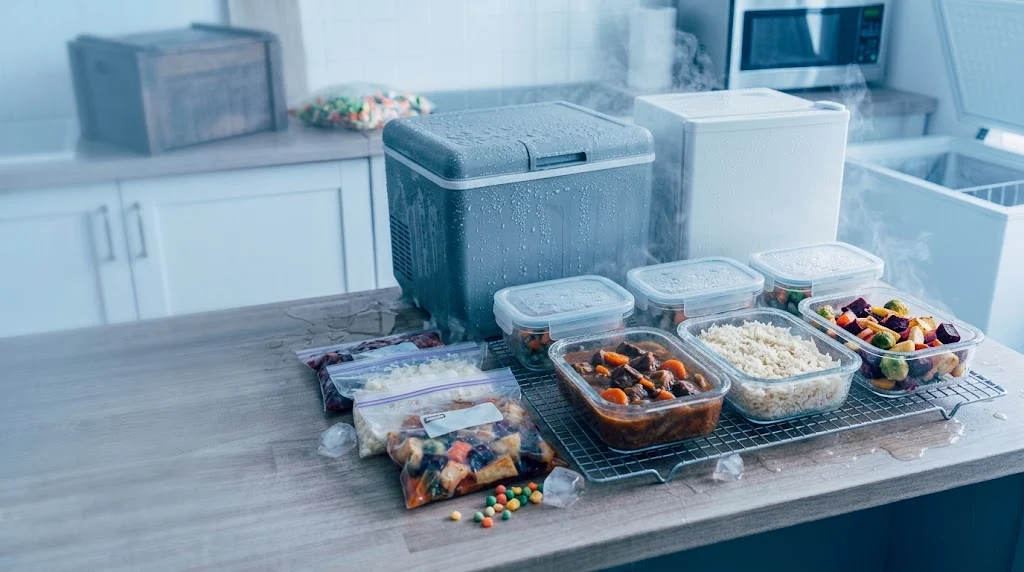
Can You Freeze It answers one question, for every food: can it go in the freezer, and how do you do it well?
Why this site exists
A huge share of the food people throw away could have been frozen: half a loaf of bread, the last of the cream cheese, overripe bananas, a pot of soup that was too big. The answer to “can I freeze this?” is usually scattered across forum threads and recipe comments. We put it in one place, with a straight verdict at the top of every page.
How the answers work
- Yes means it freezes well at home with little loss of quality.
- Sometimes means it freezes safely, but only in certain forms (blanched, cooked, grated, pureed) or with a texture change that makes it better for cooking than eating as is.
- No means freezing ruins it, isn’t safe, or can burst the container.
Every page also gives a realistic freezer time, how to prep and package the food, how to thaw it safely, and what to watch out for.
Where the information comes from
Our food-safety advice follows the USDA Food Safety and Inspection Service and FoodSafety.gov: keep your freezer at 0°F, thaw in the fridge, in cold water or in the microwave, and never on the counter. Freezer times are for best quality; food kept at 0°F stays safe indefinitely.
New answers are drafted with the help of AI and checked against that guidance, and we review and correct pages as they become popular. If you spot a mistake, please tell us and we’ll fix it.
Affiliate links
Some pages recommend freezer gear, like vacuum sealers and freezer containers, with links to Amazon. As an Amazon Associate we earn from qualifying purchases, at no extra cost to you. Product links never change an answer.