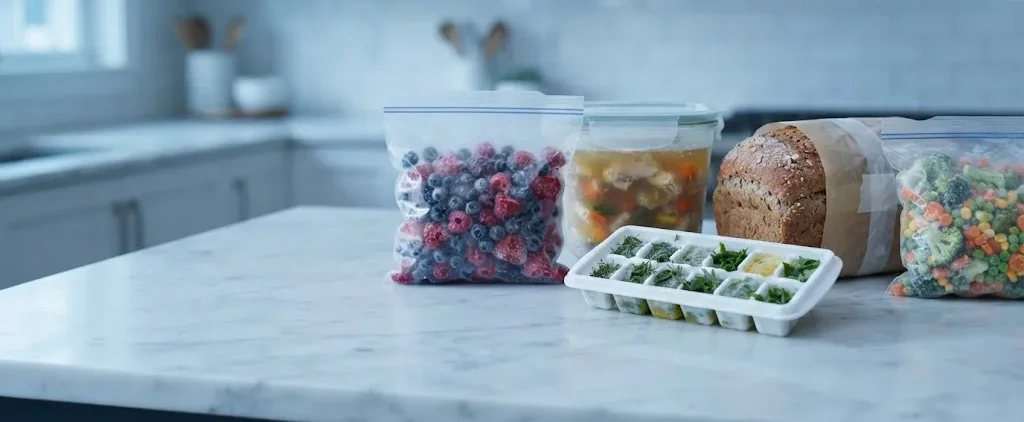
Yes, you can freeze bagels very successfully. They retain their taste and texture wonderfully when stored properly.
Why
Bagels freeze well because their dense, chewy crumb holds up to the freezing process much better than fluffy sandwich bread. When wrapped tightly to exclude air, the moisture inside the bagel is locked in, preventing severe freezer burn. While they can dry out slightly over time, toasting a frozen bagel revives its fresh texture, making it taste almost as good as the day you bought it.
What freezing does to bagels
- Texture: Slightly loses its initial fresh-baked crispness on the crust over time.
- Flavor: Can develop a mildly stale taste if exposed to air and not wrapped tightly.
- Moisture: Retains internal chewiness well when stored properly in airtight packaging.
Types of bagels and how they freeze
- Store-bought packaged bagels: These freeze extremely well because they often contain commercial preservatives that help maintain their moisture.
- Fresh bakery bagels: Wrap these extra tightly in plastic wrap because they lack preservatives and dry out faster in the freezer.
- Everything bagels: The toppings may shed easily inside the bag during freezing, so collect any loose seeds and freeze them together.
How to freeze bagels
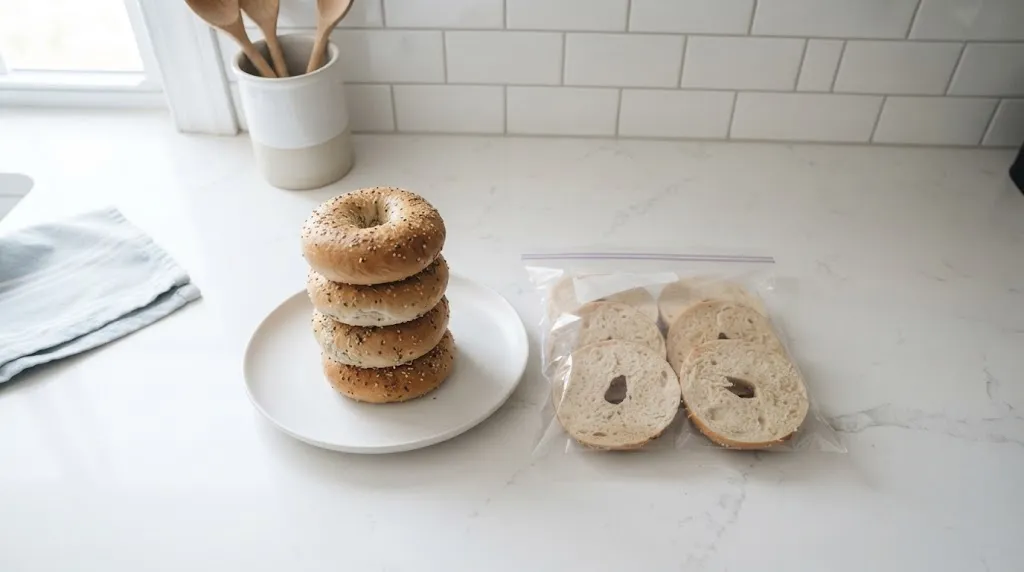
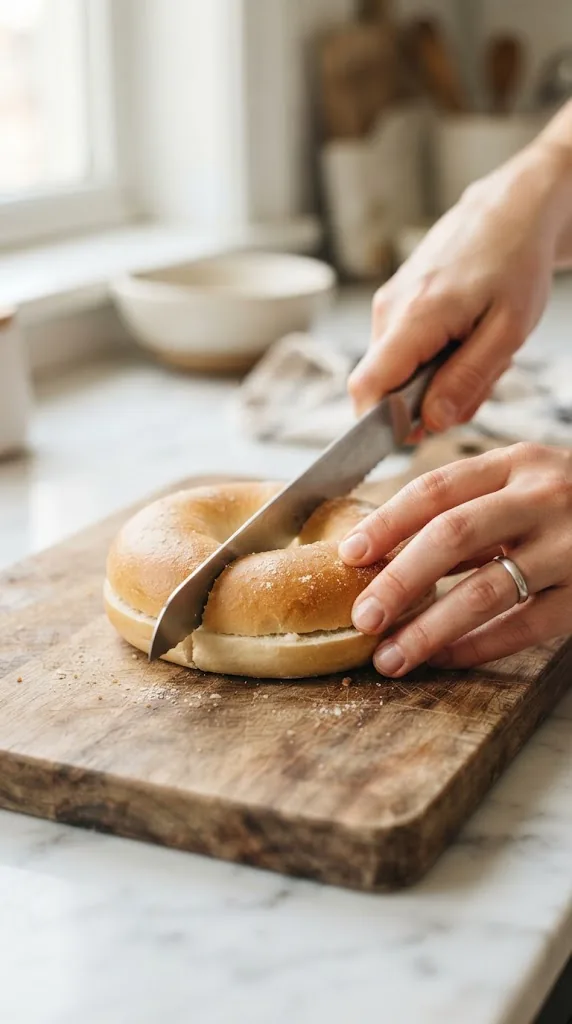
- Slice the bagels in half before freezing so they are ready for the toaster later.
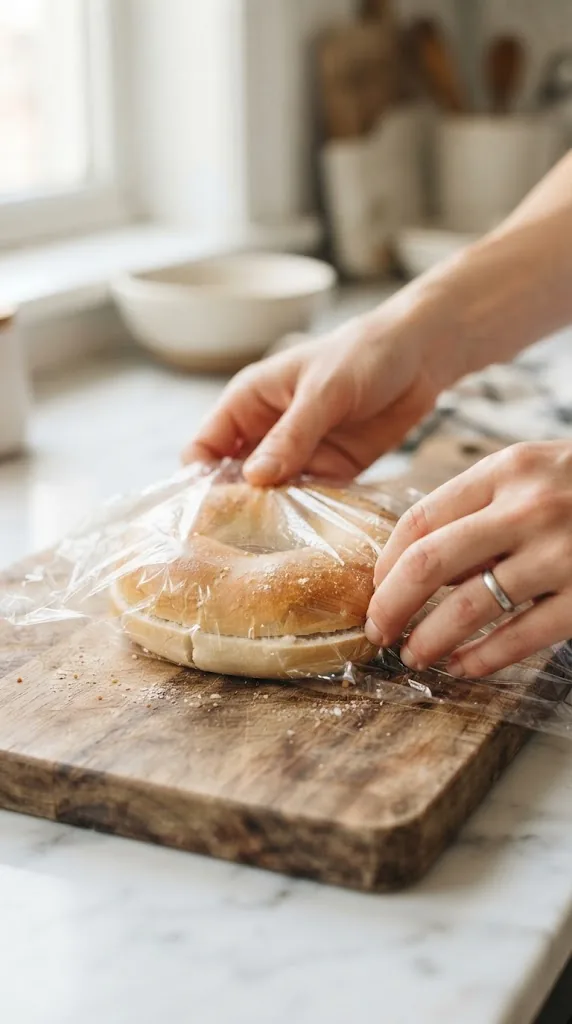
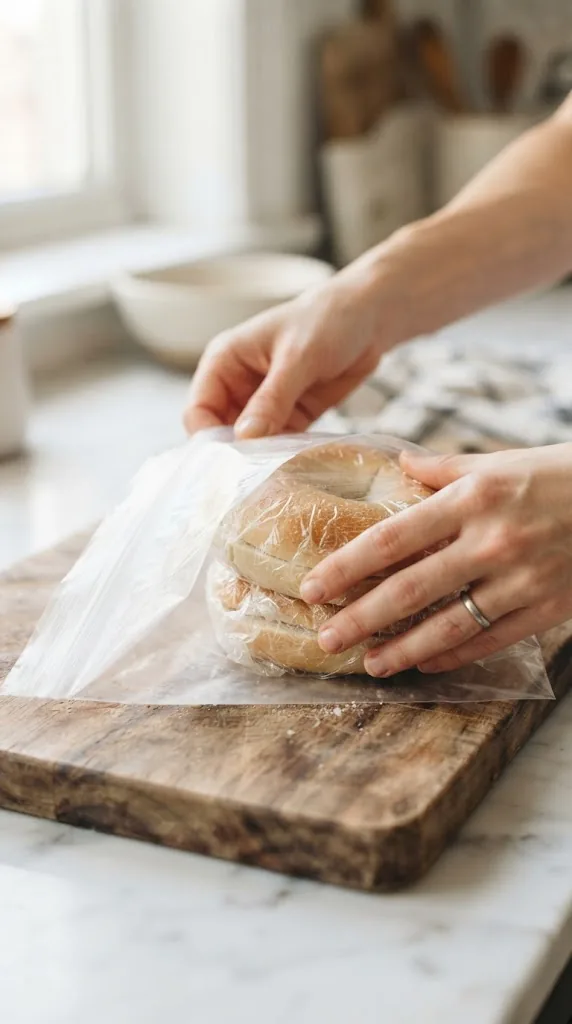
- Wrap each bagel or bagel half tightly in plastic wrap to protect against freezer burn.
- Place the wrapped bagels inside a heavy-duty freezer bag or airtight container.
- Press as much air out of the freezer bag as possible before sealing.
- Label the bag with the current date to track their storage time.
Best containers for freezing bagels
- Freezer bags: press out as much air as you can and freeze them flat so they stack and thaw faster.
- Airtight rigid containers: best for soft or liquid foods. Leave about 1/2 inch of headspace because food expands as it freezes.
- Sheet pan first: freeze pieces in a single layer for an hour or two, then bag them so they don’t clump together.
- Label everything: write the item and the date on every package.
For bagels: Wrap each individual bagel or slice tightly in plastic wrap before placing them inside a heavy-duty freezer bag to lock out moisture.
How to thaw bagels
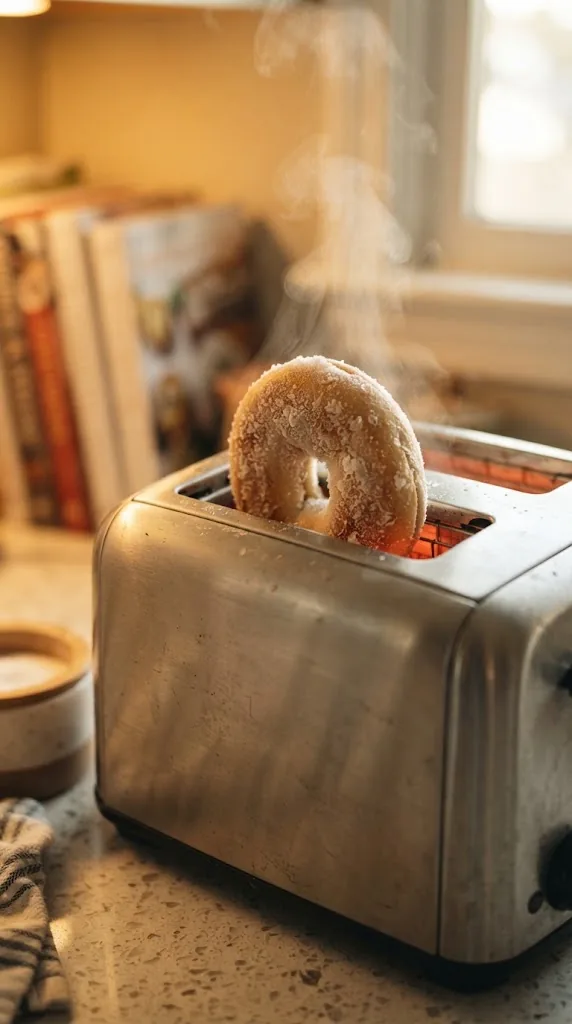
- Pop frozen bagel slices straight into the toaster for a quick and easy breakfast.
- Allow wrapped bagels to thaw at room temperature on the counter for about 15 to 30 minutes.
- Warm a thawed bagel briefly in a 350 degree Fahrenheit oven for a few minutes to restore a crisp crust.
How to reheat bagels
- Place the frozen bagel slices directly into the toaster slot.
- Toast on a medium to high setting until thoroughly warmed and slightly crisp.
- Optionally, lightly mist the frozen bagel with water before toasting to restore extra crispness.
Best ways to use frozen bagels
- Great for quick morning toast with butter or jam
- Ideal for making frozen breakfast sandwiches with eggs and cheese
- Not recommended for making fresh deli platters where a soft, untoasted texture is preferred
Fixing the texture: Toast the frozen bagel directly in a toaster or warm it briefly in a 350 degree Fahrenheit oven to easily revive its outer crust and chewy interior.
How long bagels keeps
| Where | How long |
|---|---|
| Freezer (0°F / -18°C) | 3-4 months |
| Refrigerator (40°F / 4°C) | 5-7 days |
| Pantry / counter | 2 days |
Can you refreeze bagels?
Yes, you can refreeze bagels provided they were thawed safely in the refrigerator and have not been left at room temperature for more than two hours. However, freezing them a second time will dry out the crumb and degrade the overall texture, making them noticeably tougher and less enjoyable.
- Slice bagels into portions before the initial freeze so you only thaw what you need and avoid repeated freezing.
- Toast or bake thawed bagels before considering any secondary freezing to help maintain their structure.
- Check that the thawed bagels show no signs of mold or staleness before attempting to freeze them again.
The rules for every food: Can you refreeze food after thawing?
Watch out for
- Freezer burn can occur if bagels are not wrapped tightly enough, leading to dry or stale spots.
- Unsliced bagels take much longer to thaw and are difficult to cut safely once frozen solid.
- Leaving bagels in the freezer for too long will result in a loss of flavor and an unappealingly chewy texture.
Food safety notes
Always thaw bagels in the refrigerator or toast them directly from frozen. If a thawed bagel develops mold or a strange odor, discard it immediately.
Other ways to keep bagels
- Store fresh bagels in a paper bag at room temperature for up to two days.
- Keep bagels in a bread box to maintain a slightly crisp crust.
- Revive slightly stale bagels by running them quickly under water and baking them for a few minutes.
Common questions
Should I slice bagels before freezing them?
Yes, it is best to slice your bagels before freezing so you can put them straight into the toaster without having to thaw them first.
Can I freeze bagels with cream cheese already on them?
No, dairy spreads like cream cheese do not freeze well on bread. They tend to separate, become watery, and ruin the texture of the bagel.
How can I tell if a frozen bagel has gone bad?
If the bagel shows signs of severe freezer burn, has a strange sour odor, or develops mold after thawing, it should be discarded.
Can I freeze mini bagels the same way as regular-sized bagels?
Yes, mini bagels can be frozen using the exact same method. Since they are smaller, you can often leave them whole and pop them directly into the toaster without slicing first.
Can I freeze homemade bagel dough before baking?
Yes, you can freeze unbaked shaped bagel dough after the initial rise, but it is often easier to bake them first and freeze the finished product for the best texture and convenience.
Sources
- USDA FSIS: Freezing and Food Safety
- FoodSafety.gov: FoodKeeper storage times
- National Center for Home Food Preservation: Freezing
Freezer times are for best quality. Food kept at 0°F (-18°C) stays safe indefinitely, but always thaw it in the fridge, in cold water or in the microwave, never on the counter. When in doubt, throw it out. See the USDA freezing guide.