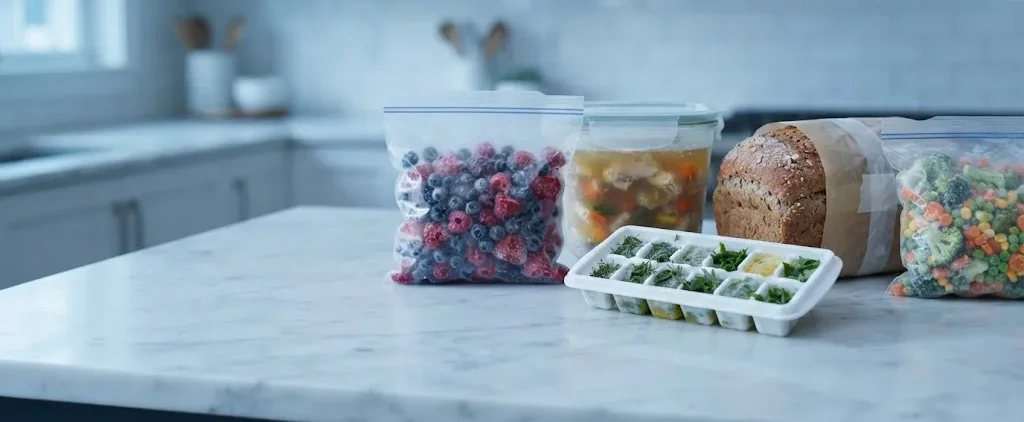
Yes, you can freeze blueberries easily. They retain their sweet flavor and quality remarkably well for months.
Why
Blueberries have a high water content, which causes ice crystals to form inside the fruit during freezing. While this does make the thawed berries noticeably softer and less plump than fresh ones, their natural sweetness and nutritional value remain largely unaffected. Because of this slight textural change, thawed blueberries are best used in cooked dishes, baking, or blended recipes rather than eaten fresh by the handful.
What freezing does to blueberries
- Texture: Cell walls rupture during freezing, resulting in a softer and juicier consistency upon thawing.
- Flavor: Natural sweetness and nutritional profiles remain largely unchanged and well-preserved.
Types of blueberries and how they freeze
- Wild blueberries: Wild blueberries freeze identically to cultivated varieties, but their smaller size means they freeze through even faster.
- Sugar-coated blueberries: Tossing berries in a light coating of sugar before freezing can help draw out less moisture, though plain freezing is usually preferred.
How to freeze blueberries
- Sort through the blueberries and discard any that are moldy, overripe, or bruised.
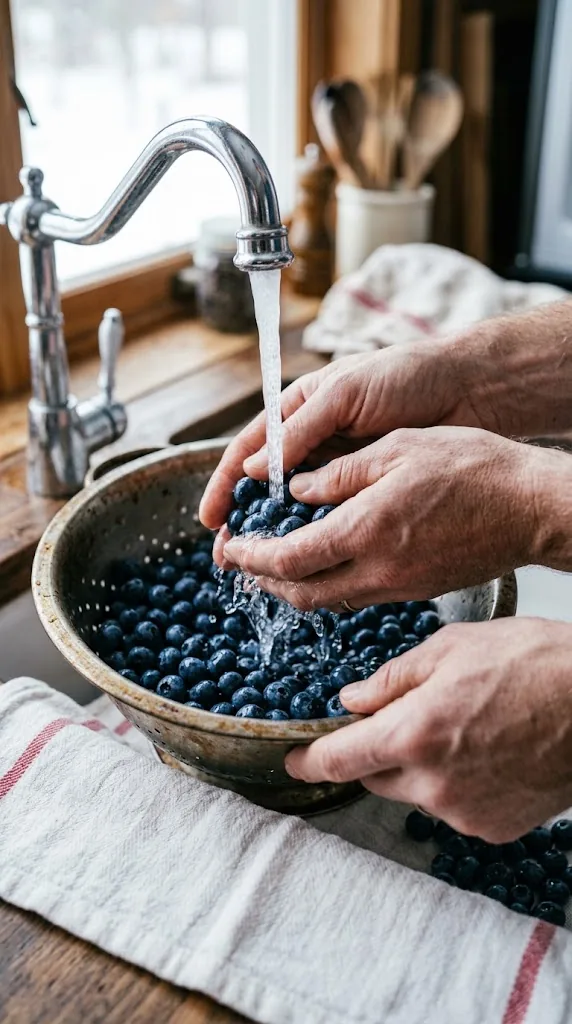
- Wash the berries gently in cold water and dry them thoroughly on a clean towel to prevent clumping.
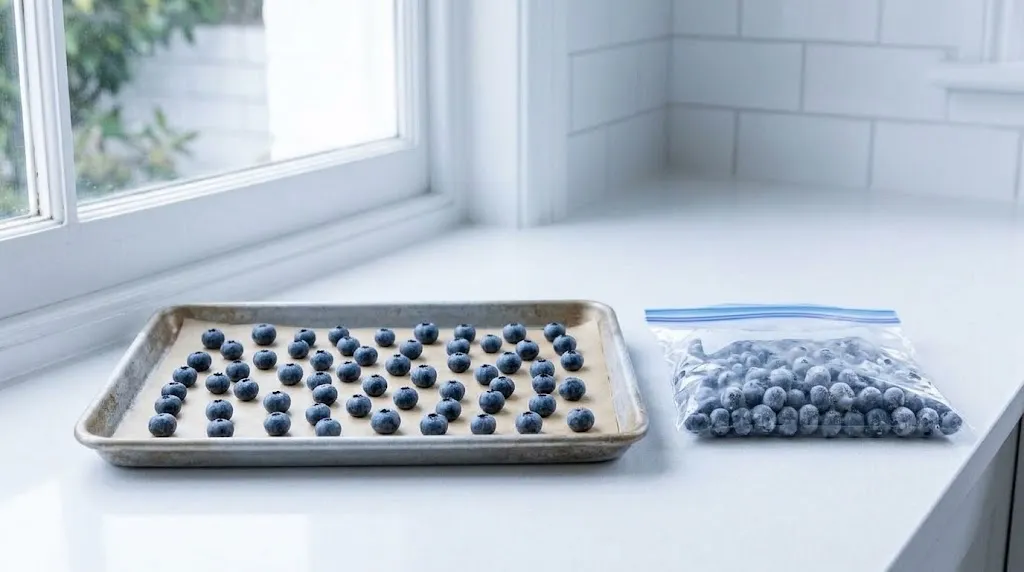
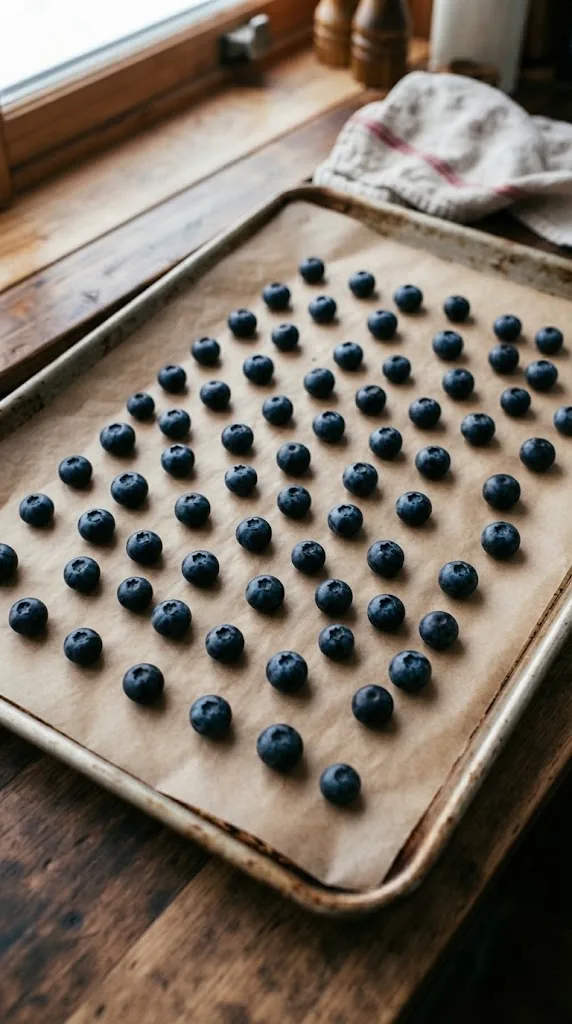
- Spread the dry blueberries in a single layer on a baking sheet lined with parchment paper and freeze for about two hours until solid.
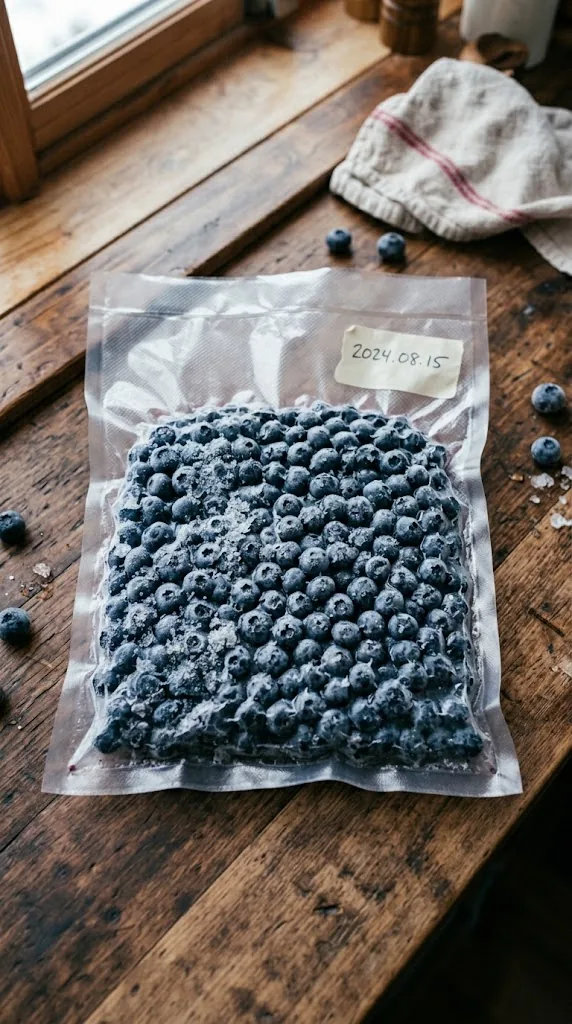
- Transfer the flash-frozen berries into heavy-duty freezer bags or airtight containers.
- Label the package with the current date and return it to the freezer.
Best containers for freezing blueberries
- Freezer bags: press out as much air as you can and freeze them flat so they stack and thaw faster.
- Airtight rigid containers: best for soft or liquid foods. Leave about 1/2 inch of headspace because food expands as it freezes.
- Sheet pan first: freeze pieces in a single layer for an hour or two, then bag them so they don’t clump together.
- Label everything: write the item and the date on every package.
For blueberries: Flash-freeze berries on a lined baking sheet first to prevent clumping, then transfer them into heavy-duty freezer bags with the air pressed out.
How to thaw blueberries
- Rinse the desired amount of frozen blueberries in a colander under cold running water just before use.
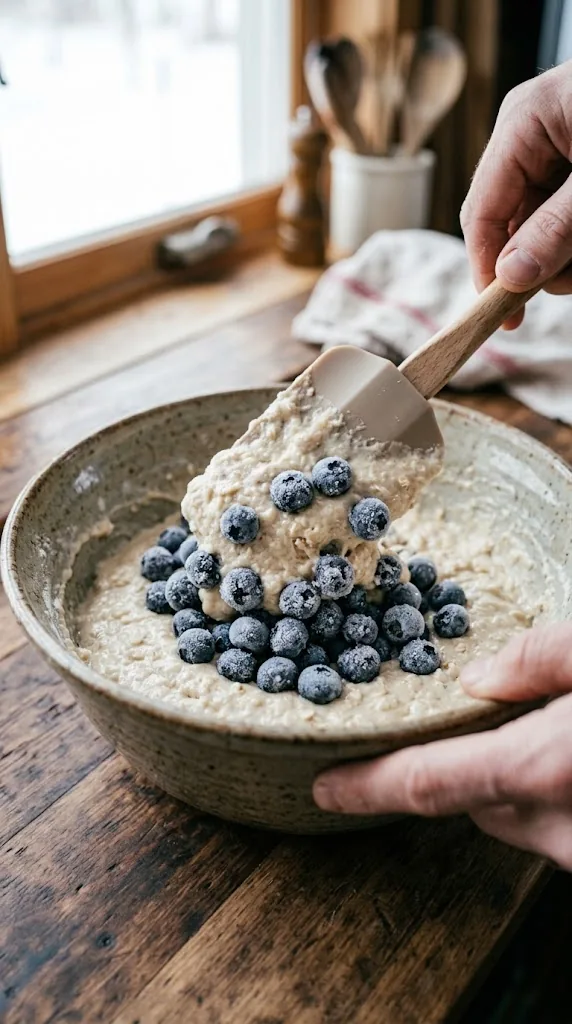
- Use or cook the blueberries straight from frozen in baking, smoothies, or oatmeal without prior thawing.
- Thaw the berries in the refrigerator for a few hours if you plan to use them in cold preparations.
Best ways to use frozen blueberries
- Great in fruit crisps, cobblers, and baked goods
- Ideal for morning oatmeal bowls and smoothie blends
- Not suitable for fresh fruit platters or crisp garnish due to softening
Fixing the texture: There is no physical fix to restore the original firm crunch of a raw blueberry after freezing, but cooking or baking them minimizes the noticeable change in texture.
How long blueberries keeps
| Where | How long |
|---|---|
| Freezer (0°F / -18°C) | 10-12 months |
| Refrigerator (40°F / 4°C) | 1-2 weeks |
| Pantry / counter | Not recommended |
Can you refreeze blueberries?
Yes, you can refreeze blueberries if they were thawed safely in the refrigerator and have not been left at room temperature for more than two hours. However, a second freeze will cause further cellular breakdown and make the thawed blueberries even mushier than before.
- Cook the thawed blueberries into a compote or bake them into a dish before refreezing for better texture.
- Freeze blueberries in smaller portions so you only thaw what you need for a single recipe.
- Always cool any cooked blueberry dishes quickly in shallow containers and refrigerate or freeze them within two hours.
The rules for every food: Can you refreeze food after thawing?
Watch out for
- Skipping the initial flash-freezing step on a baking sheet will cause the blueberries to freeze into one large, unbreakable clump.
- Thawed blueberries will lose their firm crunch and become soft and juicy, making them less suitable for fresh fruit salads.
- Ensure moisture is kept to a minimum before freezing to prevent excessive ice buildup and freezer burn.
Food safety notes
Ensure blueberries are thoroughly washed to remove potential pathogens before freezing. If you choose to thaw them for cold preparations, always do so safely in the refrigerator.
Other ways to keep blueberries
- Store fresh unwashed blueberries in a rigid container lined with a paper towel in the refrigerator for about 1-2 weeks.
- Dehydrate blueberries in a food dehydrator to make a chewy, shelf-stable snack.
- Cook the blueberries down into a homemade jam or compote for longer refrigerator or pantry storage.
Common questions
Do I need to wash blueberries before freezing them?
Yes, you should wash them to remove dirt and pesticides. However, you must dry them thoroughly before putting them in the freezer to prevent ice crystals from sticking the berries together.
Can I use frozen blueberries straight in muffin or pancake batter?
Yes, you can add them directly to your batter while frozen. Do not thaw them first, as doing so can bleed purple color throughout your mixture and make the batter too wet.
Why did my frozen blueberries turn mushy?
The freezing process causes the water inside the blueberry cells to expand and rupture the cell walls. This is completely normal and results in a softer texture once the fruit warms up.
Can I freeze store-bought blueberries in their original plastic clamshell?
It is not recommended because thin plastic clamshells do not protect against freezer burn and allow the berries to clump together. Instead, wash, dry, flash-freeze, and transfer them to a proper freezer bag.
Do frozen blueberries lose their vitamins over time?
While there can be a very minor degradation of certain nutrients over several months, blueberries retain the vast majority of their vitamins and antioxidants during long-term freezing.
Sources
- USDA FSIS: Freezing and Food Safety
- FoodSafety.gov: FoodKeeper storage times
- National Center for Home Food Preservation: Freezing
Freezer times are for best quality. Food kept at 0°F (-18°C) stays safe indefinitely, but always thaw it in the fridge, in cold water or in the microwave, never on the counter. When in doubt, throw it out. See the USDA freezing guide.