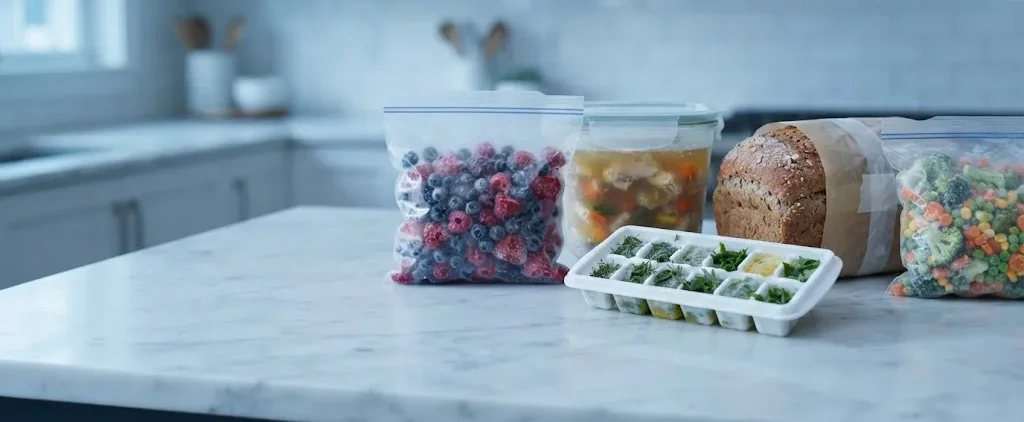
Yes, but freezing changes the texture of cheese, making hard and semi-hard varieties crumbly and soft cheeses watery.
Why
Cheese contains varying amounts of moisture and fat. When you freeze cheese, the water inside expands and forms ice crystals, which disrupts the delicate protein matrix. This causes hard cheeses like cheddar and parmesan to become crumbly, dry, and prone to breaking apart easily when sliced. Soft cheeses and cream-based cheeses suffer even more, separating and turning grainy or watery upon thawing. While freezing will not make the cheese unsafe to eat, it severely impacts the texture, meaning frozen cheese is best reserved for cooking rather than a cheese board.
What freezing does to cheese
- Texture: Hard cheeses become noticeably crumbly and prone to breaking apart easily when handled.
- Moisture: Soft cheeses release trapped water upon thawing, leading to a watery and separated consistency.
- Flavor: Mild flavor degradation can occur over extended periods due to lipid oxidation and freezer burn.
Types of cheese and how they freeze
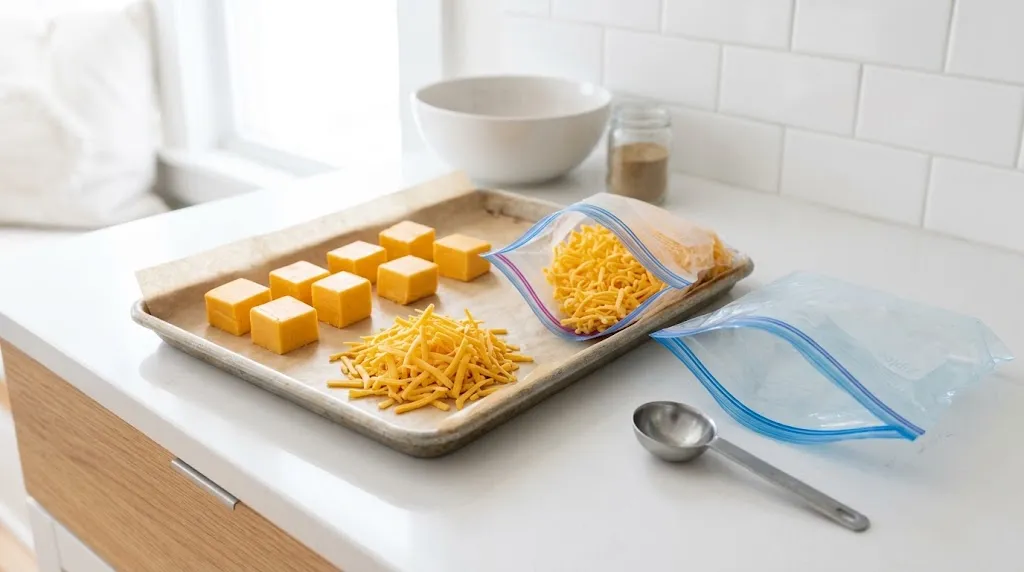
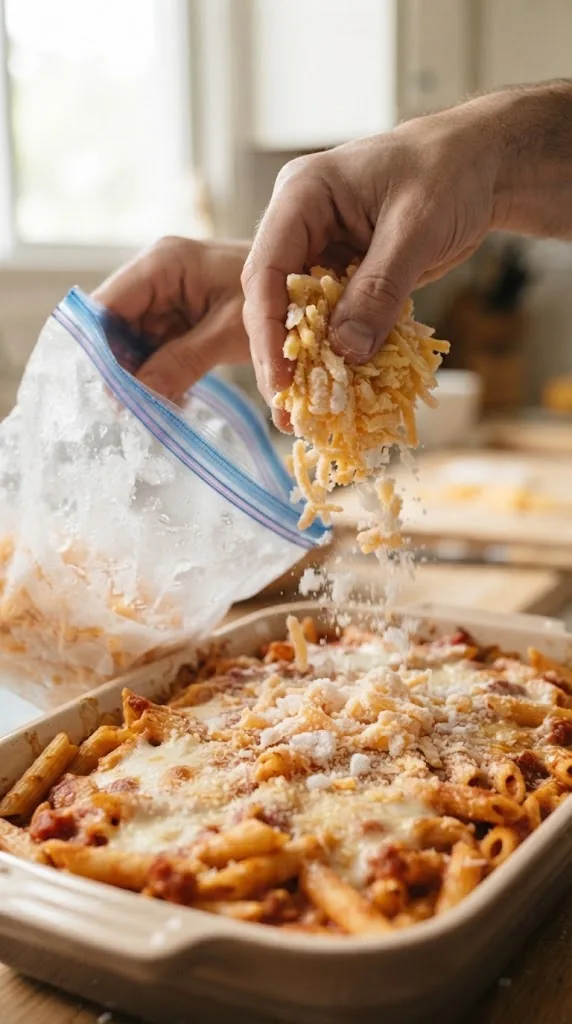
- Shredded cheese: Shredded cheese freezes exceptionally well because the smaller pieces freeze quickly and can be tossed directly into hot recipes without thawing.
- Low-fat cheese: Low-fat varieties contain more water and less fat, making them turn even more rubbery and tough when frozen compared to full-fat alternatives.
- Soft fresh cheese: Fresh cheeses like ricotta and cottage cheese separate entirely into curds and watery whey, losing their smooth spreadability completely.
How to freeze cheese
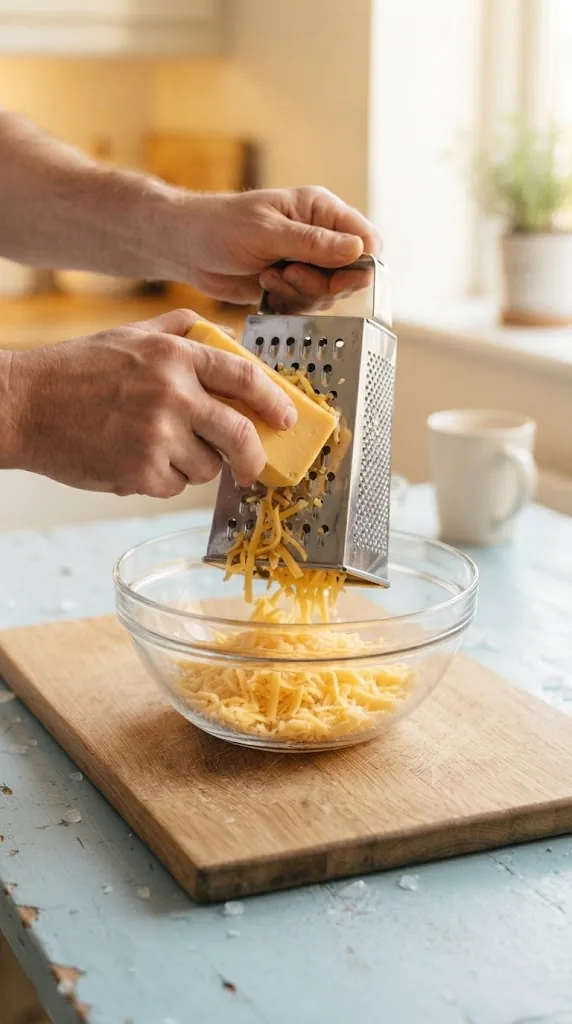
- Slice, shred, or cut the cheese into manageable portions before freezing.
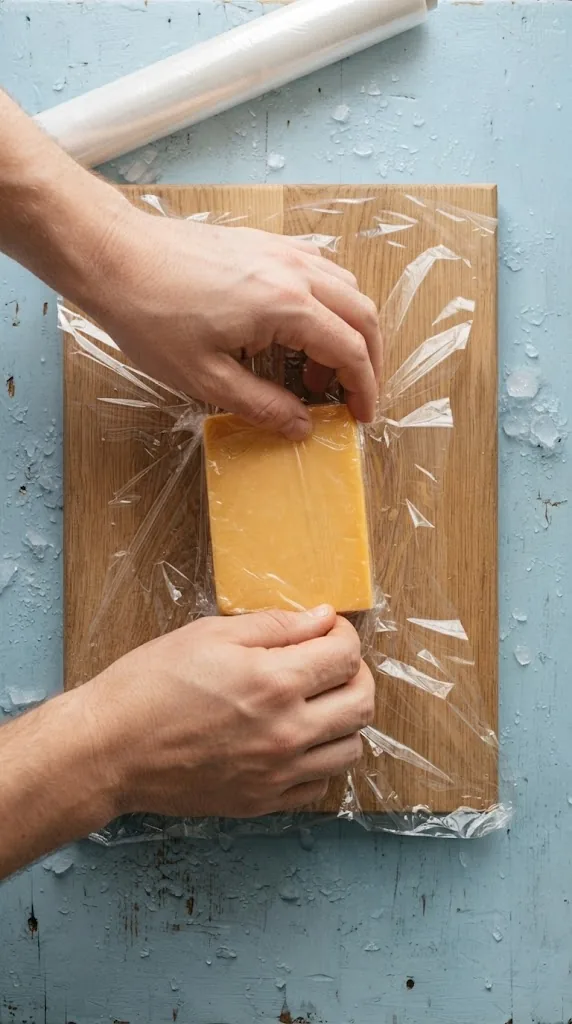
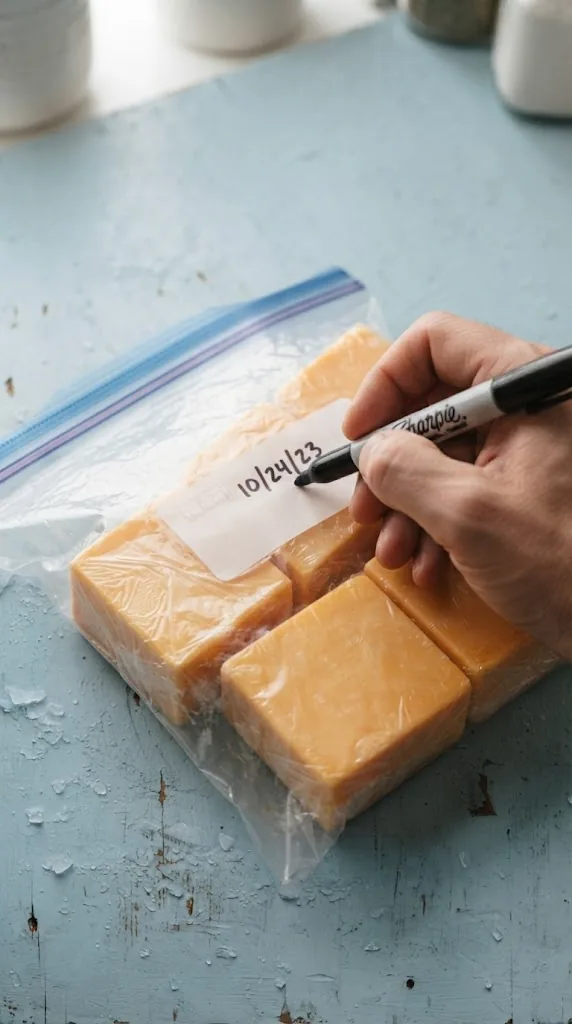
- Wrap blocks tightly in plastic wrap or heavy-duty aluminum foil to prevent air exposure.
- Place the wrapped portions inside heavy-duty freezer bags and press out as much air as possible.
- Label the bags with the type of cheese and the freezing date.
Best containers for freezing cheese
- Freezer bags: press out as much air as you can and freeze them flat so they stack and thaw faster.
- Airtight rigid containers: best for soft or liquid foods. Leave about 1/2 inch of headspace because food expands as it freezes.
- Sheet pan first: freeze pieces in a single layer for an hour or two, then bag them so they don’t clump together.
- Label everything: write the item and the date on every package.
For cheese: Wrap blocks tightly in plastic wrap followed by heavy-duty aluminum foil, then seal them inside a freezer bag to protect against moisture loss and odor absorption.
How to thaw cheese
- Thaw the cheese slowly in the refrigerator for 24 to 48 hours to minimize moisture loss.
- Use thawed cheese primarily in cooked dishes like casseroles, soups, or baked pasta where texture changes matter less.
- Shred hard cheeses straight from the frozen state to avoid the crumbling that happens after thawing.
How to reheat cheese
- Add frozen shredded cheese directly into warm sauces or soups, stirring frequently until melted.
- Incorporate frozen cheese into casseroles or baked pasta dishes before placing them in the oven, ensuring the dish reaches an internal temperature of 165°F (74°C) if containing leftovers.
Best ways to use frozen cheese
- Great in melted cheese sauces and creamy soups.
- Ideal for topping casseroles, lasagnas, and baked pasta dishes.
- Not for building a cheese board or slicing for fresh sandwiches.
Fixing the texture: Stir thawed soft cheeses vigorously or blend them with a touch of milk or cream to help restore some smoothness, though a completely uniform texture cannot be fully recovered.
How long cheese keeps
| Where | How long |
|---|---|
| Freezer (0°F / -18°C) | 6-8 months |
| Refrigerator (40°F / 4°C) | 3-6 weeks |
| Pantry / counter | Not recommended |
Can you refreeze cheese?
No, it is not recommended to refreeze cheese after it has been thawed because the second round of freezing and thawing will further degrade the protein and moisture structure, making the cheese extremely crumbly, dry, and unpalatable.
- Cook or bake the thawed cheese into a dish before freezing it again.
- Freeze cheese in small portions so you only thaw what you need at one time.
- Never leave thawed cheese at room temperature for more than two hours.
The rules for every food: Can you refreeze food after thawing?
Watch out for
- Hard cheeses will often become very crumbly and difficult to slice neatly after being frozen.
- Soft cheeses like cream cheese or ricotta separate and become grainy and watery once thawed.
- Prolonged exposure to freezer air can lead to severe freezer burn and off-flavors.
Food safety notes
Always thaw cheese safely in the refrigerator rather than on the counter to prevent bacterial growth. Never refreeze cheese that has been thawed outside of the refrigerator.
Other ways to keep cheese
- Store unopened hard cheeses in the refrigerator crisper drawer for several weeks or months.
- Vacuum seal hard cheeses to extend their refrigerated shelf life without freezing.
- Preserve softer cheeses by keeping them submerged in brine or oil as appropriate for the variety.
Common questions
Can you freeze all types of cheese?
No, hard and semi-hard cheeses like cheddar, Swiss, and parmesan freeze reasonably well for cooking. Soft cheeses, cream cheese, cottage cheese, and fresh mozzarella do not freeze well because their high moisture content causes severe textural separation.
Is it better to shred cheese before freezing it?
Yes, shredding hard cheese before freezing is often recommended because it prevents the block from crumbling excessively and allows you to grab small handfuls straight from the freezer for cooking.
Can you refreeze cheese that has been thawed?
It is not recommended to refreeze thawed cheese because the second round of freezing and thawing will further degrade the texture and make it extremely crumbly and dry.
Can moldy cheese be frozen to stop the mold from spreading?
No, freezing does not kill mold or reverse the spoilage process. If a hard cheese has small spots of mold, you can cut them off and use the rest immediately, but freezing it will not fix the contamination.
Does freezing affect the melting quality of cheese?
Yes, freezing disrupts the protein and moisture structure, which often causes the cheese to release its oils faster and melt in a slightly greasier or oilier manner than fresh cheese.
Sources
- USDA FSIS: Freezing and Food Safety
- FoodSafety.gov: FoodKeeper storage times
- National Center for Home Food Preservation: Freezing
Freezer times are for best quality. Food kept at 0°F (-18°C) stays safe indefinitely, but always thaw it in the fridge, in cold water or in the microwave, never on the counter. When in doubt, throw it out. See the USDA freezing guide.