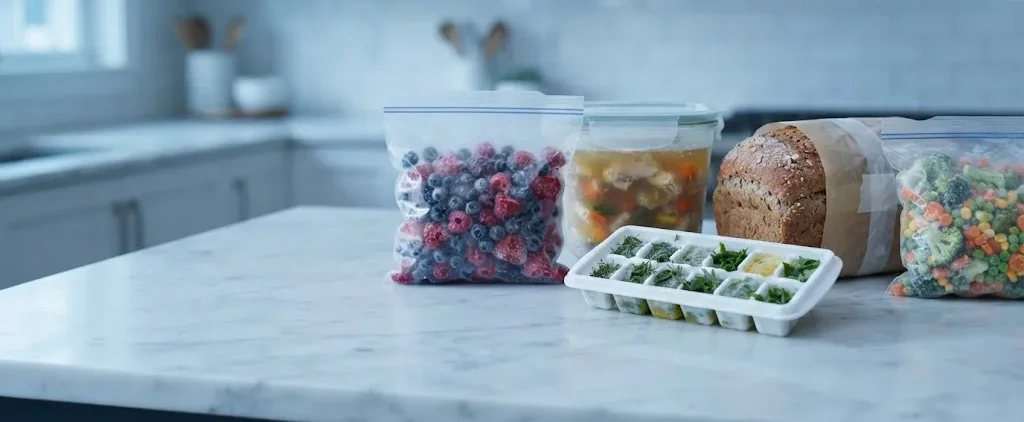
Yes, lasagna freezes wonderfully whether it is cooked or unbaked, making it a great meal-prep option for busy nights.
Why
Lasagna retains its structure remarkably well in the freezer because the layers of pasta, sauce, cheese, and meat hold together during the freezing and reheating process. While the high moisture content in the sauce and ricotta can release some water upon thawing, wrapping it tightly prevents ice crystals and freezer burn. Baked lasagna offers a convenient ready-to-eat meal, while unbaked lasagna allows the noodles to absorb flavors evenly as it bakes later.
What freezing does to lasagna
- Texture: Ricotta layers can occasionally separate or turn slightly grainy due to moisture loss during freezing.
- Moisture: Sauces may release extra water upon thawing, which can make the surrounding pasta feel slightly softer.
Types of lasagna and how they freeze
- Vegetable lasagna: High-water vegetables like zucchini, spinach, and mushrooms should be thoroughly drained and patted dry before assembling to prevent a watery texture after thawing.
- Store-bought frozen lasagna: Commercial varieties often include stabilizers and modified starches that help the cheese and sauce hold their texture better than some homemade versions.
How to freeze lasagna
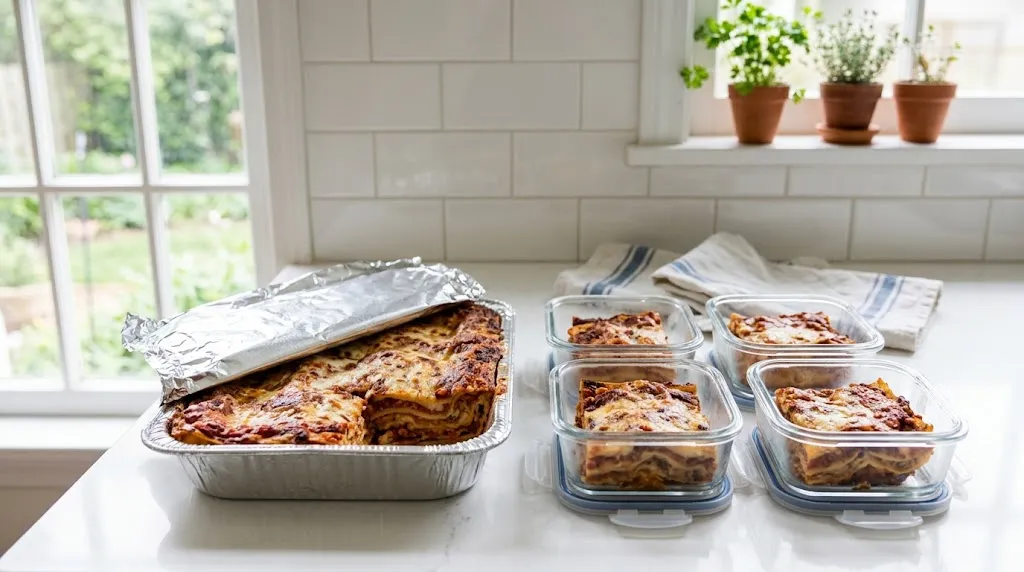
- Cool freshly baked lasagna quickly and get it into the freezer within 2 hours of cooking; cutting it into portions helps it cool faster.
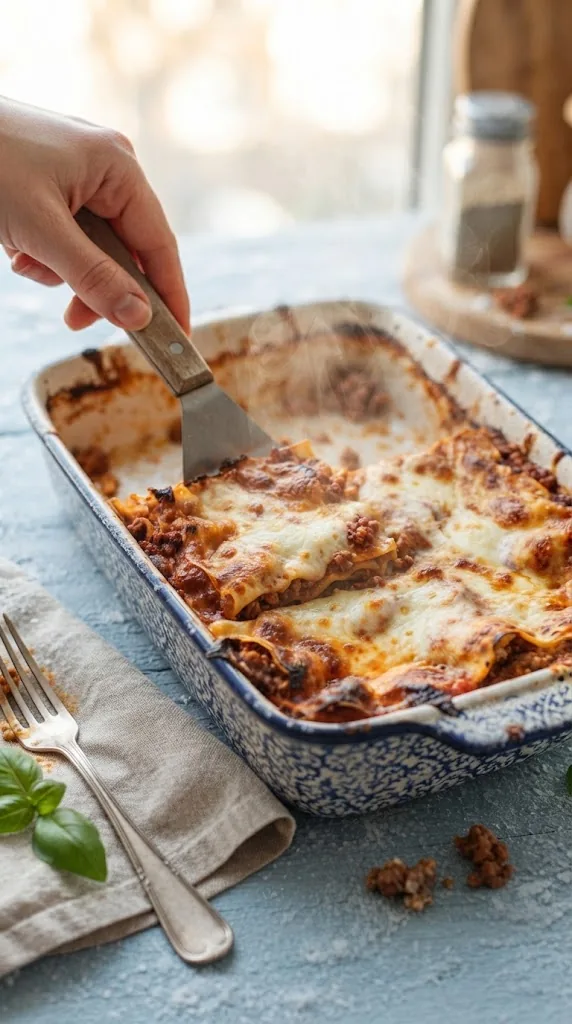
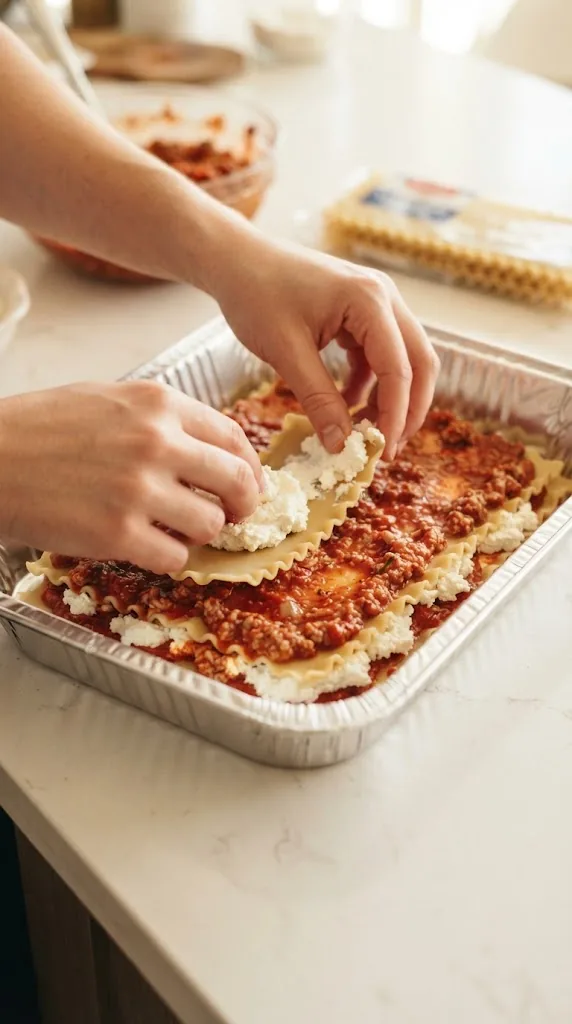
- Portion the lasagna into individual servings or leave it in a heavy-duty freezer-safe baking dish.
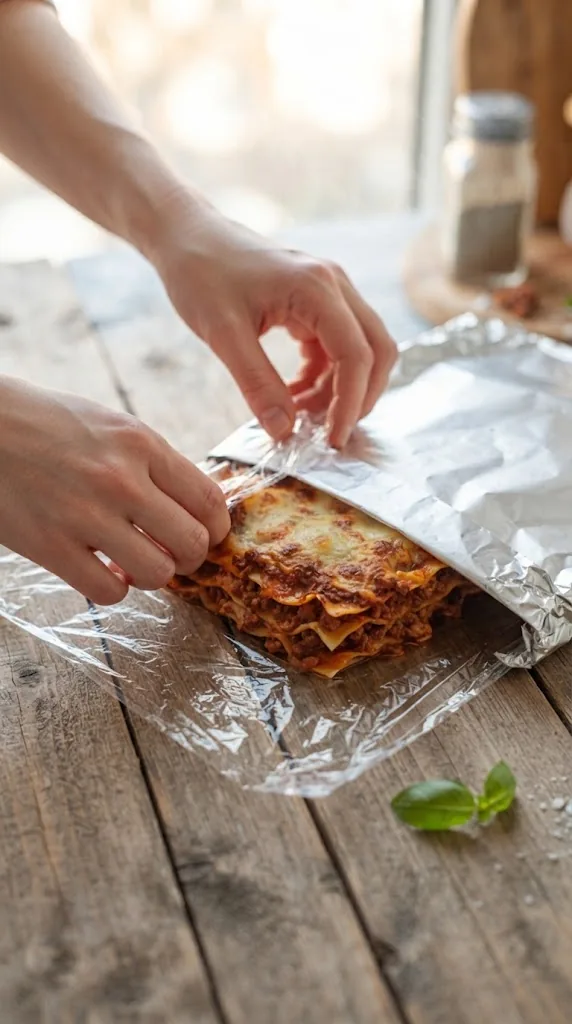
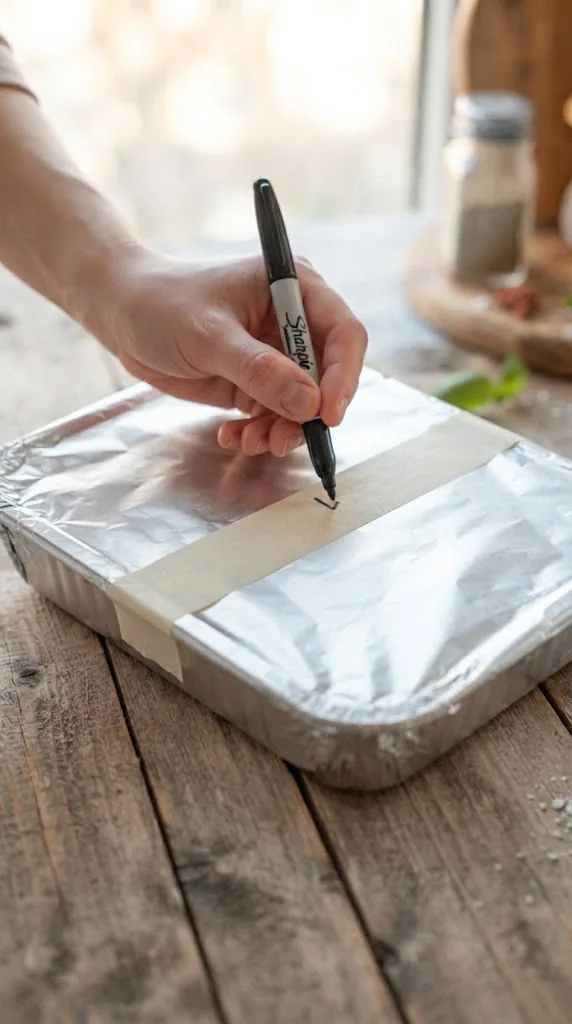
- Wrap the lasagna tightly in a layer of plastic wrap, pressing it directly against the surface, then wrap again in heavy-duty aluminum foil.
- Label the package with the date and contents to track freshness.
Best containers for freezing lasagna
- Freezer bags: press out as much air as you can and freeze them flat so they stack and thaw faster.
- Airtight rigid containers: best for soft or liquid foods. Leave about 1/2 inch of headspace because food expands as it freezes.
- Sheet pan first: freeze pieces in a single layer for an hour or two, then bag them so they don’t clump together.
- Label everything: write the item and the date on every package.
For lasagna: Use heavy-duty aluminum foil pans or oven-safe glass dishes, covering tightly with a layer of plastic wrap and heavy-duty foil to prevent freezer burn.
How to thaw lasagna
- Thaw the lasagna overnight in the refrigerator for the best texture and even heating.
- Bake or microwave the thawed lasagna until piping hot in the center before serving.
How to reheat lasagna
- Preheat the oven to 375°F (190°C) and keep the lasagna covered tightly with aluminum foil to trap steam.
- Bake for about 45 to 60 minutes if thawed, or 75 to 90 minutes if frozen, removing the foil during the last 10 minutes to brown the cheese.
- Ensure the center reaches an internal temperature of 165°F (74°C) before serving.
Best ways to use frozen lasagna
- Great served alongside a fresh green salad and garlic bread for a complete weeknight meal.
- Not ideal for fancy dinner party plating where structural perfection is required, as layers may slide slightly after thawing.
Fixing the texture: If the lasagna appears watery after baking, let it rest for 15 minutes before slicing to allow the sauce and melted cheese to reabsorb excess moisture.
How long lasagna keeps
| Where | How long |
|---|---|
| Freezer (0°F / -18°C) | 2-3 months |
| Refrigerator (40°F / 4°C) | 3 to 4 days |
| Pantry / counter | Not recommended |
Can you refreeze lasagna?
Yes, you can safely refreeze lasagna if it was thawed slowly in the refrigerator and has not been left at room temperature. However, the quality and texture of the cheese, sauce, and pasta will degrade significantly with each freeze.
- Bake or cook the lasagna before refreezing to help the ingredients hold their shape better.
- Portion the lasagna into smaller, individual servings so you only thaw what you need.
- Wrap the portions tightly in plastic wrap and heavy-duty aluminum foil to prevent further freezer burn.
The rules for every food: Can you refreeze food after thawing?
Watch out for
- Ricotta cheese can sometimes become slightly grainy or watery after being frozen and thawed.
- Ensure the dish is completely airtight to prevent freezer burn and drying out the exposed pasta edges.
- Glass baking dishes can crack from thermal shock if moved directly from the freezer to a hot oven.
Food safety notes
Always thaw lasagna safely in the refrigerator rather than on the counter to prevent harmful bacteria growth. If the lasagna was thawed slowly in the refrigerator, any leftovers can be safely refrozen.
Other ways to keep lasagna
- Store leftovers in the refrigerator for up to 3 to 4 days.
- Assemble the lasagna components separately for quick assembly later in the week.
Common questions
Can I freeze lasagna raw or should I cook it first?
You can freeze lasagna either raw or cooked. Unbaked lasagna often yields slightly better pasta texture since it cooks in the sauce during baking, but cooked lasagna is much faster to reheat.
Can I bake lasagna straight from the freezer?
Yes, you can bake frozen lasagna directly in the oven, but you will need to increase the cooking time significantly. Cover it with foil for most of the baking time so the top does not burn before the center heats through.
Can I refreeze thawed lasagna?
You can safely refreeze lasagna if it was thawed slowly in the refrigerator and has not been left at room temperature. However, the quality and texture of the cheese and pasta will degrade with each freeze.
Can I freeze lasagna in a disposable aluminum tray?
Yes, disposable aluminum foil pans work exceptionally well for freezing lasagna because they go straight from the freezer into the oven. Be sure to wrap the top securely with plastic wrap and heavy-duty aluminum foil to keep air out.
Why did the top layer of my lasagna noodles get hard in the freezer?
Exposed pasta edges will dry out and harden if they are not wrapped tightly enough. Ensure your plastic wrap is pressed directly onto the surface of the lasagna before adding the outer layer of foil to lock in moisture.
Sources
- USDA FSIS: Freezing and Food Safety
- FoodSafety.gov: FoodKeeper storage times
- National Center for Home Food Preservation: Freezing
Freezer times are for best quality. Food kept at 0°F (-18°C) stays safe indefinitely, but always thaw it in the fridge, in cold water or in the microwave, never on the counter. When in doubt, throw it out. See the USDA freezing guide.