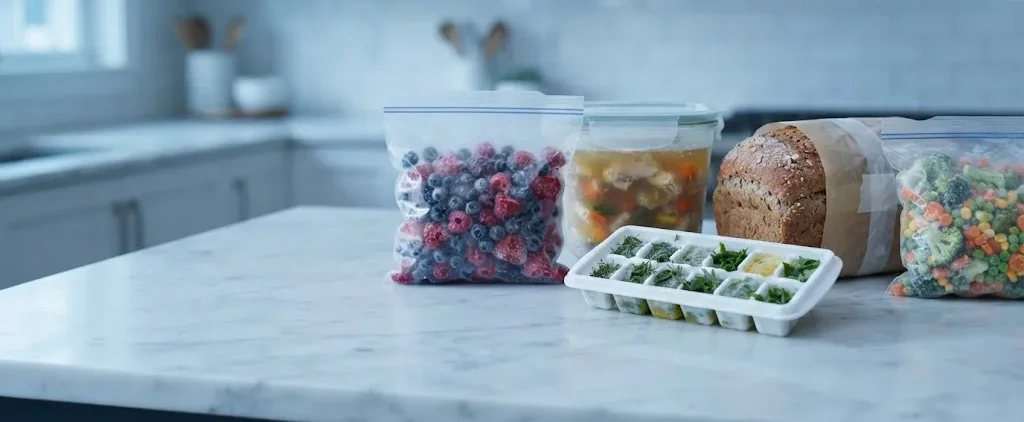
Yes, but you should blanch fresh spinach first before freezing it to lock in color and nutrients, as raw spinach becomes soggy when thawed.
Why
Spinach has a high water content and delicate cell walls. When frozen raw, the water inside the leaves expands as ice crystals form, puncturing the cell walls. Once thawed, the spinach collapses into a slimy, limp mass. Blanching inactivates enzymes that degrade flavor and color, resulting in a much better texture and nutrient retention for cooked dishes. Because of this texture change, frozen spinach is best used in cooked recipes rather than raw salads.
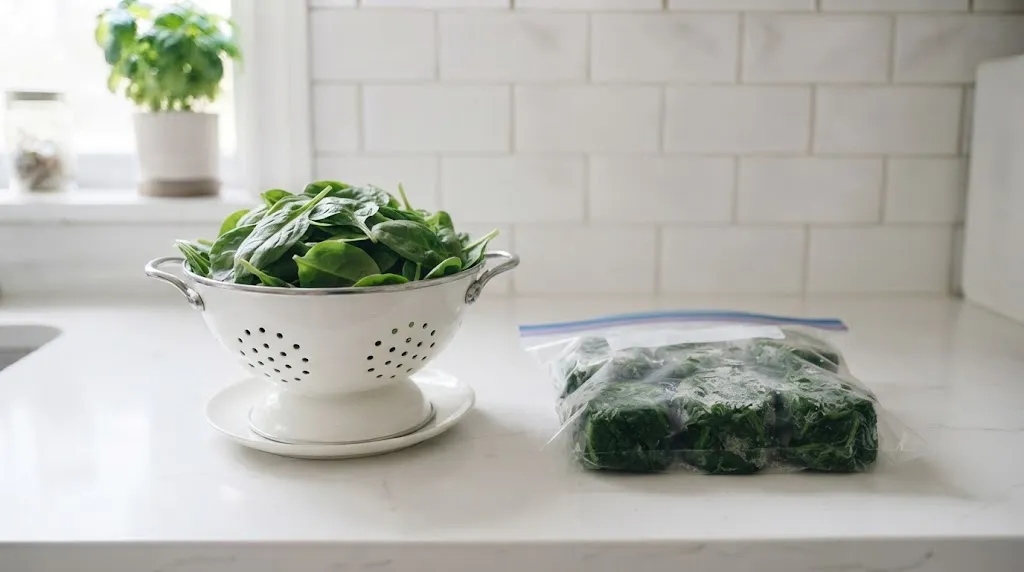
What freezing does to spinach
- Texture: Softens significantly and loses its crisp crunch due to cellular damage from ice crystals.
- Flavor: Becomes slightly more earthy and less bright if blanched improperly, though overall taste remains suitable for cooked dishes.
- Color: Fades to a duller green over extended storage periods, especially if not adequately blanched.
- Moisture: Releases a large amount of liquid as the plant tissues thaw and collapse.
Types of spinach and how they freeze
- Baby Spinach: Baby spinach leaves are more tender and bruise easily, so they require a very brief blanching time of only one minute to prevent them from becoming completely mushy.
- Mature Leaf Spinach: Mature spinach has tougher stems that must be completely removed before blanching, and it benefits from the full two-minute blanch to soften its sturdier structure.
How to freeze spinach
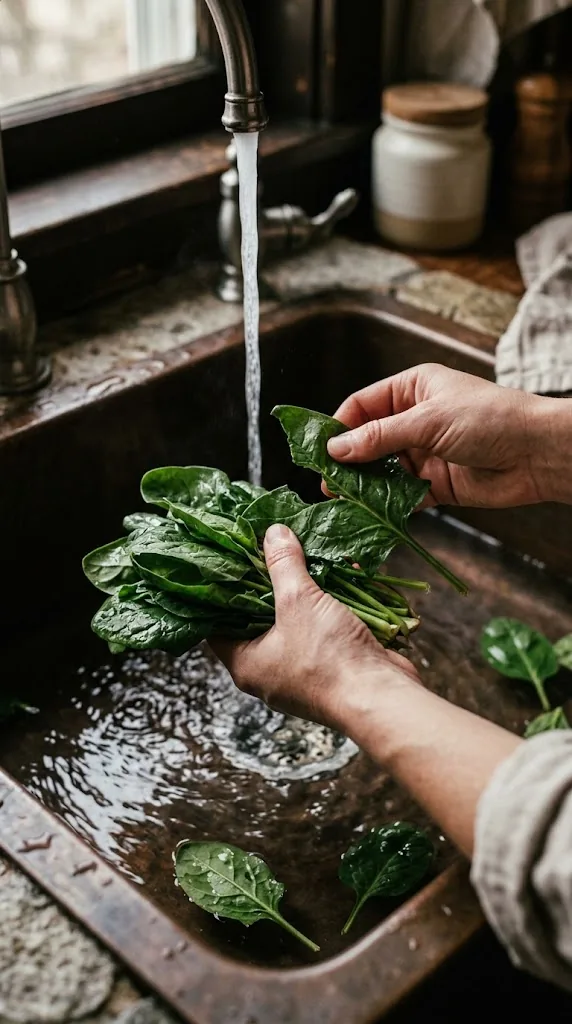
- Wash the spinach thoroughly and remove any tough stems.
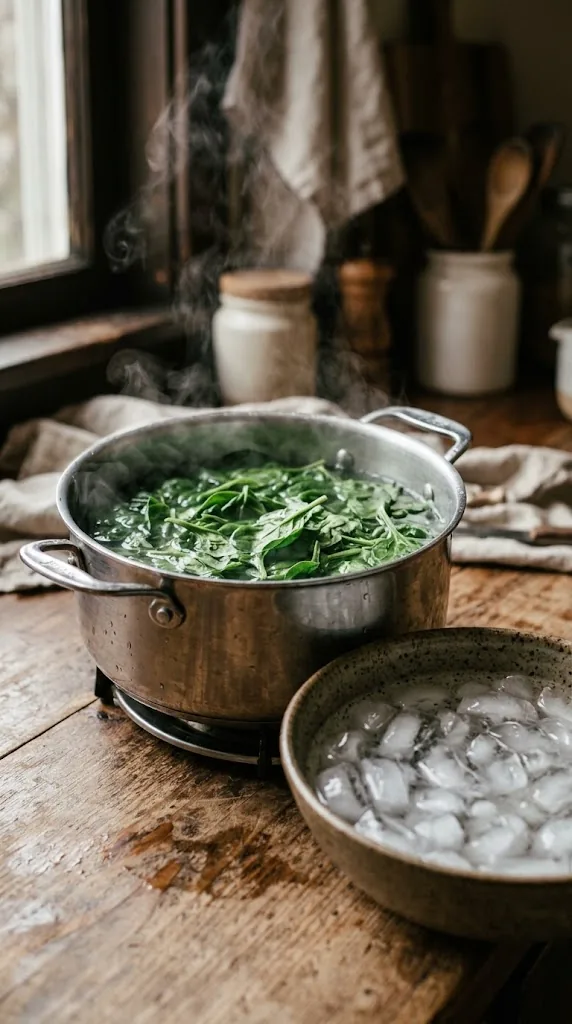
- Boil the spinach in water for two minutes, then immediately plunge it into an ice water bath to stop the cooking.
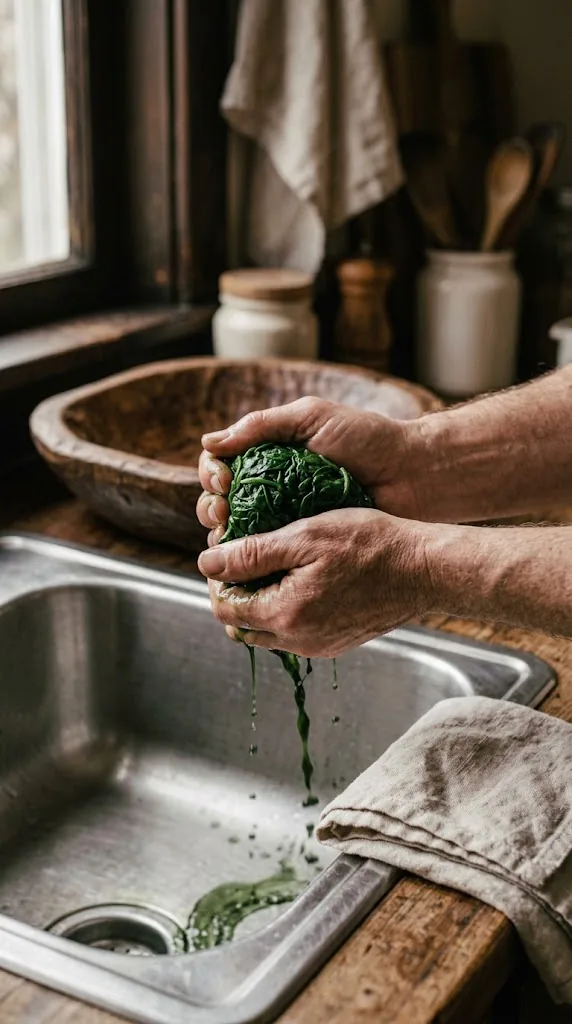
- Squeeze out as much excess moisture as possible with your hands or a clean towel.
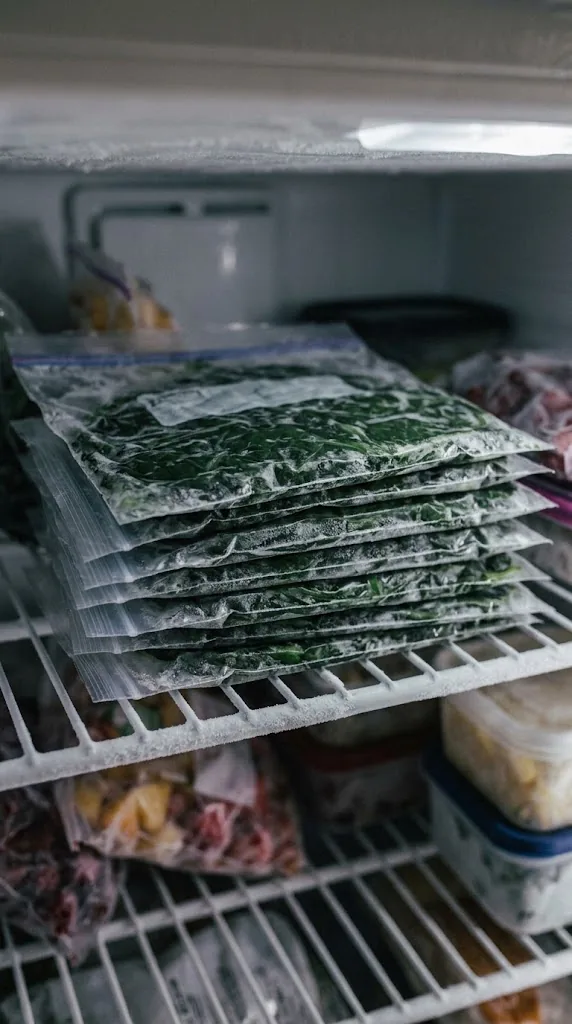
- Pack the spinach into freezer bags or containers, press out the air, and seal tightly.
- Label the package with the current date and place it in the freezer.
Best containers for freezing spinach
- Freezer bags: press out as much air as you can and freeze them flat so they stack and thaw faster.
- Airtight rigid containers: best for soft or liquid foods. Leave about 1/2 inch of headspace because food expands as it freezes.
- Sheet pan first: freeze pieces in a single layer for an hour or two, then bag them so they don’t clump together.
- Label everything: write the item and the date on every package.
For spinach: Pack the blanched and squeezed spinach into heavy-duty freezer bags and press them completely flat into thin sheets to allow for fast thawing and easy portioning.
How to thaw spinach
- Place the frozen spinach in the refrigerator overnight to thaw.
- Submerge the sealed bag in cold water, changing the water every 30 minutes for quick thawing.
- Use it or cook it straight from frozen in soups, stews, or casseroles without prior thawing.
How to reheat spinach
- Drop the frozen spinach block directly into soups, stews, or simmering sauces during the final minutes of cooking.
- Heat the spinach in a covered skillet over medium heat until warmed through and any residual moisture evaporates, ensuring it reaches 165 degrees Fahrenheit if combined with other cooked ingredients.
Best ways to use frozen spinach
- Great in creamy spinach dips and warm casseroles
- Works well stirred into pasta sauces and risottos
- Not suitable for fresh green salads or raw sandwich toppings
Fixing the texture: Drain the thawed spinach thoroughly in a fine-mesh strainer and press firmly with a spoon to remove excess water, which helps restore a denser, more workable consistency.
How long spinach keeps
| Where | How long |
|---|---|
| Freezer (0°F / -18°C) | 10-12 months |
| Refrigerator (40°F / 4°C) | 5-7 days |
| Pantry / counter | Not recommended |
Can you refreeze spinach?
Yes, you can safely refreeze spinach after thawing, but only if it was defrosted in the refrigerator and has not been left at room temperature for more than two hours. However, repeating the freezing process will cause the spinach texture to become even mushier and degrade its overall quality further.
- Cook or bake the spinach into a dish before refreezing it.
- Freeze the spinach in small portions so you only thaw what you need.
- Cool any cooked spinach dishes quickly in shallow containers before placing them in the freezer.
The rules for every food: Can you refreeze food after thawing?
Watch out for
- Never attempt to use thawed spinach in salads because it will be unpleasantly limp and watery.
- Squeeze out as much water as possible before freezing to prevent massive ice blocks and freezer burn.
- Do not leave blanched spinach at room temperature for too long before freezing to maintain food safety.
Food safety notes
Always cool cooked or blanched spinach quickly in shallow containers and place it in the freezer within two hours to prevent bacterial growth. Spinach thawed safely in the refrigerator can be refrozen, though quality will continue to decline.
Other ways to keep spinach
- Store fresh spinach in the refrigerator in a breathable bag with a paper towel to absorb moisture for up to a week.
- Dehydrate spinach leaves in a food dehydrator to make a shelf-stable powder for smoothies and soups.
- Sauté the spinach in olive oil and garlic before storing it in the refrigerator for a few days.
Common questions
Can I freeze raw spinach without blanching?
You can freeze raw spinach without blanching if you plan to toss it straight into fruit smoothies, but it will lose its vibrant color and turn mushy if thawed.
How do I prevent frozen spinach from clumping into a solid block?
Squeezing out all excess water and pressing the spinach flat into freezer bags before freezing helps prevent giant ice blocks.
Can I refreeze spinach that has been thawed?
You can safely refreeze thawed spinach only if it was defrosted in the refrigerator, though the texture will degrade even further.
Can I freeze store-bought canned spinach?
Canned spinach should not be frozen in its original metal can because the liquid expands and can cause the container to burst. If you have leftover canned spinach, transfer it to a freezer-safe container before freezing.
Why does my frozen spinach taste slightly bitter?
Bitterness in frozen spinach usually occurs if the leaves were not blanched long enough to neutralize the natural enzymes, or if the spinach was stored in the freezer for longer than the recommended ten to twelve months.
Sources
- USDA FSIS: Freezing and Food Safety
- FoodSafety.gov: FoodKeeper storage times
- National Center for Home Food Preservation: Freezing
Freezer times are for best quality. Food kept at 0°F (-18°C) stays safe indefinitely, but always thaw it in the fridge, in cold water or in the microwave, never on the counter. When in doubt, throw it out. See the USDA freezing guide.