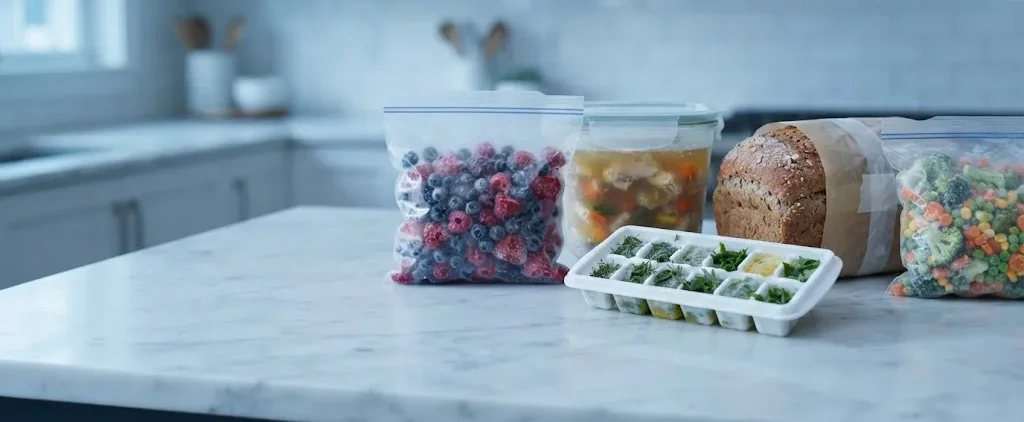
Yes, but freezing raw whole tomatoes alters their texture, making them suitable mainly for cooked dishes rather than fresh slicing.
Why
Tomatoes have a very high water content. When you freeze them, the water inside expands and forms large ice crystals that puncture the cell walls of the fruit. As a result, once thawed, the tomatoes become extremely mushy and lose their crisp, firm bite. While they are no longer suitable for fresh salads or slicing on sandwiches, they retain their flavor and work exceptionally well in cooked applications like soups, stews, sauces, and chilis after being thawed.
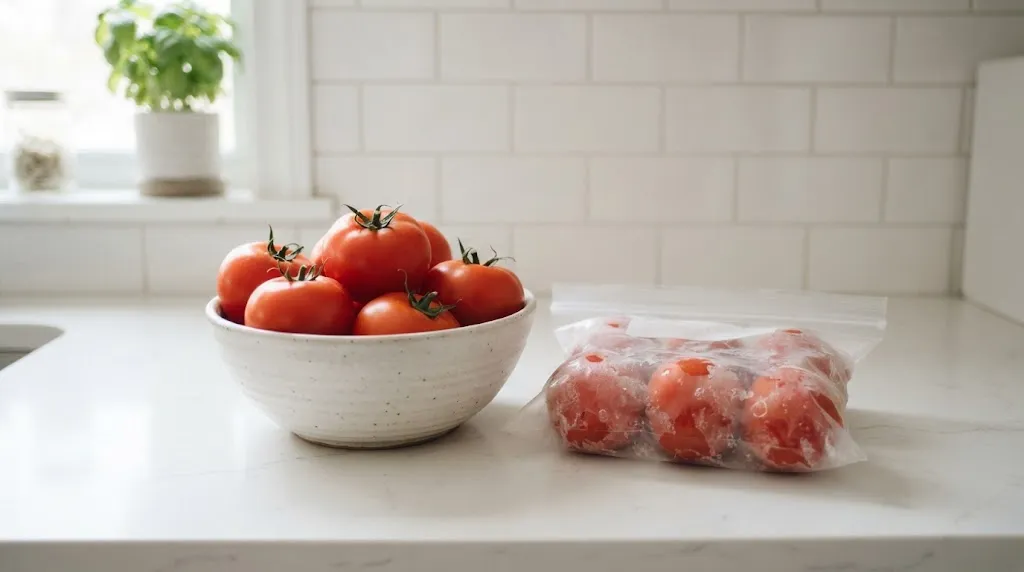
What freezing does to tomatoes
- Texture: Becomes very mushy and soft due to expanded water crystals breaking cell walls.
- Flavor: Remains largely unchanged, tasting virtually identical to fresh when used in cooked dishes.
- Moisture: Releases a significant amount of excess liquid and water upon thawing.
Types of tomatoes and how they freeze
- Whole raw tomatoes: Freeze wonderfully for soups and stews, and the skins will slip right off as they thaw.
- Sliced or diced raw tomatoes: Release the most liquid and should be packed tightly in containers for easy measuring in recipes later.
- Cooked tomato sauce: Freezes exceptionally well with minimal quality loss since the cellular breakdown has already happened.
How to freeze tomatoes
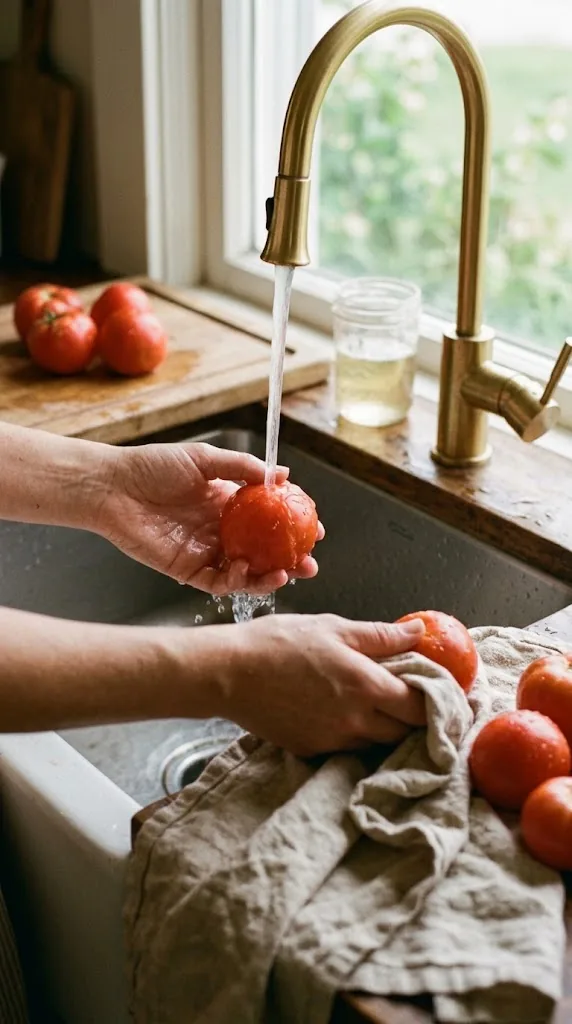
- Wash and dry the tomatoes thoroughly.
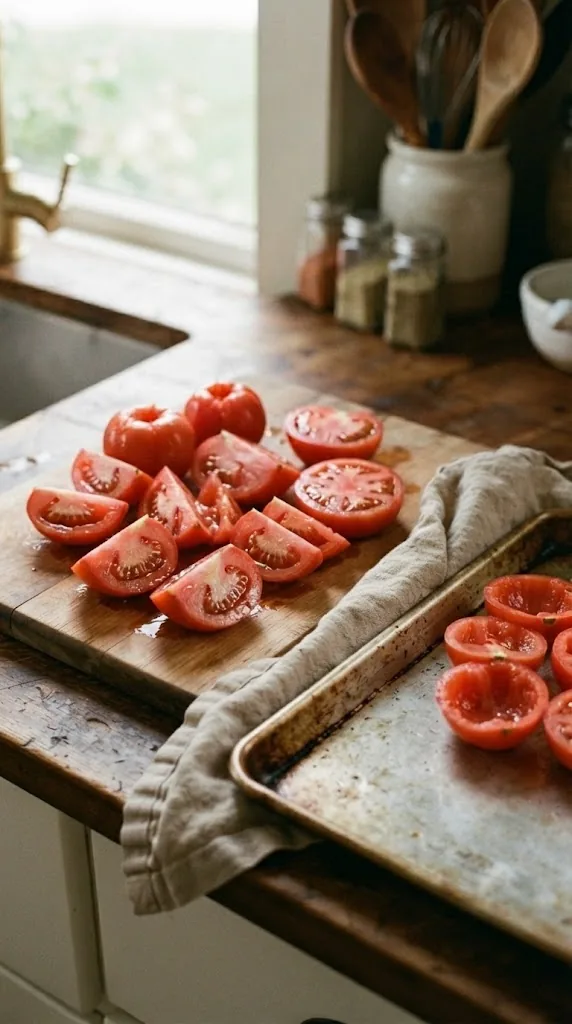
- Core the tomatoes and slice them or leave them whole depending on your preference.
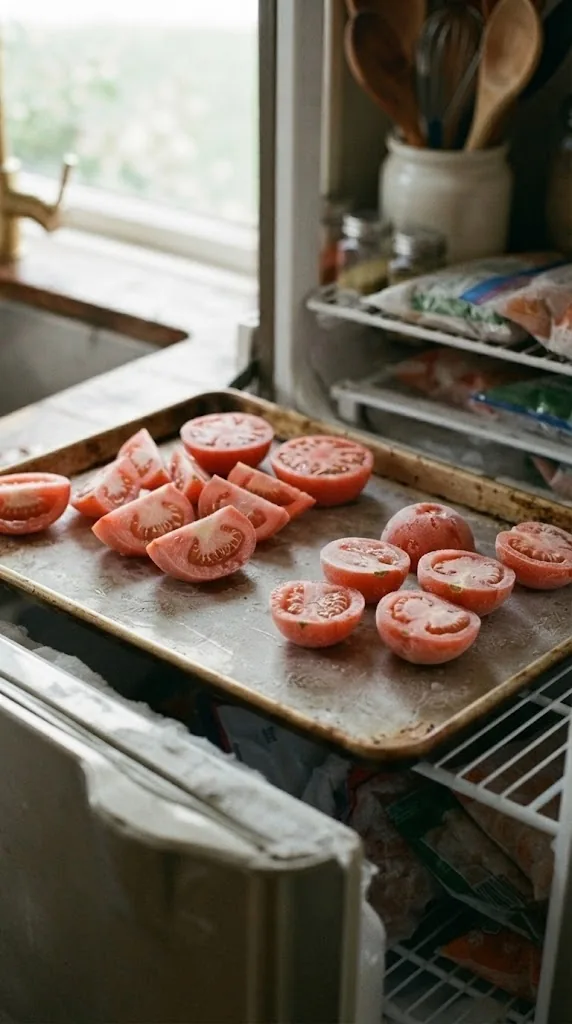
- Place tomatoes on a baking sheet and freeze until solid to prevent them from sticking together.
- Transfer the frozen tomatoes into heavy-duty freezer bags or airtight containers.
- Squeeze out as much air as possible to prevent freezer burn, then seal, label with the date, and freeze.
Best containers for freezing tomatoes
- Freezer bags: press out as much air as you can and freeze them flat so they stack and thaw faster.
- Airtight rigid containers: best for soft or liquid foods. Leave about 1/2 inch of headspace because food expands as it freezes.
- Sheet pan first: freeze pieces in a single layer for an hour or two, then bag them so they don’t clump together.
- Label everything: write the item and the date on every package.
For tomatoes: Flash-freeze sliced tomatoes on a baking sheet before transferring them to heavy-duty freezer bags. Leave about half an inch of headspace if freezing pureed or cooked tomato sauces in rigid containers to allow for expansion.
How to thaw tomatoes
- Transfer the tomatoes from the freezer to the refrigerator and let them thaw completely.
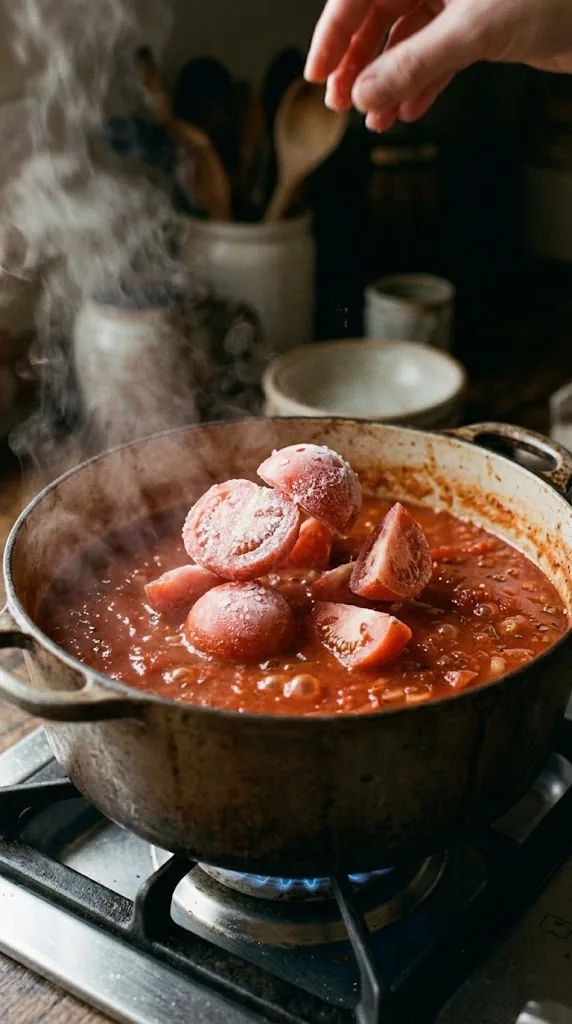
- Alternatively, you can drop frozen tomatoes directly into your cooking pot without thawing if you are making a soup, stew, or sauce.
How to reheat tomatoes
- Drop frozen whole or diced tomatoes directly into simmering soups, stews, or chili.
- Simmer thawed or frozen tomato sauces on the stovetop over medium-low heat.
- Heat dishes thoroughly until steaming hot, stirring occasionally to ensure even temperature.
Best ways to use frozen tomatoes
- Great in marinara sauces, chilis, and hearty vegetable soups
- Works well in slow-cooker braises and casseroles
- Not suitable for fresh salsas, green salads, or raw sandwich toppings
Fixing the texture: Drain excess watery liquid in a colander before using, or allow the extra moisture to simply cook off while simmering in your recipe.
How long tomatoes keeps
| Where | How long |
|---|---|
| Freezer (0°F / -18°C) | 8-12 months |
| Refrigerator (40°F / 4°C) | 3-5 days after thawing |
| Pantry / counter | Not recommended |
Can you refreeze tomatoes?
Yes, you can safely refreeze tomatoes if they were thawed in the refrigerator and not left out over two hours, but doing so will make their texture even mushier and softer than before. If the tomatoes were thawed using another method, you must cook them into a dish before freezing again.
- Cook the thawed tomatoes into a sauce or soup before refreezing to help salvage their consistency.
- Freeze tomatoes in small, portion-controlled containers so you only thaw what you need for a single recipe.
- Cool any cooked tomato dishes quickly in shallow containers and refrigerate or freeze them within two hours of cooking.
The rules for every food: Can you refreeze food after thawing?
Watch out for
- Thawed raw tomatoes will be very mushy and watery, so do not expect them to retain a firm texture for fresh use.
- Freezer burn can alter the flavor if tomatoes are not stored in airtight containers.
- Frozen tomatoes release a lot of liquid as they thaw, so thaw them in a bowl and add the juice to your recipe.
Food safety notes
Always thaw frozen tomatoes safely in the refrigerator rather than on the kitchen counter to prevent bacterial growth. Tomatoes that were thawed safely in the fridge can be refrozen, though their texture will become even mushier.
Other ways to keep tomatoes
- Store whole unripe tomatoes on the counter at room temperature out of direct sunlight.
- Can tomatoes with added lemon juice or citric acid, using a tested recipe, for long-term storage.
- Dehydrate tomato slices in a food dehydrator to make dried tomatoes.
Common questions
Do I need to blanch tomatoes before freezing them?
Blanching is not strictly required, but dipping tomatoes in boiling water for 30 seconds makes the skins very easy to peel off before you put them in the freezer.
Can I freeze store-bought canned tomatoes?
You should never freeze tomatoes inside an unopened metal can. Instead, transfer any leftover canned tomatoes into a freezer-safe container, leaving a little space at the top, before freezing.
Can I refreeze thawed tomatoes?
You can safely refreeze tomatoes if they were thawed in the refrigerator, though the texture will become even softer and mushier with each freeze.
Do I need to remove the skins before freezing tomatoes?
You do not need to remove the skins before freezing, as they soften during cooking and can easily be peeled off after thawing. However, blanching them briefly beforehand makes skin removal effortless if you prefer a smooth final texture.
Can I freeze homegrown green tomatoes?
Yes, green tomatoes can be frozen successfully just like ripe ones, and they work very well when thawed for making fried green tomatoes or green tomato relishes.
Sources
- USDA FSIS: Freezing and Food Safety
- FoodSafety.gov: FoodKeeper storage times
- National Center for Home Food Preservation: Freezing
Freezer times are for best quality. Food kept at 0°F (-18°C) stays safe indefinitely, but always thaw it in the fridge, in cold water or in the microwave, never on the counter. When in doubt, throw it out. See the USDA freezing guide.