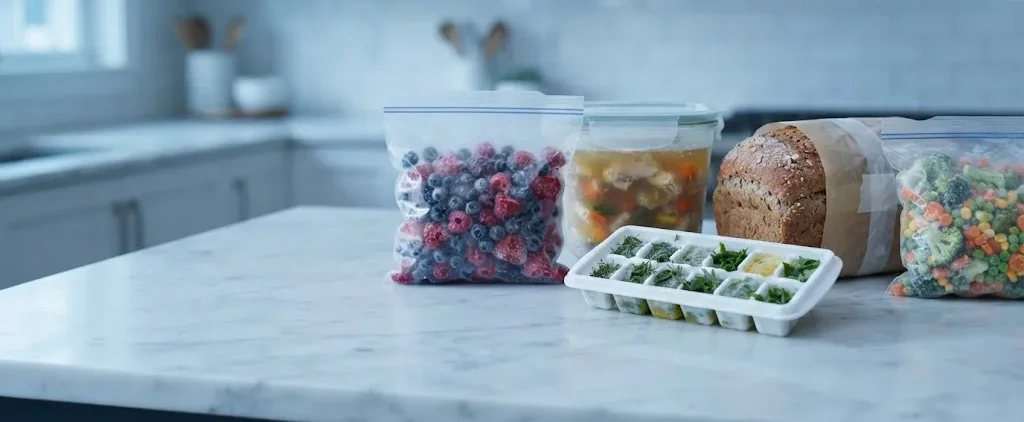
Yes, but you must blanch it first, and it will lose its crisp texture.
Why
Cabbage has a very high water content and delicate cell walls. When raw cabbage freezes, ice crystals puncture these walls, causing the vegetable to become limp, watery, and mushy once thawed. Because of this dramatic structural change, raw cabbage is not suitable for slews or fresh salads after freezing. However, if you blanch it first to stop enzyme activity, it freezes quite well and remains safe to use in cooked dishes where texture is not the main priority.
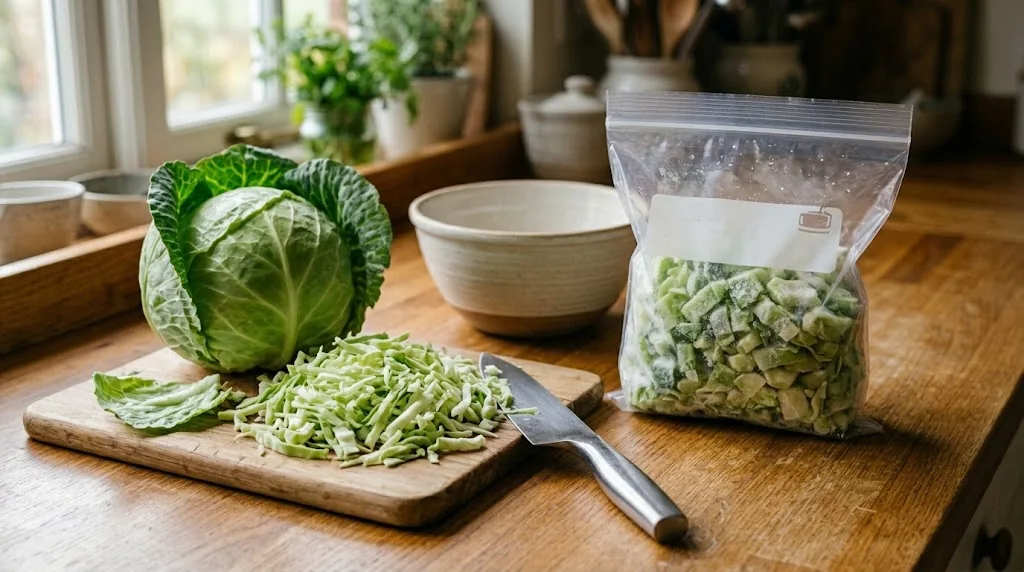
What freezing does to cabbage
- Texture: Becomes significantly softer, limper, and loses all raw crunch due to cell wall collapse.
- Flavor: Turns slightly milder and sweeter, losing some of its initial peppery bite.
- Moisture: Releases a substantial amount of water upon thawing, requiring thorough draining for certain applications.
Types of cabbage and how they freeze
- Green Cabbage: Freezes well after blanching and holds up best in hearty cooked dishes like stews.
- Red Cabbage: Blanching may cause the vibrant purple color to bleed slightly or fade, but it remains safe to freeze for cooked meals.
- Savoy Cabbage: Has more delicate, crinkled leaves that become even softer than green varieties, so blanch it very briefly and use strictly in soups.
How to freeze cabbage
- Remove any bruised outer leaves and wash the cabbage thoroughly under running water.
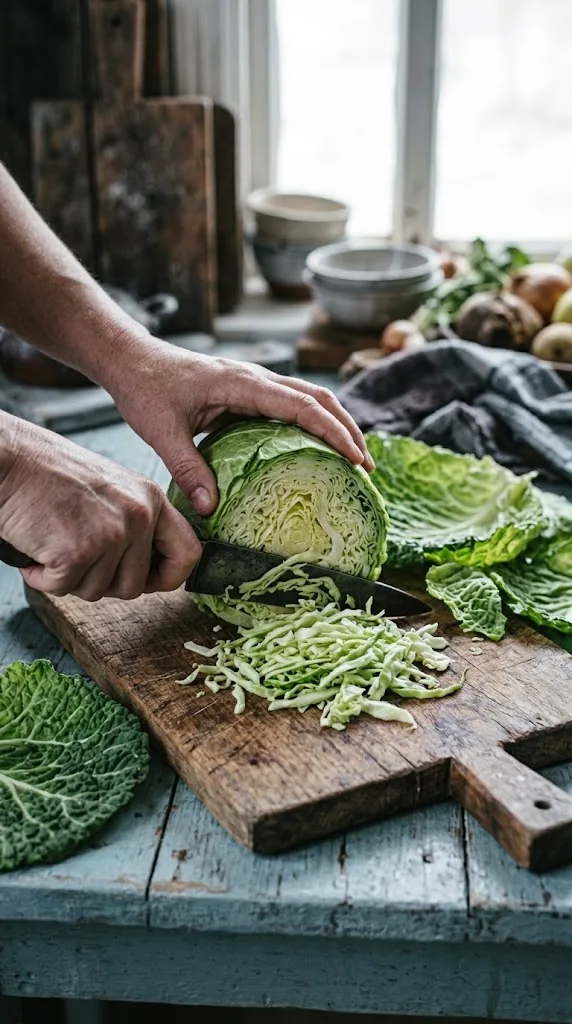
- Cut the head into wedges, shred it, or separate individual leaves depending on your preference.
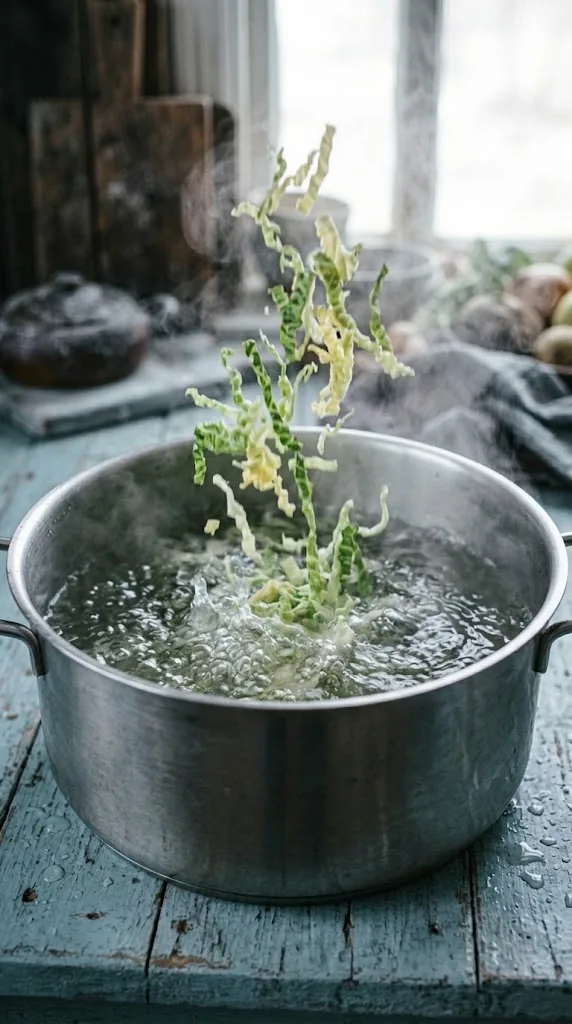
- Blanch shredded or chopped cabbage in boiling water for 90 seconds, or wedges for 3 minutes, to preserve color and nutrients.
- Transfer the blanched cabbage immediately to a bowl of ice water to stop the cooking process, then drain and dry thoroughly.
- Pack the cabbage tightly into freezer-safe bags or containers, squeezing out as much air as possible to prevent freezer burn.
- Label the package with the date and freeze for up to 12 months.
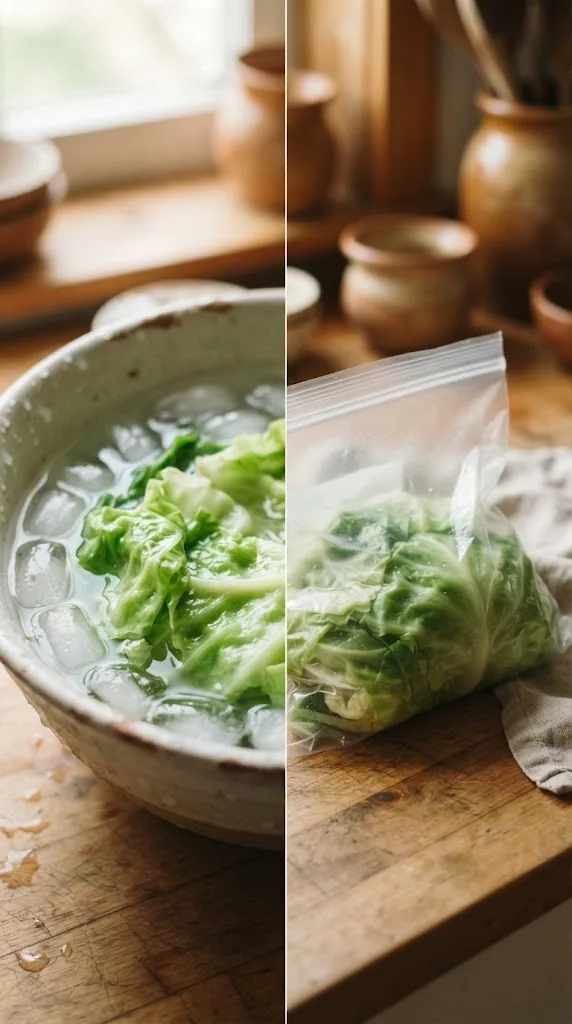
Best containers for freezing cabbage
- Freezer bags: press out as much air as you can and freeze them flat so they stack and thaw faster.
- Airtight rigid containers: best for soft or liquid foods. Leave about 1/2 inch of headspace because food expands as it freezes.
- Sheet pan first: freeze pieces in a single layer for an hour or two, then bag them so they don’t clump together.
- Label everything: write the item and the date on every package.
For cabbage: Pack blanched cabbage tightly into heavy-duty freezer bags while pressing out as much air as possible to prevent freezer burn.
How to thaw cabbage
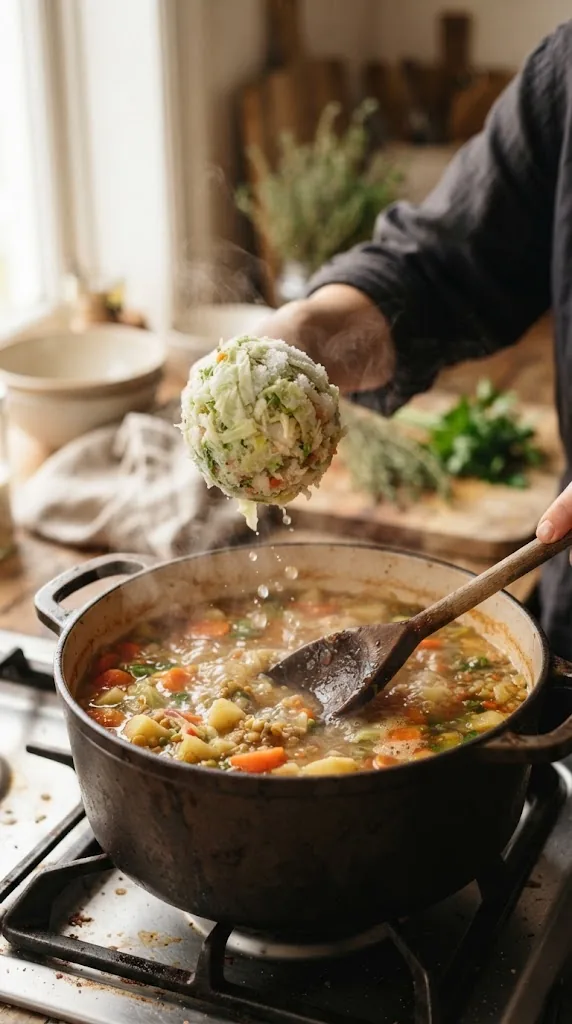
- Use the cabbage straight from frozen in cooked dishes like soups, stews, and casseroles without thawing first.
- If using in a recipe that requires thawing, place the bag in the refrigerator overnight.
- Alternatively, submerge the sealed bag in cold water, changing the water every 30 minutes until thawed.
How to reheat cabbage
- Drop frozen cabbage directly into simmering soups, stews, or casseroles without prior thawing.
- Cook until the cabbage is heated completely through, ensuring any surrounding dish reaches an internal temperature of 165°F (74°C) if it includes leftovers or cooked meat.
Best ways to use frozen cabbage
- Great in vegetable soups and beef stews
- Works well stirred into warm noodle casseroles
- Not suitable for fresh salads, slaws, or raw garnishes
Fixing the texture: Since freezing permanently damages the cell walls, there is no way to restore the original crunch. Instead, embrace its soft texture in blended soups or braised dishes where crispness is not expected.
How long cabbage keeps
| Where | How long |
|---|---|
| Freezer (0°F / -18°C) | 10-12 months |
| Refrigerator (40°F / 4°C) | 3 to 6 weeks for whole heads, up to 1 week for shredded raw cabbage |
| Pantry / counter | Not recommended for long-term storage, as room temperature causes wilting within a few days |
Can you refreeze cabbage?
Yes, you can refreeze cabbage as long as it was safely thawed in the refrigerator and not left out at room temperature for more than two hours. However, a second freeze will cause the texture to become even softer and more waterlogged, further reducing its overall quality.
- Cook or incorporate the cabbage into a dish like a soup or casserole before refreezing it rather than freezing it plain again.
- Freeze the cabbage in small portions so you only thaw what you plan to use immediately.
- Cool any leftover cooked cabbage dishes quickly in shallow containers and refrigerate them within two hours before freezing.
The rules for every food: Can you refreeze food after thawing?
Watch out for
- Do not expect thawed cabbage to have a crunchy texture, as it will be soft and limp.
- Raw cabbage should never be frozen whole or without blanching, or it will turn into a bitter, unappealing mush.
- Ensure all excess moisture is removed before bagging to minimize large ice crystals and freezer burn.
Food safety notes
Always cool cooked cabbage dishes quickly in shallow containers and refrigerate or freeze them within 2 hours of cooking. If cabbage was safely thawed in the refrigerator, it can be refrozen within 3 to 4 days, though quality will further decline.
Other ways to keep cabbage
- Store whole heads of cabbage in the crisper drawer of your refrigerator for up to several weeks.
- Ferment the cabbage into homemade sauerkraut to preserve it for long periods with great flavor.
- Store shredded cabbage in airtight containers in the fridge for up to a week.
Common questions
Can I freeze raw cabbage without blanching?
It is not recommended. Unblanched raw cabbage will become extremely mushy, discolored, and lose its flavor during freezing due to active plant enzymes.
Can I use frozen cabbage in coleslaw?
No. Freezing destroys the cell structure, making the cabbage limp and watery, which ruins the crisp texture required for fresh salads and coleslaw.
How can I tell if frozen cabbage has gone bad?
If the cabbage develops a sour odor, severe freezer burn, or a slimy texture after thawing, it should be discarded for quality and safety reasons.
Can I freeze cooked cabbage dishes like cabbage rolls?
Yes, stuffed cabbage rolls freeze very well after they have been fully cooked. Let them cool quickly, pack them tightly in a freezer-safe container with their sauce, and freeze for up to 3 months.
Should I salt shredded cabbage before freezing it?
Salting is not necessary unless you are actively fermenting it into sauerkraut. For standard freezing, simply blanch the cabbage in plain boiling water, chill it in an ice bath, and pack it directly into bags.
Sources
- USDA FSIS: Freezing and Food Safety
- FoodSafety.gov: FoodKeeper storage times
- National Center for Home Food Preservation: Freezing
Freezer times are for best quality. Food kept at 0°F (-18°C) stays safe indefinitely, but always thaw it in the fridge, in cold water or in the microwave, never on the counter. When in doubt, throw it out. See the USDA freezing guide.