Only if you plan to puree or blend them afterward, as whole or sliced cucumbers become soggy when thawed.
Why
Cucumbers have an extremely high water content, hovering around 95 percent. When you freeze them, the water inside expands as it forms large ice crystals, which rupture the delicate cell walls of the vegetable. Once thawed, all that trapped water escapes, leaving you with a mushy, waterlogged mess that loses its characteristic crisp crunch entirely. They are no good for a fresh salad after freezing, but you can still use the thawed pulp or juice in smoothies and cold soups.
What freezing does to cucumbers
- Texture: Turns completely soft, mushy, and loses all its natural crunch.
- Moisture: Releases a large amount of water once thawed due to ruptured cell walls.
- Flavor: Becomes slightly muted and watery compared to fresh cucumbers.
Types of cucumbers and how they freeze
- English cucumbers: Due to their higher water content and thinner skin, they turn even more waterlogged than standard varieties and require thorough draining.
- Pickling cucumbers: These are firmer with less water, but they still lose their structural integrity in the freezer and are best preserved via pickling rather than plain freezing.
How to freeze cucumbers
- Wash the cucumbers thoroughly and trim the ends off both sides.
- Peel the skin if desired, as freezing can make tough skins even more unappealing.
- Slice, chop, or purée the cucumbers depending on your intended use.
- Pack the pieces tightly into heavy-duty freezer bags or airtight containers.
- Squeeze out as much excess air as possible to minimize freezer burn.
- Label the bag with the current date and use within the optimal timeframe.
Best containers for freezing cucumbers
- Freezer bags: press out as much air as you can and freeze them flat so they stack and thaw faster.
- Airtight rigid containers: best for soft or liquid foods. Leave about 1/2 inch of headspace because food expands as it freezes.
- Sheet pan first: freeze pieces in a single layer for an hour or two, then bag them so they don’t clump together.
- Label everything: write the item and the date on every package.
For cucumbers: Pack pureed or chopped cucumbers tightly into heavy-duty freezer bags while removing as much air as possible to prevent freezer burn.
How to thaw cucumbers
- Place the frozen cucumbers in the refrigerator overnight to thaw gradually.
- Drain any excess liquid thoroughly before adding the cucumber pulp to your recipe.
- Use thawed cucumbers immediately in blended drinks or soups and do not refreeze.
Best ways to use frozen cucumbers
- Great in blended green smoothies and cold gazpacho soups
- Not for fresh salads, sandwich toppings, or crudité platters
Fixing the texture: There is no way to restore the original crunch, but draining the thawed cucumber pulp through a fine-mesh strainer will remove excess water.
How long cucumbers keeps
| Where | How long |
|---|---|
| Freezer (0°F / -18°C) | 6-8 months |
| Refrigerator (40°F / 4°C) | 1 week |
| Pantry / counter | 2-3 days |
Can you refreeze cucumbers?
No, you should not refreeze cucumbers once they have thawed. The second freeze will degrade the remaining texture even further and turn the already mushy pulp into an unappealing liquid mess.
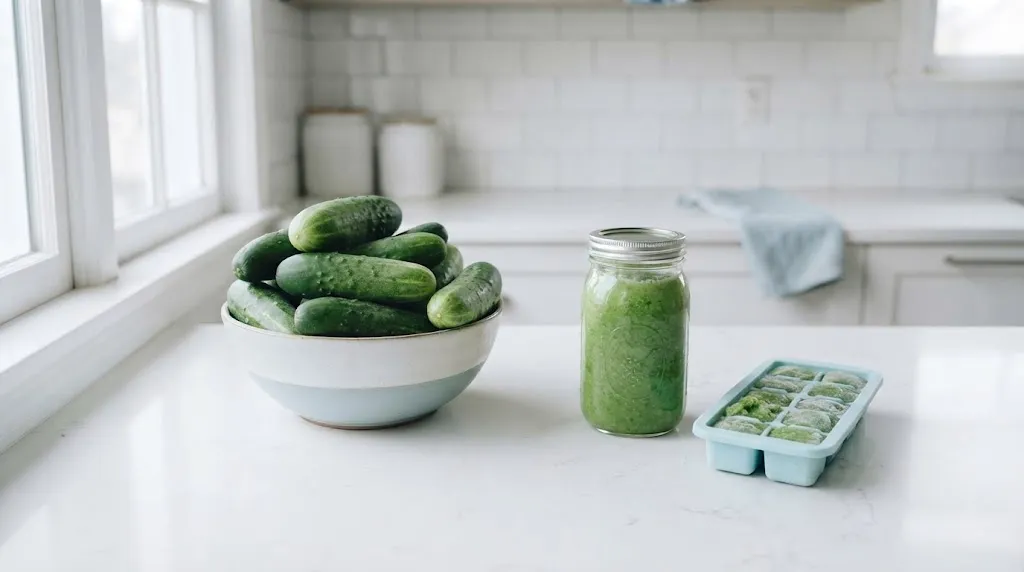
- Freeze cucumber pulp in small portions or ice cube trays so you only thaw what you need for smoothies.
- Never refreeze cucumbers that have been left at room temperature for more than two hours.
The rules for every food: Can you refreeze food after thawing?
Watch out for
- Expect a severe change in texture, turning crisp cucumbers into a soft and watery mush.
- Freezer burn can easily develop if the cucumbers are not tightly sealed in airtight packaging.
- Do not expect to use thawed cucumbers in fresh salads, sandwiches, or vegetable platters.
Food safety notes
Always thaw frozen cucumbers in the refrigerator and use them immediately once defrosted. Never refreeze cucumbers once they have completely thawed.
Other ways to keep cucumbers
- Store whole cucumbers unwashed in the crisper drawer of your refrigerator wrapped in paper towels.
- Pickle your surplus cucumbers in a vinegar brine to enjoy a crunchy snack for months.
- Dehydrate cucumber slices in a food dehydrator to make homemade vegetable chips.
Common questions
Can I freeze whole cucumbers without slicing them?
Freezing whole cucumbers is not recommended because it increases the risk of uneven freezing and makes them even harder to portion later. Slicing or pureeing them beforehand is always the best approach.
Why do my thawed cucumbers look so watery and mushy?
Ice crystals formed during the freezing process rupture the cellular walls of the high-water vegetable. When thawed, the water simply leaks out, which destroys the fresh crunch.
Can I refreeze cucumbers after they have thawed?
No, you should not refreeze cucumbers once they have thawed. The second freeze will degrade the remaining texture even further and increase the risk of spoilage.
Can I freeze cucumber juice instead of the pulp?
Yes, freezing freshly extracted cucumber juice in ice cube trays works wonderfully for adding to smoothies or using in homemade face masks later.
Will adding salt before freezing help preserve the crunch?
Salting cucumbers before freezing actually draws out even more moisture through osmosis, making the thawed result even more watery rather than crunchier.
Sources
- USDA FSIS: Freezing and Food Safety
- FoodSafety.gov: FoodKeeper storage times
- National Center for Home Food Preservation: Freezing
Freezer times are for best quality. Food kept at 0°F (-18°C) stays safe indefinitely, but always thaw it in the fridge, in cold water or in the microwave, never on the counter. When in doubt, throw it out. See the USDA freezing guide.