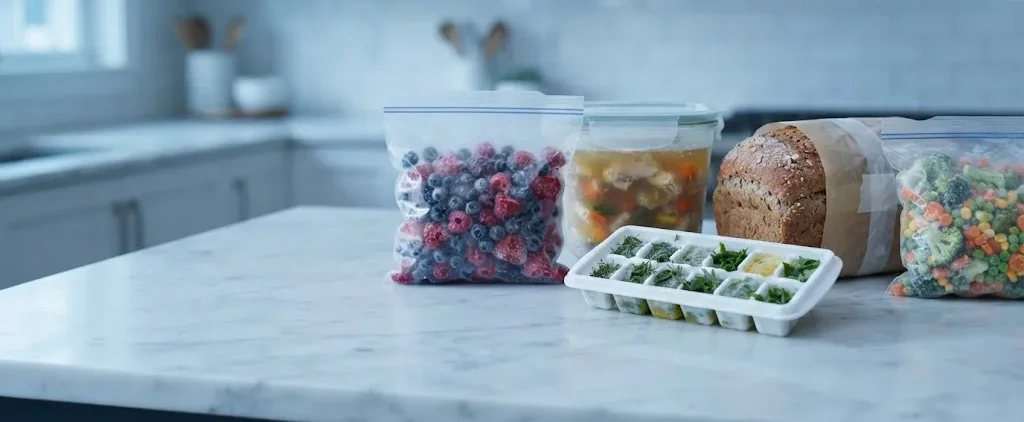
Yes, but celery loses its crisp texture and becomes very limp when frozen, so it is only suitable for cooked dishes.
Why
Celery has a very high water content, with rigid cell walls made of fiber that give it its signature crunch. When you freeze celery, the water inside expands as it forms ice crystals, which rupture these cell walls. Once thawed, the celery completely loses its structural integrity and becomes soft and watery. While it is safe to eat, you can no longer use it raw in salads or as a crunchy snack. However, it still works well when added directly to cooked recipes like soups, stews, and casseroles where texture is not the main focus.
What freezing does to celery
- Texture: Becomes soft, limp, and watery due to the rupture of cell walls from expanding ice crystals.
- Flavor: Retains most of its savory taste when cooked, though raw intensity diminishes slightly.
- Color: Maintains its green hue well if properly blanched before freezing.
- Moisture: Releases excess water as it thaws, which can add extra liquid to your recipes.
Types of celery and how they freeze
- Whole stalks vs. chopped celery: Whole stalks are far too limp and difficult to manage after freezing, so chopping them into bite-sized pieces or slices before freezing is always the best approach.
- Raw vs. cooked celery: Freezing raw celery that has been blanched works well for future cooked dishes, while pre-cooking celery directly into a soup or stew also freezes successfully within that dish.
How to freeze celery
- Wash the celery stalks thoroughly and trim off the leaves and base.
- Chop the celery into your preferred size for future recipes.
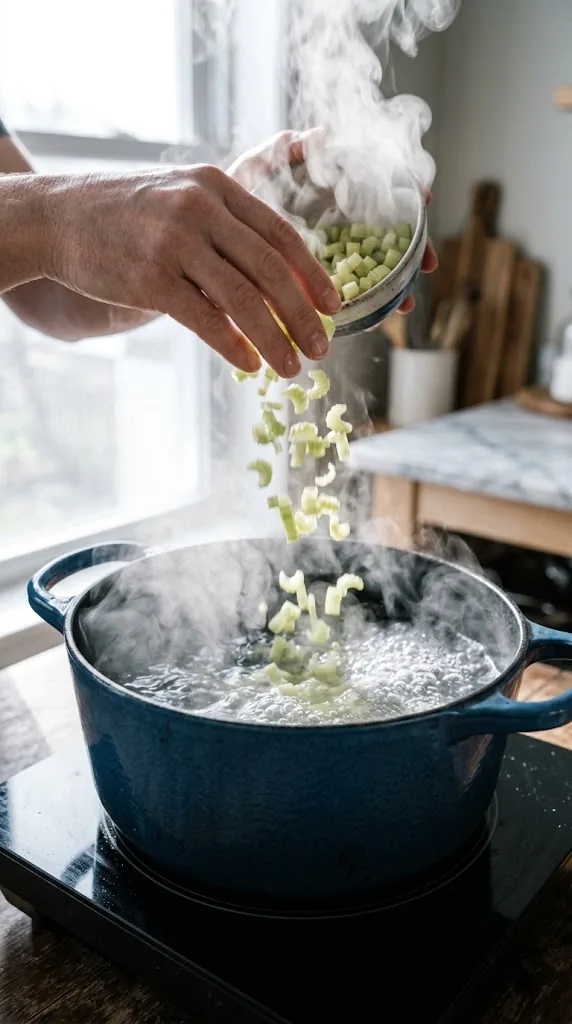
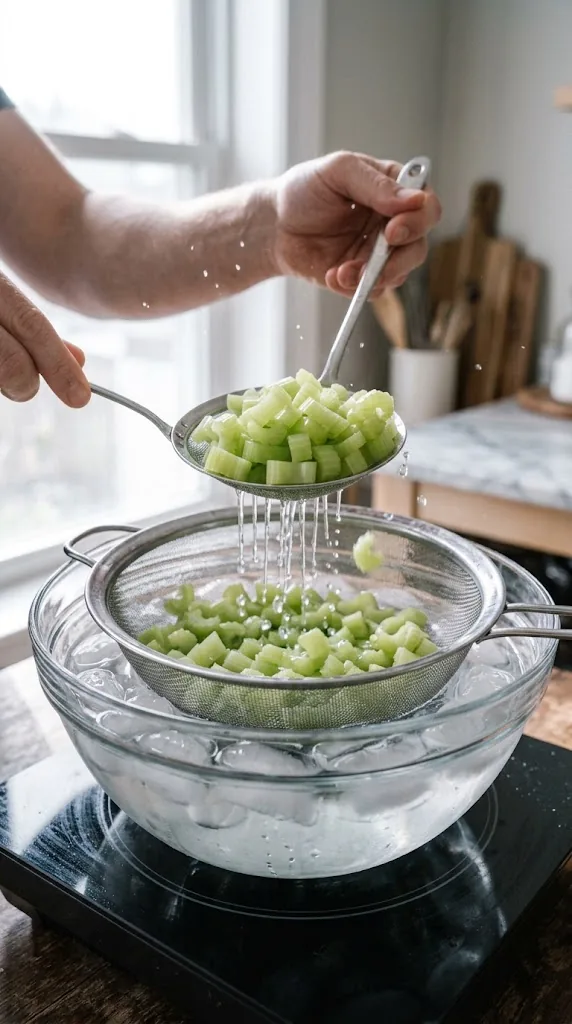
- Blanch the chopped celery in boiling water for two to three minutes, then transfer immediately to an ice bath to stop the cooking.
- Drain the celery completely and pat it dry with clean paper towels.
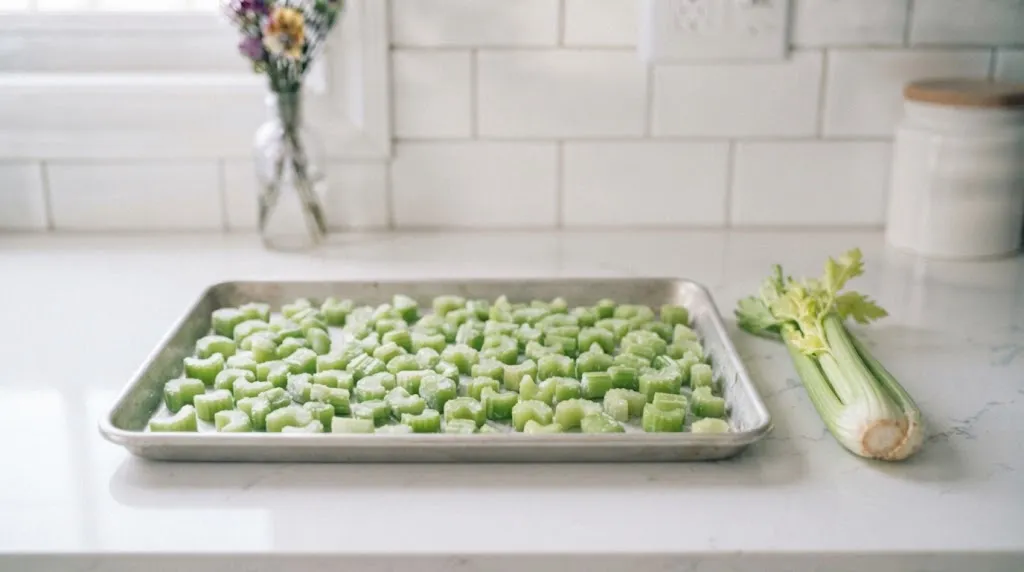
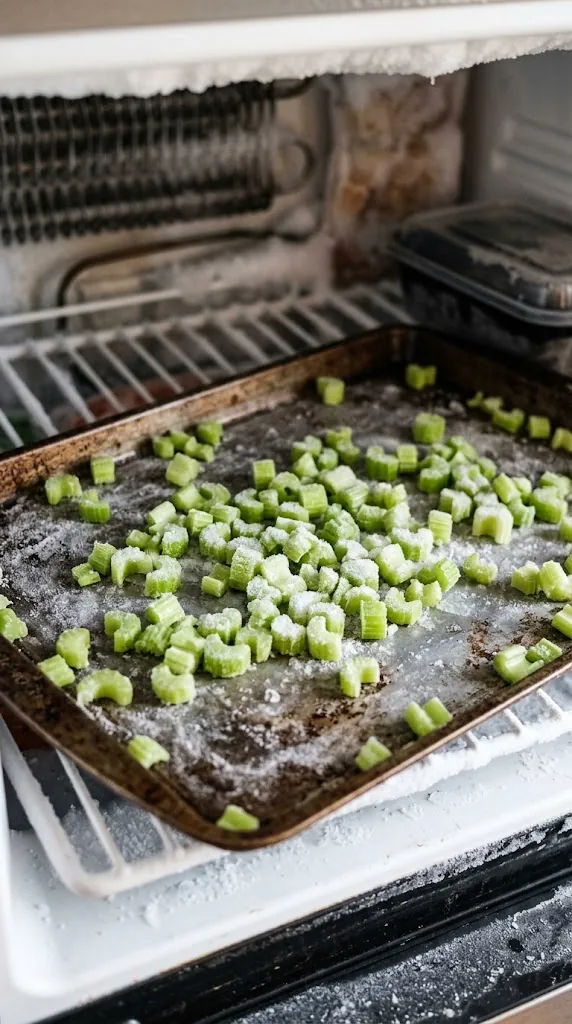
- Spread the pieces on a baking sheet to freeze individually, then transfer to a freezer bag, remove excess air, label, and date.
Best containers for freezing celery
- Freezer bags: press out as much air as you can and freeze them flat so they stack and thaw faster.
- Airtight rigid containers: best for soft or liquid foods. Leave about 1/2 inch of headspace because food expands as it freezes.
- Sheet pan first: freeze pieces in a single layer for an hour or two, then bag them so they don’t clump together.
- Label everything: write the item and the date on every package.
For celery: Freeze chopped celery pieces in a single layer on a baking sheet before transferring them to heavy-duty freezer bags to prevent clumping. Squeeze out as much air as possible to minimize freezer burn.
How to thaw celery
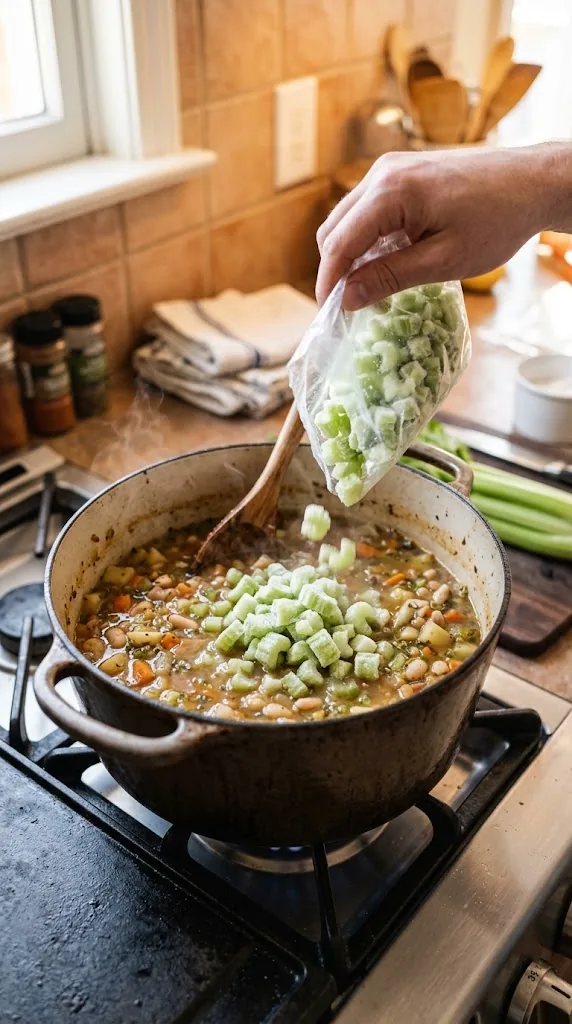
- Use frozen celery straight from the freezer without thawing in soups, stews, or cooked dishes.
- If your recipe calls for thawed celery, place the bag in the refrigerator overnight.
How to reheat celery
- Drop frozen celery pieces directly into soups, stews, or casseroles while they are cooking.
- Simmer or heat the dish until it reaches an internal temperature of 165 degrees Fahrenheit (74 degrees Celsius) before serving.
Best ways to use frozen celery
- Great in hearty vegetable soups, broths, and slow-cooker stews
- Works well in casseroles and savory stuffing mixes
- Not suitable for fresh crudité platters or raw green salads
Fixing the texture: There is no way to restore the crisp crunch of celery once it has been frozen, so it should only be used in recipes where a soft texture is acceptable.
How long celery keeps
| Where | How long |
|---|---|
| Freezer (0°F / -18°C) | 10-12 months |
| Refrigerator (40°F / 4°C) | 3-4 weeks when stored properly in water or wrapped in foil |
| Pantry / counter | 1-2 days at room temperature before wilting |
Can you refreeze celery?
Yes, you can safely refreeze celery if it was thawed in the refrigerator and never left at room temperature for more than two hours. However, because freezing already ruins the crisp texture of celery, a second freeze will make the pieces even more mushy and waterlogged.
- Cook or bake the thawed celery into a dish like a soup or casserole before refreezing it.
- Freeze celery in small portions so you only thaw what you need for a single meal.
- Cool any cooked dishes containing celery quickly in shallow containers and place them in the freezer within two hours.
The rules for every food: Can you refreeze food after thawing?
Watch out for
- Thawed celery will be completely limp and cannot be used raw in salads or crudité platters.
- Skipping the blanching step will result in a loss of vibrant green color and a bitter flavor over time.
- Ensure bags are tightly sealed to prevent the celery from absorbing odors from other foods in the freezer.
Food safety notes
Always store celery in the refrigerator and discard any stalks that develop a slimy texture, severe discoloration, or a foul odor. If freezing leftover cooked dishes containing celery, cool them quickly in shallow containers and place them in the freezer within two hours of cooking.
Other ways to keep celery
- Store whole stalks wrapped in aluminum foil in the crisper drawer of the refrigerator for up to four weeks.
- Submerge trimmed celery sticks in water in a sealed container in the fridge, changing the water every few days.
- Dehydrate celery slices in a food dehydrator to make homemade celery flakes for seasoning.
Common questions
Can I freeze celery without blanching it first?
You can, but it is not recommended. Blanching deactivates enzymes that cause the celery to lose its color, flavor, and nutritional value during long-term freezer storage.
Can I use frozen celery in a raw salad after it thaws?
No, freezing destroys the cell structure of celery, turning it completely soft and watery upon thawing. It is only suitable for cooked dishes where texture is less important.
Do I need to thaw frozen celery before adding it to soup?
No, you can toss frozen celery directly into soups, stews, and casseroles while they are cooking without any prior thawing.
Can I freeze celery leaves along with the stalks?
Celery leaves can be frozen, but they tend to become very fragile and mushy. It is usually better to chop and freeze the leaves separately to use up in stocks or to dry them out for seasoning.
What should I do if my frozen celery bags develop ice crystals inside?
A light layer of frost is normal, but heavy ice crystals usually mean temperature fluctuations or excess moisture was left on the celery before freezing. The celery is still safe to cook with, though the quality may degrade faster.
Sources
- USDA FSIS: Freezing and Food Safety
- FoodSafety.gov: FoodKeeper storage times
- National Center for Home Food Preservation: Freezing
Freezer times are for best quality. Food kept at 0°F (-18°C) stays safe indefinitely, but always thaw it in the fridge, in cold water or in the microwave, never on the counter. When in doubt, throw it out. See the USDA freezing guide.