Yes, but whole oranges do not freeze well because their high water content makes the flesh mushy and the peel bitter upon thawing.
Why
Oranges are packed with water and delicate juice vesicles. When frozen whole, expanding ice crystals rupture the cell walls, destroying the crisp texture and leaving the fruit limp and watery when thawed. Additionally, the compounds in the white pith and peel can turn bitter after freezing. To freeze oranges successfully, you must peel them, remove the bitter white pith and seeds, and section them or freeze the juice and zest instead of keeping them whole.
What freezing does to oranges
- Texture: Cell walls rupture from expanding ice crystals, resulting in a mushy and limp structure after thawing.
- Flavor: Compounds in the peel and white pith intensify and turn unpleasant or bitter if left on the fruit during freezing.
- Moisture: Juice vesicles break down, causing the fruit to release excess liquid and feel watery when thawed.
Types of oranges and how they freeze
- Whole Oranges: Whole oranges do not freeze well because the peel becomes bitter and the internal water expands to burst the fruit.
- Orange Zest: Zest freezes exceptionally well when grated directly from clean fruit and stored in a small airtight container.
- Fresh Orange Juice: Juice freezes wonderfully in ice cube trays or rigid containers, provided you leave adequate headspace for expansion.
How to freeze oranges
- Wash the oranges thoroughly under cold running water and dry them with a clean towel.
- Peel the fruit completely and remove all white pith and seeds from the segments.
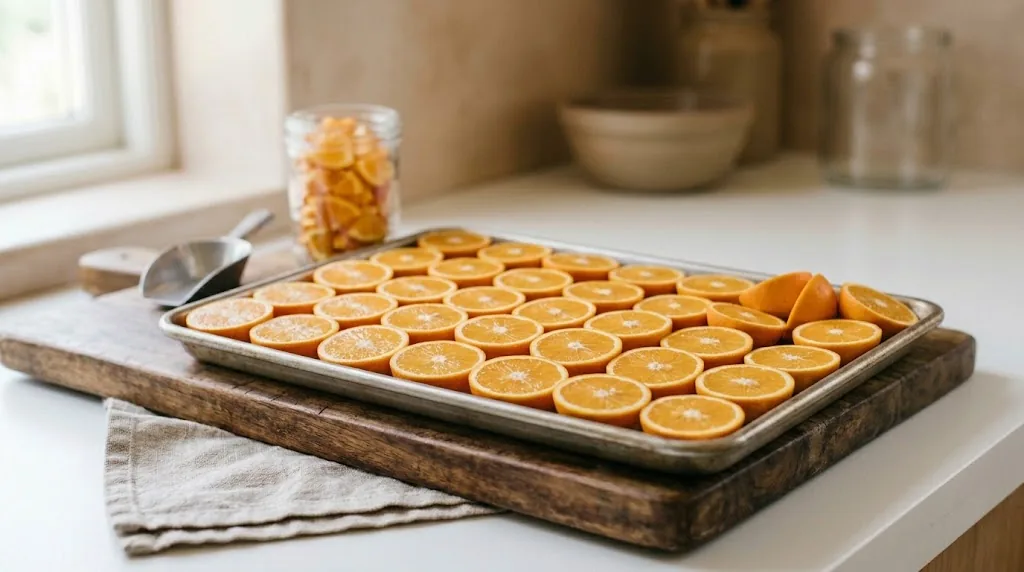
- Place individual segments in a single layer on a parchment-lined baking sheet and freeze until solid.
- Transfer the frozen segments into a heavy-duty freezer bag or airtight container.
- Press out as much air as possible before sealing, then label the bag with the current date.


Best containers for freezing oranges
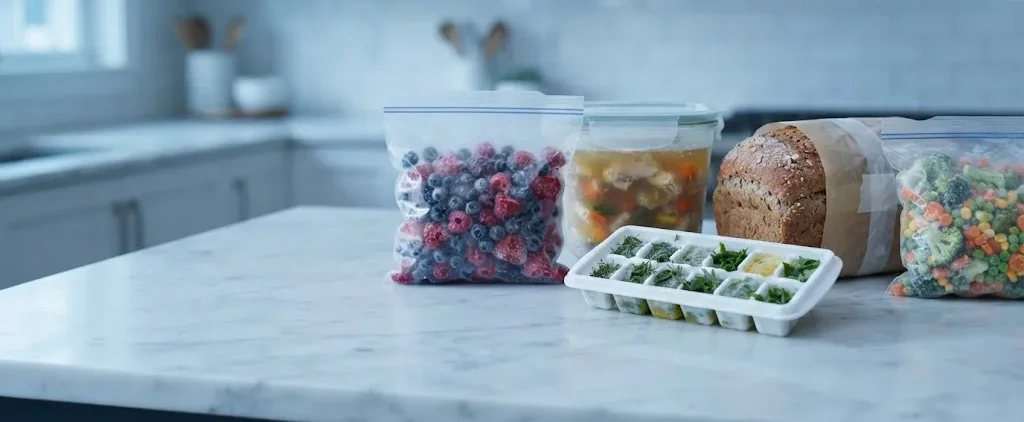
- Freezer bags: press out as much air as you can and freeze them flat so they stack and thaw faster.
- Airtight rigid containers: best for soft or liquid foods. Leave about 1/2 inch of headspace because food expands as it freezes.
- Sheet pan first: freeze pieces in a single layer for an hour or two, then bag them so they don’t clump together.
- Label everything: write the item and the date on every package.
For oranges: Flash-freeze peeled segments on a parchment-lined baking sheet before transferring them to a heavy-duty freezer bag, pressing out as much air as possible.
How to thaw oranges
- Place the frozen orange segments in the refrigerator for a few hours until partially thawed.
- Use the thawed orange sections immediately in smoothies, baking recipes, or fruit salads while they are still slightly chilled.
Best ways to use frozen oranges
- Great in morning smoothies and blended frozen cocktails
- Works well in baked goods like muffins and pound cakes
- Not suitable for fresh snacking or garnishing cheese boards due to the soft post-thaw texture
How long oranges keeps
| Where | How long |
|---|---|
| Freezer (0°F / -18°C) | 10-12 months |
| Refrigerator (40°F / 4°C) | 3-4 weeks |
| Pantry / counter | 1-2 weeks |
Can you refreeze oranges?
Yes, you can refreeze oranges if they were thawed safely in the refrigerator and have not been left out at room temperature for more than two hours. However, repeating the freezing process causes the delicate cells of the orange segments to break down even further, resulting in an increasingly mushy texture and a duller flavor.
- Cook or bake the thawed oranges into a recipe before refreezing them to help mask the degraded texture.
- Portion your frozen oranges into smaller amounts so you only thaw what you need for a single recipe.
- Promptly return any unused thawed portions to the refrigerator and refreeze them within safe time limits.
The rules for every food: Can you refreeze food after thawing?
Watch out for
- Whole oranges will burst and become completely unpalatable if placed directly into the freezer.
- Thawed oranges lose their firmness and will be mushy, making them unsuitable for fresh snacking.
- Leaving the bitter white pith on the segments before freezing will result in an unpleasantly bitter taste.
Food safety notes
Always wash the outer peel thoroughly before cutting or peeling to prevent transferring surface bacteria to the edible flesh. Thaw frozen orange segments safely in the refrigerator.
Other ways to keep oranges
- Store whole oranges in the refrigerator crisper drawer for up to a month.
- Keep them in a cool, dark, and well-ventilated pantry for up to two weeks.
- Juice the oranges and freeze the juice in ice cube trays for easy portioning.
Common questions
Can you freeze whole oranges?
No, freezing whole oranges ruins their texture and makes the peel and pith very bitter. You should always peel, segment, or juice them before freezing.
Can you freeze orange juice?
Yes, orange juice freezes wonderfully. Pour it into freezer-safe containers or ice cube trays, leaving a little headspace for expansion.
How do you use frozen orange segments?
Frozen orange segments are best used directly in smoothies, blended drinks, or baked goods where their softer post-thaw texture does not matter.
Can you freeze orange zest?
Yes, orange zest freezes very well. Grate the outer colored peel before juicing the fruit and store the zest in a small airtight bag or container in the freezer.
Why do frozen oranges taste bitter?
Freezing causes compounds in the white pith and outer peel to break down and release bitter flavors into the fruit. To prevent this, remove all white pith and peel completely before freezing the segments.
Sources
- USDA FSIS: Freezing and Food Safety
- FoodSafety.gov: FoodKeeper storage times
- National Center for Home Food Preservation: Freezing
Freezer times are for best quality. Food kept at 0°F (-18°C) stays safe indefinitely, but always thaw it in the fridge, in cold water or in the microwave, never on the counter. When in doubt, throw it out. See the USDA freezing guide.