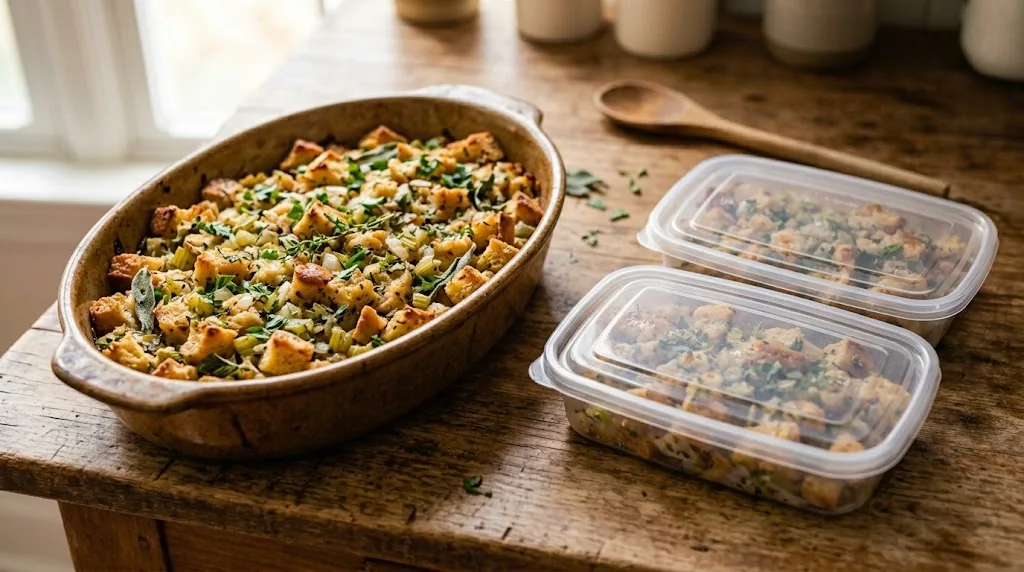
Yes, you can freeze stuffing. It freezes very well, whether it is homemade or store-bought, and retains its comforting holiday flavors.
Why
Stuffing freezes well because its primary ingredients like bread, broth, butter, celery, and onions hold up remarkably well to freezing temperatures. While the bread will absorb more moisture and become slightly softer after thawing, baking the stuffing in the oven helps crisp up the top and restores its appealing texture. Any fats and herbs present help lock in flavor during storage, making it a great dish to make ahead of time for the holidays.
What freezing does to stuffing
- Texture: Bread can become slightly denser and softer after the freezing and thawing process.
- Moisture: Broth and butter may separate slightly during freezing, requiring a splash of liquid upon reheating to restore consistency.
- Flavor: Herbs and spices generally maintain their profile well, though subtle blending may occur over extended storage.
Types of stuffing and how they freeze
- Homemade Stuffing: Freezes exceptionally well when allowed to cool quickly and packed tightly into freezer-safe containers.
- Store-Bought Prepared Stuffing: Can be frozen directly in its original container if rated for freezer use, though transferring to a heavy-duty bag often prevents freezer burn better.
- Cornbread Stuffing: Tends to crumble more easily after thawing, so handle gently and consider adding extra broth before baking to restore moisture.
How to freeze stuffing
- Allow the cooked stuffing to cool quickly by spreading it into shallow containers, and refrigerate it within two hours of cooking.
- Portion the chilled stuffing into freezer-safe containers or heavy-duty freezer bags.
- Press out as much air as possible to prevent freezer burn and seal tightly.
- Label the packaging with the contents and the date.
Best containers for freezing stuffing
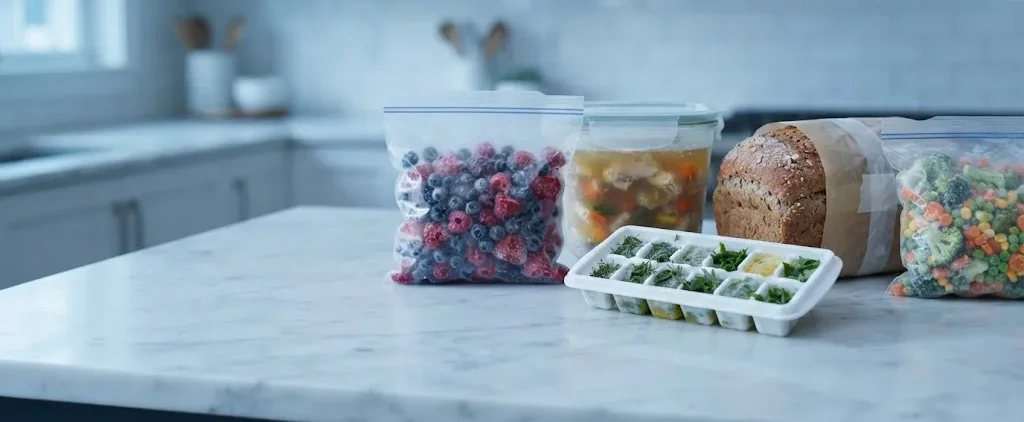
- Freezer bags: press out as much air as you can and freeze them flat so they stack and thaw faster.
- Airtight rigid containers: best for soft or liquid foods. Leave about 1/2 inch of headspace because food expands as it freezes.
- Sheet pan first: freeze pieces in a single layer for an hour or two, then bag them so they don’t clump together.
- Label everything: write the item and the date on every package.
For stuffing: Pack the stuffing tightly into heavy-duty freezer bags or airtight rigid containers to eliminate excess air pockets. Pressing the contents down helps retain moisture and prevents freezer burn.
How to thaw stuffing
- Place the frozen stuffing in the refrigerator and allow it to thaw completely for 24 hours.
- Alternatively, you can bake it straight from frozen by covering it with foil and adding extra cooking time.
- Reheat the thawed stuffing in an oven preheated to 350 degrees Fahrenheit until piping hot throughout, removing the foil during the last 15 minutes to crisp the top.
How to reheat stuffing
- Preheat your oven to 350 degrees Fahrenheit.
- Place the thawed or frozen stuffing in a baking dish and cover tightly with aluminum foil.
- Bake for 30 to 45 minutes, removing the foil during the last 15 minutes to crisp the top.
- Ensure the center reaches an internal temperature of 165 degrees Fahrenheit before serving.
Best ways to use frozen stuffing
- Great for holiday casseroles and side dishes
- Excellent base for post-holiday turkey or chicken bakes
- Not recommended for cold uses like sandwich fillings or raw salads
Fixing the texture: Stir a tablespoon or two of chicken broth or melted butter into the stuffing before reheating to restore its original moisture and softness.
How long stuffing keeps
| Where | How long |
|---|---|
| Freezer (0°F / -18°C) | 1 month |
| Refrigerator (40°F / 4°C) | 3 to 4 days |
| Pantry / counter | 2 hours max at room temperature |
Can you refreeze stuffing?
Yes, you can refreeze stuffing if it was thawed safely in the refrigerator and has not been left out at room temperature for more than two hours. However, subjecting stuffing to a second round of freezing and thawing will further soften the bread and degrade the overall texture, so it is best to avoid it unless necessary.
- Always ensure thawed stuffing is thoroughly cooked or baked before attempting to freeze it again.
- Portion the stuffing into smaller amounts before freezing so you only thaw what you need for a single meal.
- Add a splash of chicken broth when reheating previously frozen stuffing to help restore its original moisture.
The rules for every food: Can you refreeze food after thawing?
Watch out for
- Stuffing cooked inside a turkey should never be frozen inside the bird; remove it completely before freezing.
- Bread-based stuffing can turn soggy if it goes into the freezer with too much liquid.
- Ensure the center reaches an internal temperature of 165 degrees Fahrenheit when reheating to guarantee safety.
Food safety notes
Always cool cooked stuffing quickly by placing it in shallow containers and refrigerating within two hours of preparation. Never refreeze stuffing that has been thawed outside of the refrigerator.
Other ways to keep stuffing
- Store in the refrigerator for up to four days.
- Freeze the dry bread cubes ahead of time instead of the fully assembled dish.
Common questions
Can you freeze stuffing with meat in it?
Yes, you can freeze stuffing containing sausage, bacon, or giblets, provided it was cooled and frozen promptly. Just ensure it is reheated thoroughly to an internal temperature of 165 degrees Fahrenheit before serving.
Can I freeze uncooked stuffing mixture?
It is generally best to freeze stuffing after it has been cooked. Raw bread mixed with moist ingredients can become unpleasantly mushy and dense when frozen before baking.
How can I make frozen stuffing taste freshly made?
To restore its texture, add a splash of chicken or vegetable broth before reheating in the oven. Bake it uncovered for the last part of its heating time to get a golden, crispy crust on top.
Can I freeze stuffing in a glass baking dish?
It is not recommended to place standard glass baking dishes straight from the freezer into a hot oven, as thermal shock can cause the glass to shatter. Instead, freeze the stuffing in a freezer-safe bag or container, then transfer it to a baking dish before reheating.
Can I add raw eggs to my stuffing recipe before freezing?
While eggs are often used as a binder in stuffing, freezing raw eggs mixed into a cooked or semi-cooked dish can alter the texture unfavorably and increase food safety risks if not thoroughly incorporated and cooked. It is best to cook the stuffing fully before freezing.
Sources
- USDA FSIS: Freezing and Food Safety
- FoodSafety.gov: FoodKeeper storage times
- National Center for Home Food Preservation: Freezing
Freezer times are for best quality. Food kept at 0°F (-18°C) stays safe indefinitely, but always thaw it in the fridge, in cold water or in the microwave, never on the counter. When in doubt, throw it out. See the USDA freezing guide.