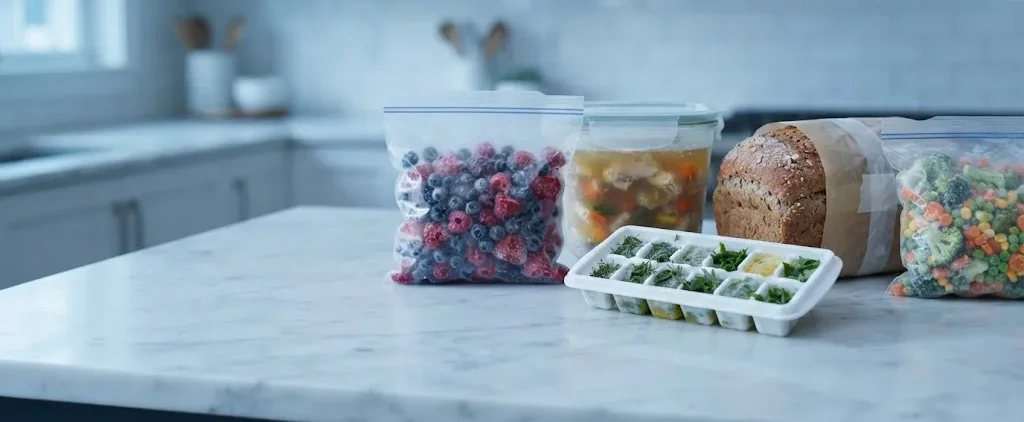
Yes, you can freeze mangoes successfully, though their texture will soften significantly once thawed.
Why
Mangoes have a high water content, which means ice crystals form during freezing and break down the fruit's cell walls. When thawed, the fruit will be much softer and more mushy than fresh mango. However, the flavor remains sweet and vibrant, making frozen mango ideal for blended drinks and cooked applications. Peeling and slicing the fruit before freezing ensures you have convenient portions ready to go whenever you need them.
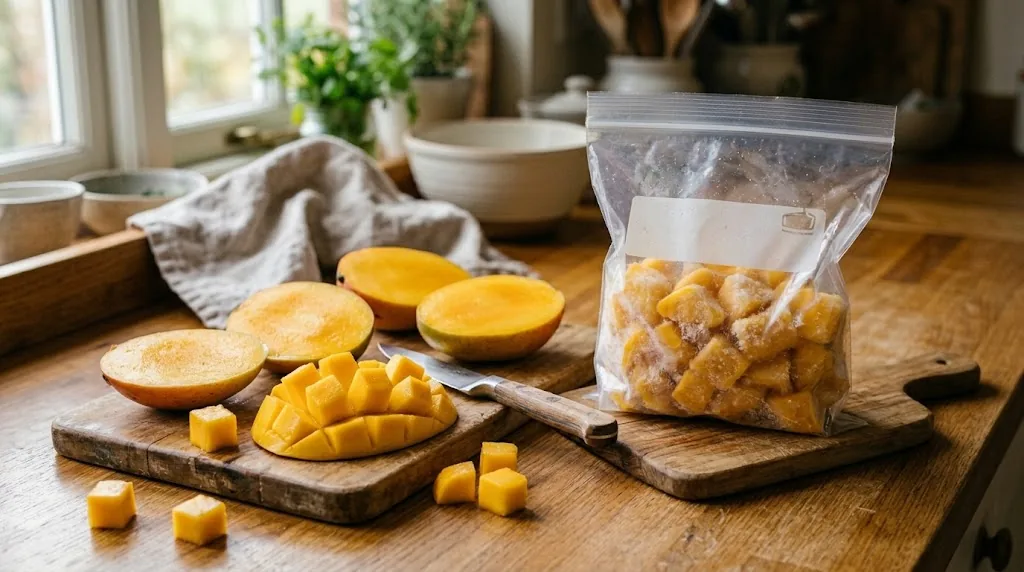
What freezing does to mango
- Texture: Cell walls rupture from ice crystal formation, resulting in a softer and more yielding bite upon thawing.
- Flavor: Natural sugars remain concentrated and sweet, though slight oxidation can subtly mute the brightness over extended storage.
- Color: Carotenoid pigments remain mostly stable, though prolonged exposure to air can cause minor dulling of the vibrant orange hue.
Types of mango and how they freeze
- Alphonso or Ataulfo mangoes: These sweeter, less fibrous varieties puree exceptionally well after freezing, maintaining a smooth consistency for tropical sauces and desserts.
- Green or unripe mangoes: Firm, unripe mangoes do not develop optimal sweetness or flavor when frozen prematurely and should be ripened at room temperature first.
How to freeze mango
- Wash the fresh mango thoroughly and pat it dry with a paper towel.
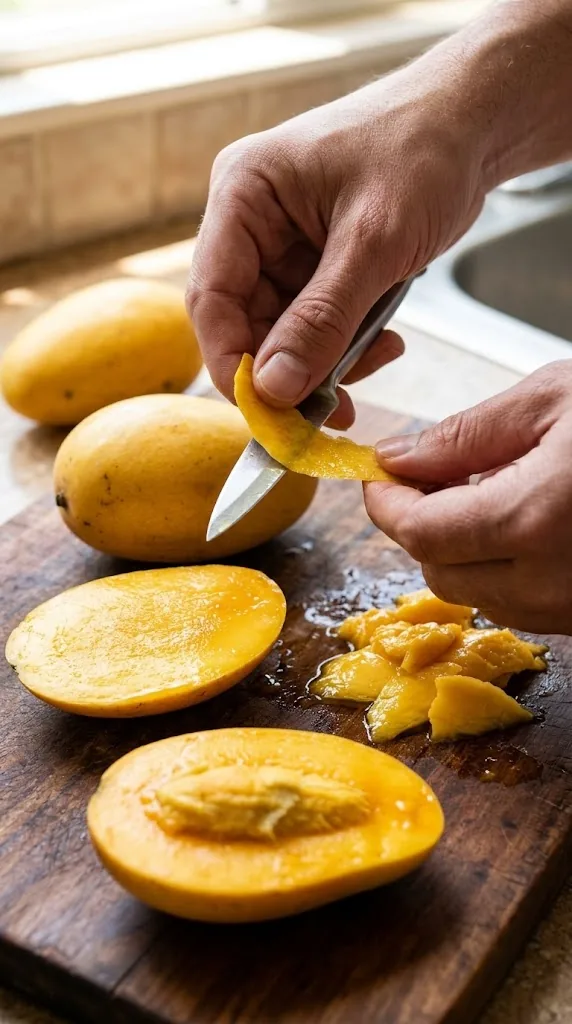
- Slice the flesh away from the large flat pit and peel the skin from each piece.
- Cut the mango flesh into bite-sized cubes or strips.
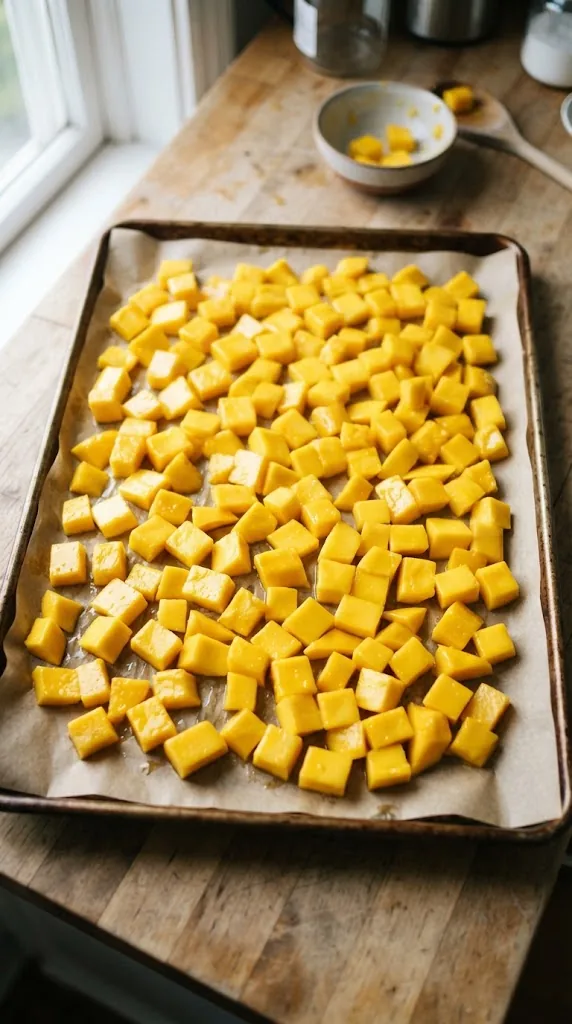
- Spread the pieces in a single layer on a parchment-lined baking sheet and freeze for two hours until solid.
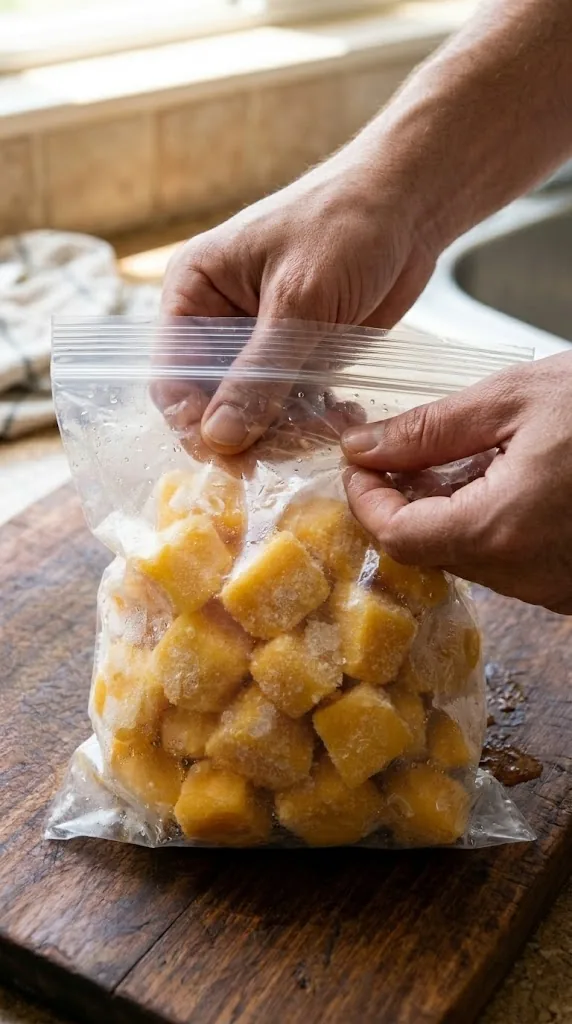
- Transfer the frozen mango chunks into a heavy-duty freezer bag, press out as much air as possible, seal tightly, and label with the date.
Best containers for freezing mango
- Freezer bags: press out as much air as you can and freeze them flat so they stack and thaw faster.
- Airtight rigid containers: best for soft or liquid foods. Leave about 1/2 inch of headspace because food expands as it freezes.
- Sheet pan first: freeze pieces in a single layer for an hour or two, then bag them so they don’t clump together.
- Label everything: write the item and the date on every package.
For mango: Flash-freeze sliced pieces on a lined baking sheet before transferring them to heavy-duty freezer bags to prevent clumping and freezer burn.
How to thaw mango
- Transfer the desired amount of frozen mango from the freezer to the refrigerator and let it thaw for several hours.
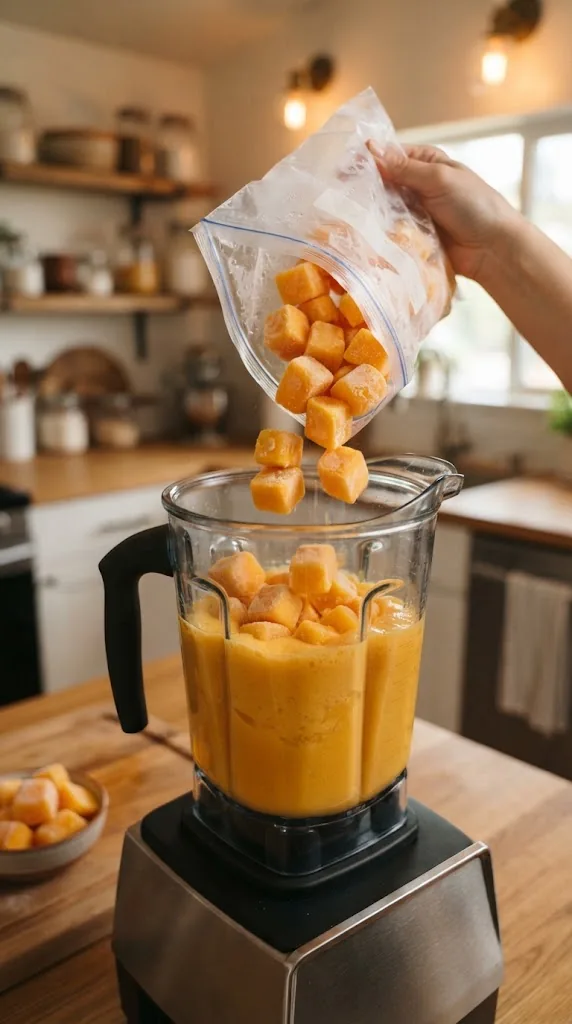
- Use the mango straight from frozen when tossing pieces directly into a blender for smoothies.
- Use the thawed mango within a few days for the best quality and flavor.
Best ways to use frozen mango
- Great for blending directly into morning smoothies and protein shakes without prior thawing.
- Wonderful for simmering down into tropical fruit compotes and dessert sauces.
- Not recommended for fresh fruit platters or crisp summer salads due to the softened post-thaw texture.
Fixing the texture: Because the cellular structure softens during freezing, there is no way to restore a crisp snap, but blending, pureeing, or cooking down the fruit masks the textural change completely.
How long mango keeps
| Where | How long |
|---|---|
| Freezer (0°F / -18°C) | 10-12 months |
| Refrigerator (40°F / 4°C) | 3-5 days after thawing |
| Pantry / counter | 2-4 days for ripe fresh fruit |
Can you refreeze mango?
Yes, you can safely refreeze mango if it was thawed properly in the refrigerator and showed no signs of spoilage. However, a second freeze will cause the texture to degrade even further into a very mushy consistency.
- Cook or bake the thawed mango into a puree or sauce before refreezing it.
- Freeze the fruit in small portions so you only thaw what you need at one time.
- Cool any cooked mango dishes quickly in shallow containers before refrigerating or freezing within two hours.
The rules for every food: Can you refreeze food after thawing?
Watch out for
- Thawed mango will lose its crisp texture and become quite soft, so it is not suitable for fresh fruit salads.
- Freezer burn can occur if the fruit is not tightly sealed in moisture-proof packaging.
- Keep frozen mango stored away from strong-smelling foods in the freezer to prevent flavor absorption.
Food safety notes
Always thaw frozen mango safely in the refrigerator and discard any fruit left at room temperature for longer than two hours. If thawed properly in the fridge, it can be safely refrozen, though the texture will degrade further.
Other ways to keep mango
- Store ripe whole mangoes on the counter for a couple of days, or in the refrigerator for up to a week.
- Dehydrate mango slices in a food dehydrator to make chewy dried mango snacks.
- Purée and freeze mango into ice pop molds for a refreshing frozen treat.
Common questions
Can I freeze a whole mango without cutting it?
It is not recommended to freeze a whole mango because the large seed and thick skin trap moisture and make it very difficult to slice later. Peeling and cubing the fruit before freezing yields much better results.
Do I need to add sugar before freezing mangoes?
No, sugar is not necessary for freezing mangoes safely. Ripe mangoes freeze wonderfully on their own, though you can toss them with a tiny bit of lemon juice to help preserve their bright color.
Can I refreeze mango after it has thawed?
You can refreeze mango safely if it was thawed properly in the refrigerator and shows no signs of spoilage. However, the texture will become even mushier the second time around, so it is best to only thaw what you plan to use.
Can I freeze mango in its own juice or syrup?
While you can pack sliced mango in a light sugar syrup to help retain its shape and color better, plain freezing is much easier and yields fruit that is far more versatile for everyday recipes.
Why does my frozen mango taste slightly fermented after a long time?
If mango is stored too long or exposed to air via poor packaging, subtle enzymatic activity and minor flavor degradation can occur, leading to an off taste. Ensure your freezer bags are tightly sealed and pressed flat of excess air to maintain optimal flavor.
Sources
- USDA FSIS: Freezing and Food Safety
- FoodSafety.gov: FoodKeeper storage times
- National Center for Home Food Preservation: Freezing
Freezer times are for best quality. Food kept at 0°F (-18°C) stays safe indefinitely, but always thaw it in the fridge, in cold water or in the microwave, never on the counter. When in doubt, throw it out. See the USDA freezing guide.