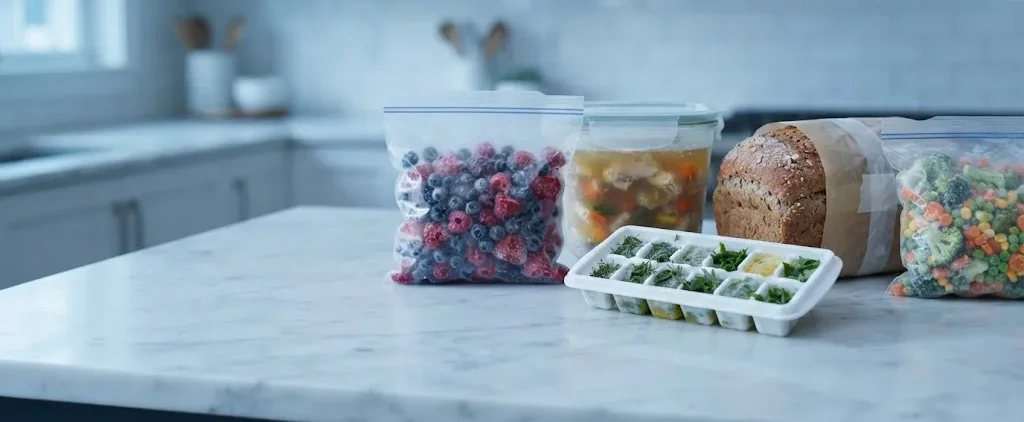
Yes, but they lose their crispness and become mushy when thawed, so they are best frozen sliced or pureed for cooking and baking.
Why
Apples have a high water content. When you freeze them, the water inside forms ice crystals that rupture the cell walls of the fruit. This process destroys the firm, crisp texture that makes raw apples appealing to bite into. While they are no longer suitable for fresh eating or salads after being frozen, the softened fruit remains completely safe to eat and works wonderfully in cooked applications such as applesauce, pies, crumbles, and smoothies where texture is not the primary concern.
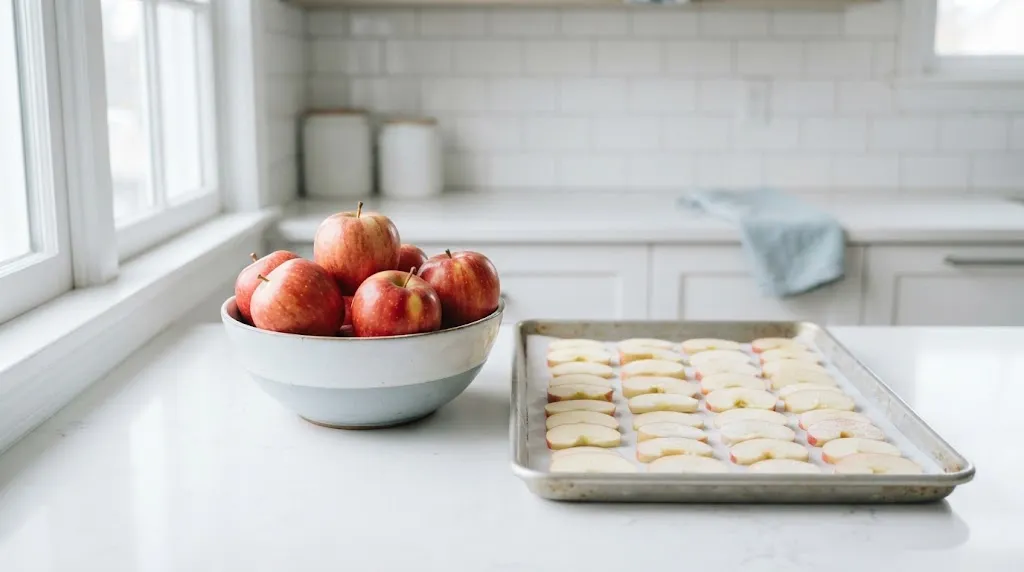
What freezing does to apples
- Texture: Cell walls rupture due to ice crystal formation, resulting in a significantly softer and mushy consistency upon thawing.
- Flavor: Natural sugars become slightly more concentrated as moisture is released, though the overall tartness and sweetness remain largely intact.
- Color: Enzymatic browning occurs rapidly unless slices are pretreated with an acidic solution like lemon juice.
Types of apples and how they freeze
- Raw apple slices: Raw slices require pretreatment with ascorbic acid or lemon juice to prevent browning and must be flash-frozen on a tray before bagging to prevent clumping.
- Cooked applesauce: Applesauce freezes exceptionally well with no texture loss because the fruit is already softened and pureed prior to freezing.
- Whole apples: Freezing whole apples is discouraged because they become waterlogged and mushy throughout, making them extremely difficult to peel and slice after thawing.
How to freeze apples
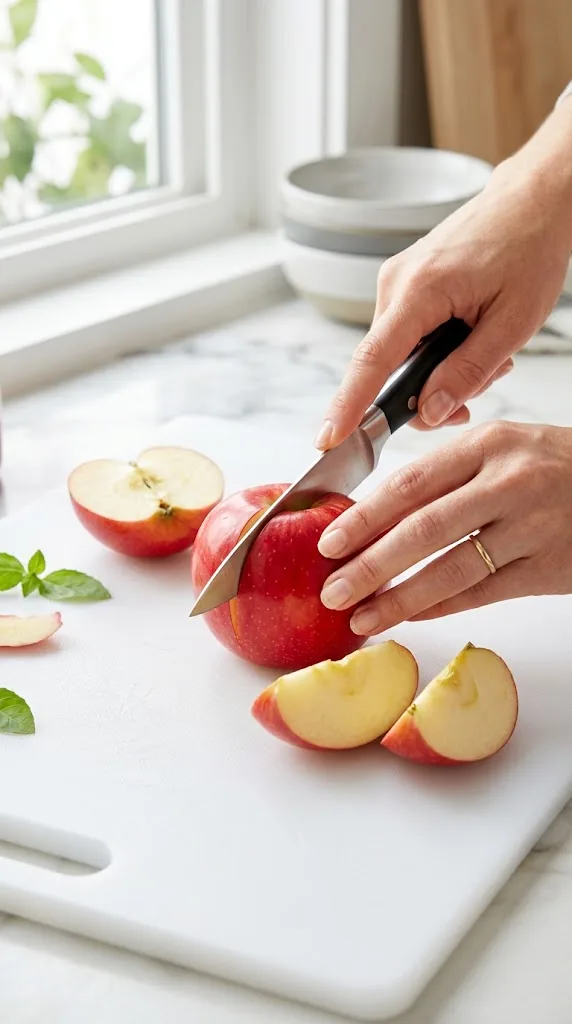
- Wash, peel, and core the apples, then slice them into wedges or chop them into chunks.
- Treat the slices with an anti-darkening solution by dipping them in water mixed with lemon juice or ascorbic acid for 3 to 5 minutes.
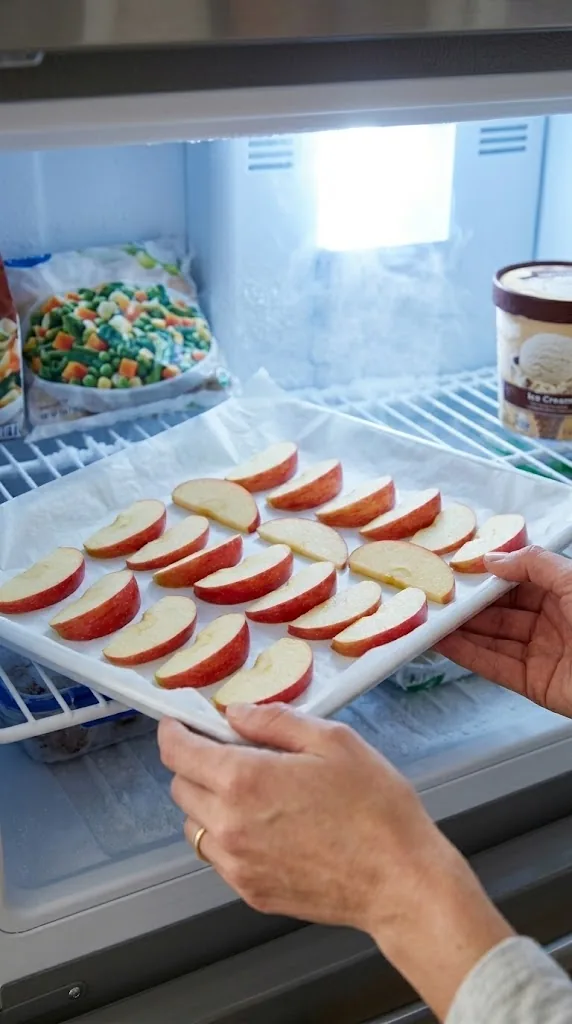
- Spread the treated slices in a single layer on a baking sheet and freeze until solid to prevent clumping.
- Transfer the frozen apple slices into heavy-duty freezer bags, squeezing out as much air as possible.
- Label the bags with the item name and date.


Best containers for freezing apples
- Freezer bags: press out as much air as you can and freeze them flat so they stack and thaw faster.
- Airtight rigid containers: best for soft or liquid foods. Leave about 1/2 inch of headspace because food expands as it freezes.
- Sheet pan first: freeze pieces in a single layer for an hour or two, then bag them so they don’t clump together.
- Label everything: write the item and the date on every package.
For apples: Pack sliced apples tightly into heavy-duty freezer bags after flash-freezing them on a baking sheet, pressing out all excess air to prevent freezer burn.
How to thaw apples
- Use frozen apple slices straight from the freezer for baked goods, pies, or stovetop cooking without prior thawing.
- Place the sealed bag of apples in the refrigerator overnight if you need them thawed for a recipe.
- Thaw the apples in the microwave on the defrost setting if you plan to use them immediately in cooking.
How to reheat apples
- Transfer frozen apple slices or pureed apples directly into a saucepan for stovetop cooking or simmering.
- Bake frozen apple slices directly into pies, crumbles, or crisps without any prior thawing.
- Heat in the microwave on a defrost setting for 1 to 2 minutes if using immediately in warm recipes, ensuring food is heated thoroughly throughout.
Best ways to use frozen apples
- Great in baked apple pies, crisps, and crumbles where mushy texture is unnoticeable
- Wonderful for blending into morning smoothies or stirring into oatmeal
- Not suitable for fresh green salads or raw snacking due to the loss of crispness
Fixing the texture: Drain excess liquid from thawed apple slices using a colander if the fruit appears too watery for your specific baking recipe.
How long apples keeps
| Where | How long |
|---|---|
| Freezer (0°F / -18°C) | 8-12 months |
| Refrigerator (40°F / 4°C) | 3-5 days after slicing or cooking |
| Pantry / counter | 1-3 weeks for fresh whole apples depending on variety |
Can you refreeze apples?
Yes, you can refreeze apples if they were thawed safely in the refrigerator and show no signs of spoilage. However, a second freeze will cause the texture to degrade further, making the apples even softer and mushier than before.
- Cook or bake thawed apples into a dish like applesauce or pie filling before refreezing them for better results.
- Freeze apple portions in smaller quantities so you only thaw what you need for a single recipe.
- Cool any cooked apple dishes quickly in shallow containers and refrigerate them within two hours before freezing.
The rules for every food: Can you refreeze food after thawing?
Watch out for
- Do not expect thawed apples to be crisp; they will be soft and mushy due to cell wall damage from ice crystals.
- Untreated apples will turn brown rapidly in the freezer due to oxidation.
- Ensure your bags are airtight to prevent severe freezer burn over time.
Food safety notes
Apples thawed safely in the refrigerator can be refrozen, though the texture will degrade further. Discard thawed apples if they develop mold, an off odor, or slimy patches.
Other ways to keep apples
- Store whole apples in the crisper drawer of your refrigerator where they can last for several weeks.
- Dehydrate apple slices in a food dehydrator to make chewy dried apple snacks.
- Can applesauce or apple slices with a tested home-canning recipe for shelf-stable storage.
Common questions
Can you freeze whole apples?
You can freeze whole apples, but it is not recommended because they turn completely mushy and brown from the inside out when thawed, making them very difficult to prep and use.
Do I have to blanch apples before freezing?
Blanching is not strictly necessary, but treating the apple slices with an acid like lemon juice or ascorbic acid is essential to prevent unsightly browning.
Can I refreeze apples if they thaw?
You can safely refreeze apples as long as they were thawed properly in the refrigerator and show no signs of spoilage, though the texture will become even softer.
Can I freeze apples with the skin on?
Yes, you can freeze apples with the skin on if you prefer, but keep in mind that the skins can become tough and stringy during the freezing and thawing process.
Do I need to use sugar when freezing apples?
Sugar is not required to preserve apples safely in the freezer, though tossing sliced apples with a small amount of sugar can help them retain a slightly better firmness and flavor.
Sources
- USDA FSIS: Freezing and Food Safety
- FoodSafety.gov: FoodKeeper storage times
- National Center for Home Food Preservation: Freezing
Freezer times are for best quality. Food kept at 0°F (-18°C) stays safe indefinitely, but always thaw it in the fridge, in cold water or in the microwave, never on the counter. When in doubt, throw it out. See the USDA freezing guide.