Yes, you can freeze butter successfully for several months with almost no loss in flavor or texture. It is a fantastic way to stock up when butter is on sale.
Why
Butter freezes remarkably well because it has a high fat content and relatively low water content. This composition prevents large ice crystals from forming and breaking down the texture the way they do in foods with high water content. Both salted and unsalted butter freeze without a problem, though salted butter generally lasts slightly longer due to the natural preservative properties of salt. Wrapped properly to protect against absorbing odors from other foods in the freezer, thawed butter behaves and tastes just like fresh butter.
What freezing does to butter
- Flavor: Can gradually develop a slightly muted taste if stored near strongly scented foods.
- Texture: May become marginally more crumbly after prolonged storage due to moisture loss.
- Color: Can fade slightly on the outer surface if exposed to light or air.
Types of butter and how they freeze
- Whipped butter: Contains more incorporated air, which makes it prone to faster oxidation and freezer burn. Use it within three months for best quality.
- European-style butter: Has a higher fat content and less water, allowing it to freeze exceptionally well with virtually no textural changes.
- Vegan butter: Plant-based spreads freeze adequately, though high-water margarine varieties may separate slightly upon thawing.
How to freeze butter
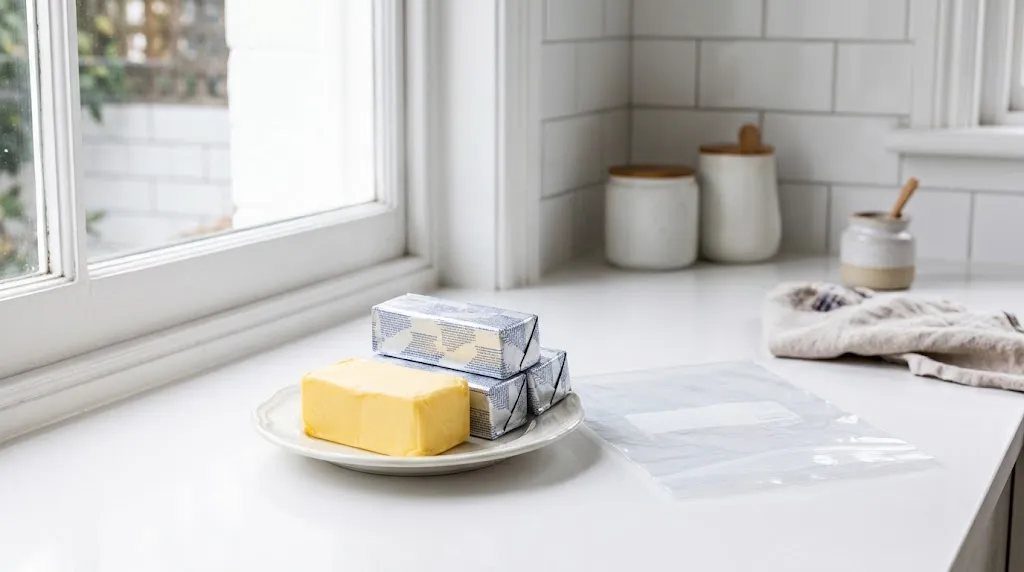
- Leave the butter in its original parchment or foil packaging.
- Place the original packages inside a heavy-duty freezer bag or wrap them tightly in a layer of heavy-duty aluminum foil.
- Squeeze out as much air as possible from the freezer bag and seal it tightly.
- Label the package with the current date and the use-by date.
Best containers for freezing butter
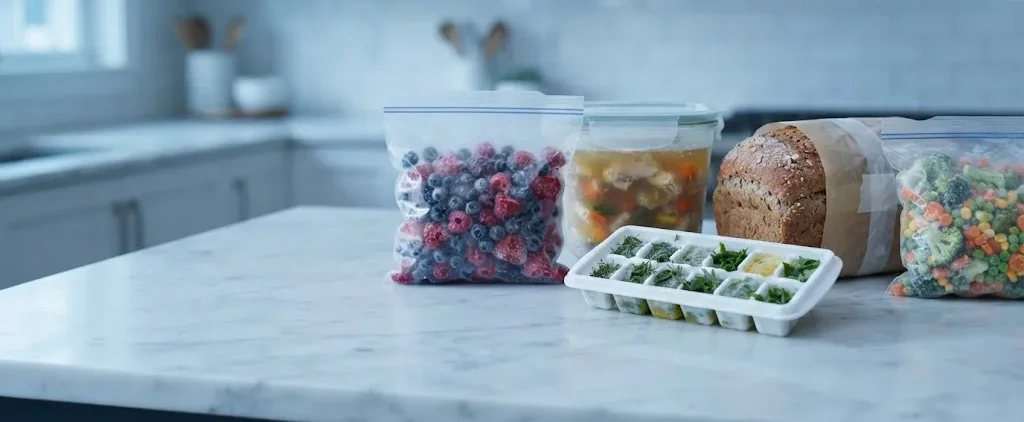
- Freezer bags: press out as much air as you can and freeze them flat so they stack and thaw faster.
- Airtight rigid containers: best for soft or liquid foods. Leave about 1/2 inch of headspace because food expands as it freezes.
- Sheet pan first: freeze pieces in a single layer for an hour or two, then bag them so they don’t clump together.
- Label everything: write the item and the date on every package.
For butter: Keep sticks in their original foil or parchment wrap, then place them inside a heavy-duty freezer bag to block out ambient odors.
How to thaw butter
- Place the butter in the refrigerator overnight to thaw evenly.
- Alternatively, grate frozen butter with a box grater if you need it immediately for baking.
- You can also soften frozen butter in the microwave on 30 percent power in short bursts, watching closely so it does not melt.
Best ways to use frozen butter
- Great for baking flaky pie crusts and cookies directly from frozen
- Ideal for melting into hot oatmeal, pancakes, or cooked vegetables
- Well-suited for incorporating into sauces, soups, and roux
- Not recommended for delicate icing where uniform room-temperature consistency is critical
Fixing the texture: If the butter appears slightly separated after thawing, let it come to room temperature and give it a quick stir.
How long butter keeps
| Where | How long |
|---|---|
| Freezer (0°F / -18°C) | 6-12 months |
| Refrigerator (40°F / 4°C) | 1-3 months |
| Pantry / counter | 1-2 days |
Can you refreeze butter?
Yes, you can refreeze butter as long as it was thawed safely in the refrigerator and shows no signs of spoilage. However, repeated freezing and thawing can gradually degrade the flavor and cause the texture to become more crumbly.
- Cook or bake with butter before refreezing if it has been thawed for a while.
- Freeze butter in small portions so you only thaw what you need at one time.
- Ensure the butter is tightly wrapped in a freezer bag to prevent absorbing odors during the second freeze.
The rules for every food: Can you refreeze food after thawing?
Watch out for
- Butter easily absorbs strong odors and flavors from other foods in the freezer if not wrapped tightly.
- Unsalted butter has a shorter freezer life than salted butter because salt acts as a natural preservative.
- Frozen butter is hard to slice, so cut it into tablespoon portions before freezing if you bake often.
Food safety notes
Always thaw butter safely in the refrigerator. You can refreeze butter as long as it was thawed in the fridge and shows no signs of spoilage.
Other ways to keep butter
- Store unopened butter in the refrigerator for up to a few months.
- Keep a stick of butter in a covered butter dish at room temperature for short-term use over a few days.
- Clarify the butter to extend its shelf life in the refrigerator.
Common questions
Can you freeze salted and unsalted butter?
Yes, both salted and unsalted butter freeze very well. However, salted butter typically lasts a bit longer in the freezer because the salt helps preserve the flavor and freshness.
Does frozen butter taste different after thawing?
No, if wrapped properly to prevent freezer burn and odor absorption, thawed butter tastes and performs just like fresh butter.
Can I refreeze butter that has been thawed?
Yes, you can refreeze butter as long as it was thawed safely in the refrigerator and shows no signs of spoilage, though repeated freezing and thawing can gradually degrade its flavor.
Can I freeze butter in its paper wrapper without extra protection?
Paper wrappers alone are too porous, allowing the butter to absorb odors and freezer burn. Always add an extra layer of foil or a freezer bag.
Why does my frozen butter taste stale after a few months?
Butter readily picks up aromas from nearby items in the freezer like onions or fish. Ensure your packaging is airtight to preserve its clean flavor.
Sources
- USDA FSIS: Freezing and Food Safety
- FoodSafety.gov: FoodKeeper storage times
- National Center for Home Food Preservation: Freezing
Freezer times are for best quality. Food kept at 0°F (-18°C) stays safe indefinitely, but always thaw it in the fridge, in cold water or in the microwave, never on the counter. When in doubt, throw it out. See the USDA freezing guide.