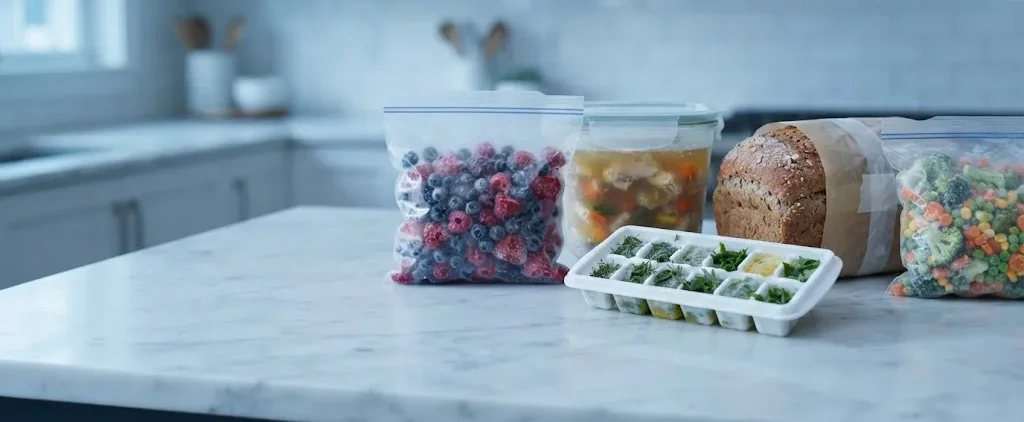
Yes, egg whites freeze exceptionally well for months, making them a great way to save leftovers from recipes that only use yolks.
Why
Egg whites consist mostly of water and protein, which means their chemical structure holds up remarkably well to freezing without a drastic change in quality. Unlike whole eggs or egg yolks, which can become unpleasantly gelatinous and thick in the freezer, pure egg whites maintain their liquid consistency and whipping properties once thawed. You can freeze them either plain or with a tiny pinch of sugar or salt to prevent them from becoming too tough over time. They are one of the most reliable dairy and protein items to store in the freezer.
What freezing does to egg whites
- Texture: Remains entirely liquid and consistent without becoming watery or separated once fully thawed.
- Flavor: Remains completely neutral with no noticeable loss or alteration of taste.
- Whipping property: May require an extra minute or two of beating to reach full volume and stiff peaks compared to fresh whites.
Types of egg whites and how they freeze
- Raw plain egg whites: Freeze exceptionally well on their own in ice cube trays for up to 12 months without any special preparation.
- Pasteurized liquid egg whites: Can be frozen directly in their original carton if unopened, or poured into smaller freezer-safe containers for convenient portioning.
- Cooked egg whites: Hard-boiled egg whites become tough, spongy, and rubbery when frozen, so it is best to avoid freezing them after cooking.
How to freeze egg whites
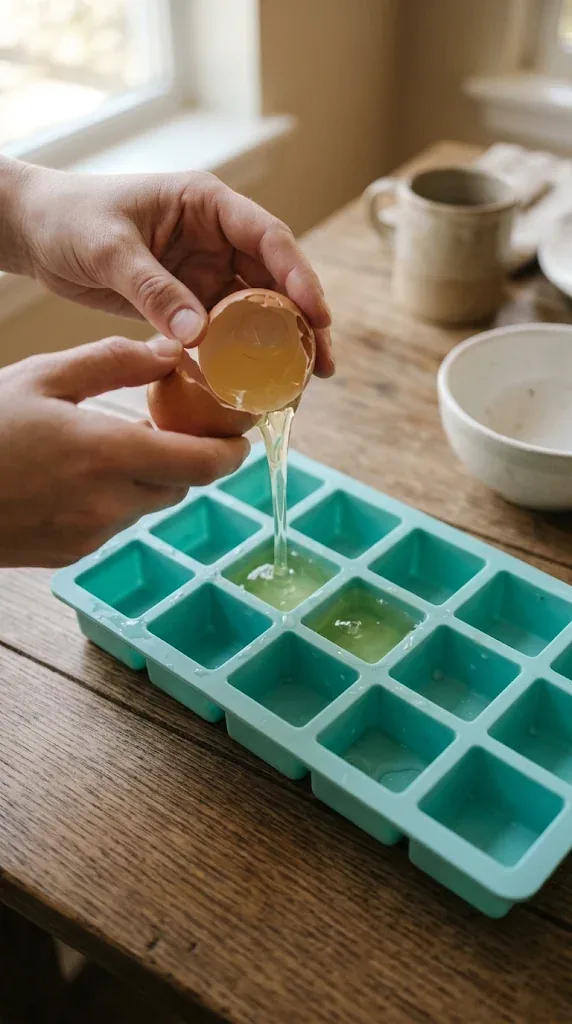
- Crack the eggs and carefully separate the whites from the yolks, ensuring no yolk contaminates the whites.
- Pour the whites into clean ice cube trays, measuring precisely one tablespoon or one egg white per compartment for easy portioning.
- Place the ice cube tray in the freezer until the egg whites are completely solid.
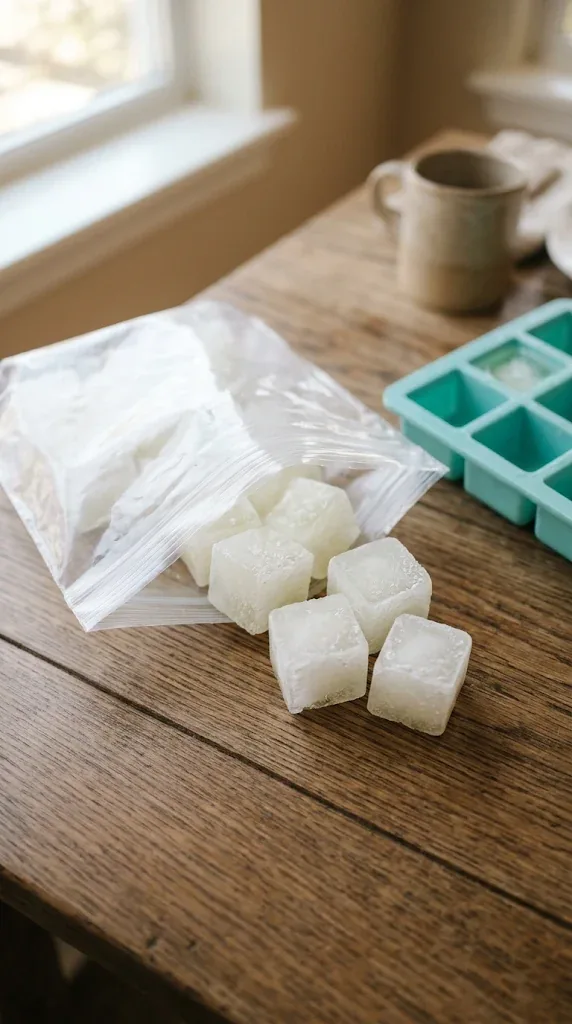
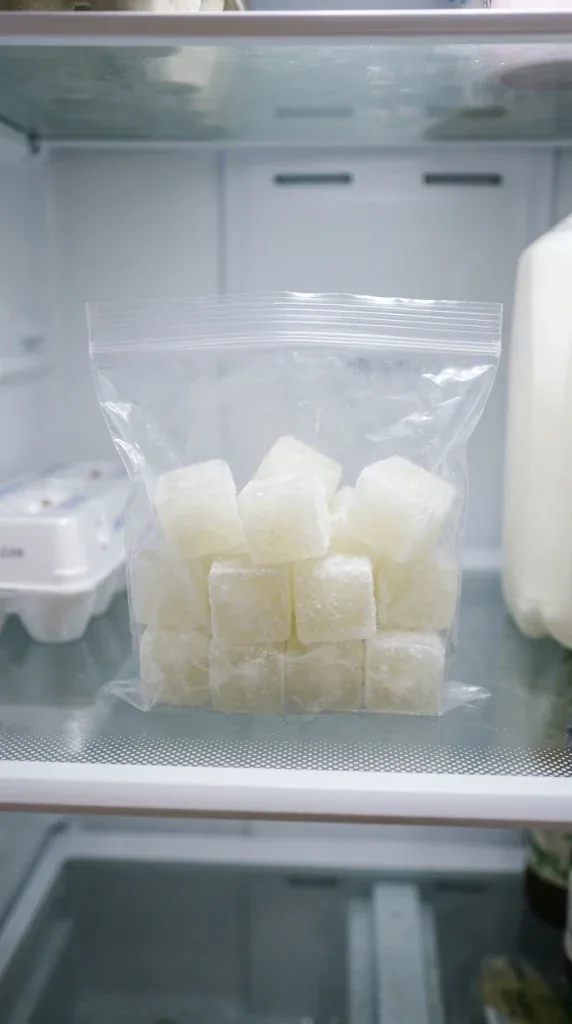
- Transfer the frozen egg white cubes into a heavy-duty freezer bag or airtight container.
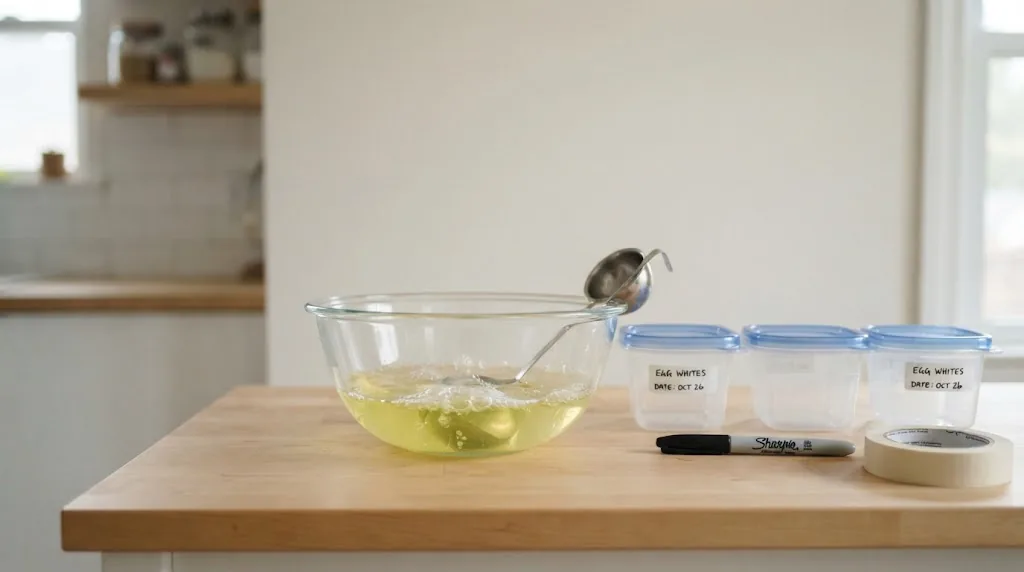
- Remove as much air as possible from the bag, seal it tightly, and label it with the date and number of egg whites.
Best containers for freezing egg whites
- Freezer bags: press out as much air as you can and freeze them flat so they stack and thaw faster.
- Airtight rigid containers: best for soft or liquid foods. Leave about 1/2 inch of headspace because food expands as it freezes.
- Sheet pan first: freeze pieces in a single layer for an hour or two, then bag them so they don’t clump together.
- Label everything: write the item and the date on every package.
For egg whites: Freeze egg whites in silicone ice cube trays for effortless popping out of precise one-tablespoon portions, then transfer the solid cubes into a heavy-duty freezer bag.
How to thaw egg whites
- Place the desired number of frozen egg white cubes in the refrigerator overnight.
- Alternatively, submerge the sealed bag of egg whites in cold water in the refrigerator until completely thawed.
- Use the thawed egg whites immediately in your recipe.
Best ways to use frozen egg whites
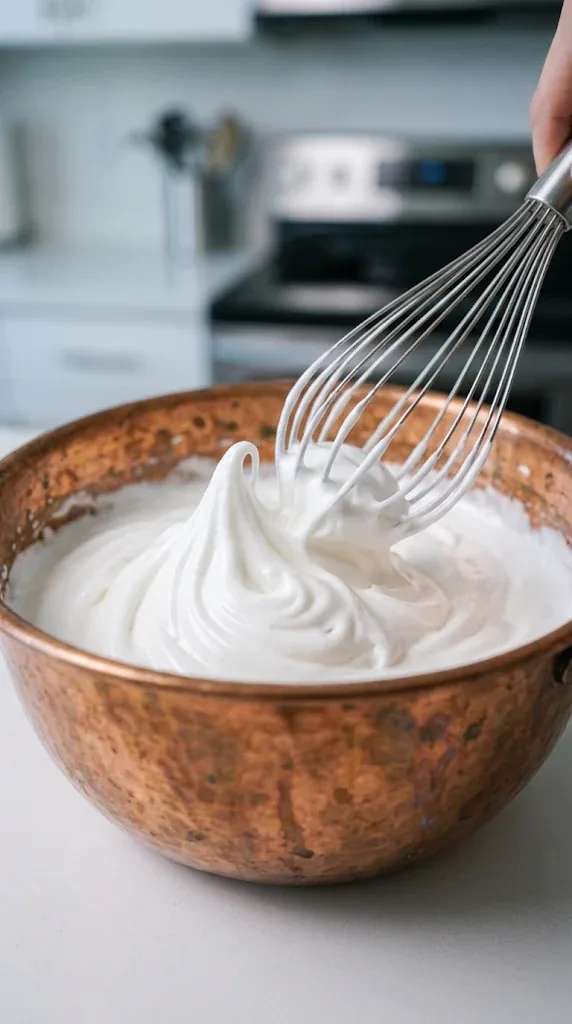
- Great for whipping into fluffy meringues and macarons for baking.
- Works well in royal icing recipes for decorating cookies.
- Ideal for making angel food cake and marshmallows.
- Not suitable for eating raw if safety guidelines require thorough cooking first.
Fixing the texture: Allow thawed egg whites to sit at room temperature for about 30 minutes before whipping to help restore their optimal volume and elasticity.
How long egg whites keeps
| Where | How long |
|---|---|
| Freezer (0°F / -18°C) | 12 months |
| Refrigerator (40°F / 4°C) | 2 to 4 days |
| Pantry / counter | Not recommended |
Can you refreeze egg whites?
Yes, you can refreeze egg whites safely only if they were thawed in the refrigerator and have not been left at room temperature for more than two hours. However, freezing egg whites a second time can further break down their delicate protein structure, potentially reducing their ability to whip into stiff peaks for baking.
- Bake the thawed egg whites into a cake or cookies before freezing the cooked dish instead of refreezing the raw whites.
- Freeze egg whites in small, measured portions so you only thaw what you need for a single recipe.
- Ensure any thawed whites have been handled safely and kept cold before considering any further freezing.
The rules for every food: Can you refreeze food after thawing?
Watch out for
- Ensure zero traces of egg yolk get into the whites, as fat from the yolk can ruin their ability to whip properly.
- Always thaw egg whites in the refrigerator or cold water rather than at room temperature to prevent bacterial growth.
- Label your containers clearly because frozen egg whites look very similar to other frozen liquids once solid.
Food safety notes
Always thaw egg whites safely in the refrigerator or submerged in cold water in the fridge to prevent bacterial growth. Never thaw them on the counter at room temperature.
Other ways to keep egg whites
- Store raw egg whites in a sealed airtight container in the refrigerator for up to 4 days.
- Bake a batch of meringues, macarons, or angel food cake to use them up immediately.
Common questions
Can you whip egg whites after they have been frozen?
Yes, thawed egg whites whip up just as well as fresh ones, though they may take a minute or two longer to reach stiff peaks. For best results, let them warm up to room temperature after thawing in the fridge before whipping.
Do I need to add anything to egg whites before freezing them?
No additives are strictly necessary if you plan to use them within a few months. However, adding a tiny pinch of sugar or salt per cup of whites can help protect the protein structure during long-term storage.
Can you freeze whole eggs in their shells?
No, you should never freeze whole eggs in their shells because the water inside expands as it freezes and causes the shells to crack. You must always crack, separate, and remove the shells before freezing eggs.
Can you freeze leftover egg whites from store-bought cartons?
Yes, leftover liquid egg whites from opened cartons freeze just as well as fresh separated whites. Pour them into portion-controlled containers and freeze for up to 12 months.
What is the easiest way to measure egg whites before freezing?
Pour exactly three tablespoons of liquid egg white into each compartment of a clean ice cube tray, which equals one standard large egg white. Once frozen, store them together in a labeled freezer bag.
Sources
- USDA FSIS: Freezing and Food Safety
- FoodSafety.gov: FoodKeeper storage times
- National Center for Home Food Preservation: Freezing
Freezer times are for best quality. Food kept at 0°F (-18°C) stays safe indefinitely, but always thaw it in the fridge, in cold water or in the microwave, never on the counter. When in doubt, throw it out. See the USDA freezing guide.