Yes, but heavy cream changes texture in the freezer and will separate and curdle when thawed, making it best for cooking rather than whipping.
Why
Heavy cream has a high fat content, but freezing causes the fat emulsions to break down. When the ice crystals form and melt, the water separates from the milk solids, resulting in a grainy, watery texture that cannot be whipped back into peaks. However, it is completely safe to freeze and will still taste delicious when incorporated into cooked dishes, baked goods, soups, and sauces where texture separation does not matter.
What freezing does to heavy cream
- Texture: Becomes grainy, watery, and separates into milk solids and liquid due to broken fat emulsions.
- Flavor: Remains rich and creamy with no noticeable loss of taste when used in cooking.
- Appearance: Looks curdled and separated upon thawing, losing its smooth glossy look.
Types of heavy cream and how they freeze
- Ultra-pasteurized heavy cream: Freezes just as well as standard heavy cream because the high fat content remains the same.
- Sweetened whipped cream: Can be frozen in dollops on a baking sheet for topping hot chocolate later, though it will deflate slightly.
How to freeze heavy cream
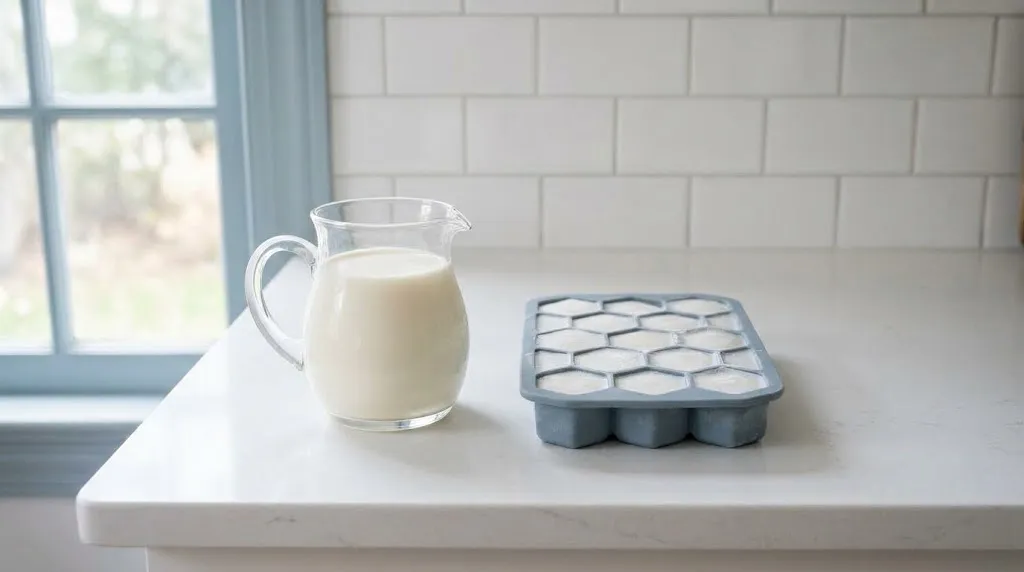
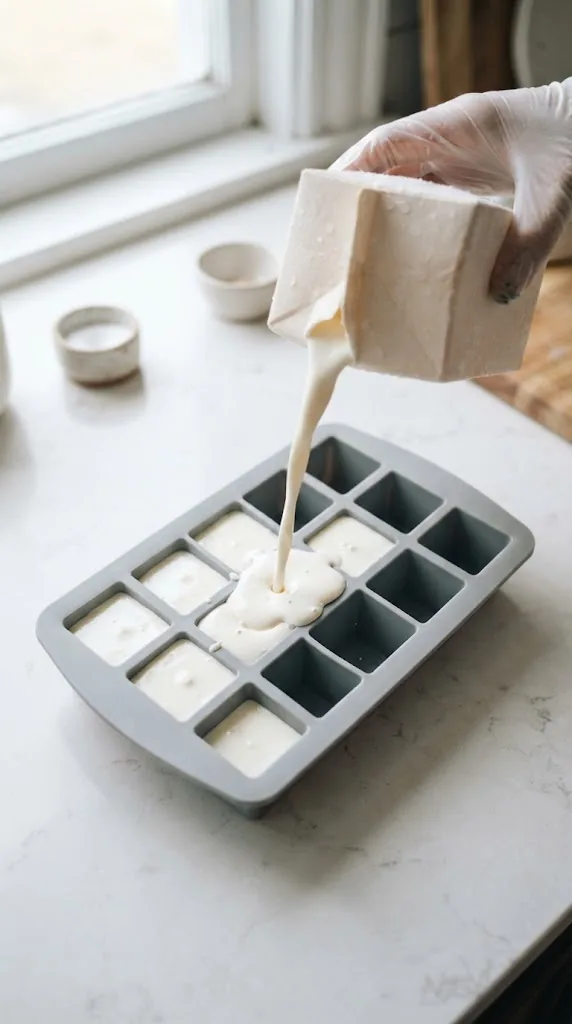
- Pour fresh heavy cream into ice cube trays for easy portioning.
- Freeze the trays until the cream is completely solid.
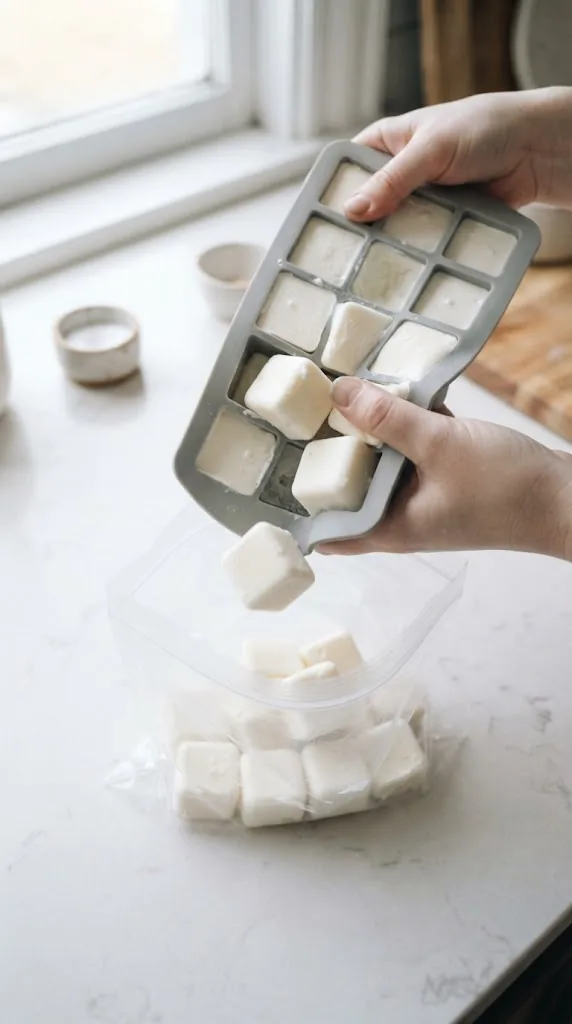
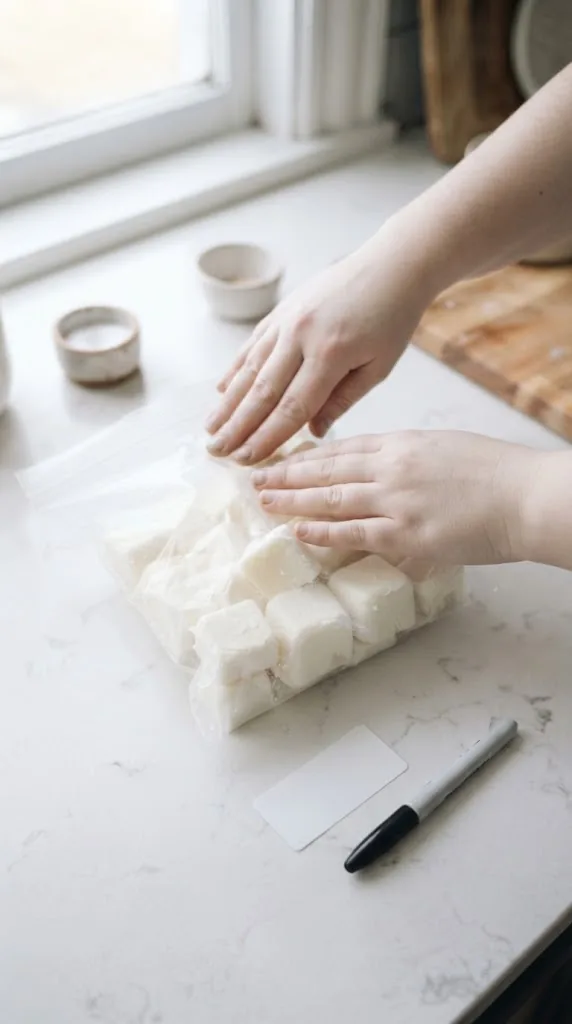
- Transfer the frozen cream cubes into a heavy-duty freezer bag.
- Squeeze out excess air, seal tightly, and label with the date.
Best containers for freezing heavy cream
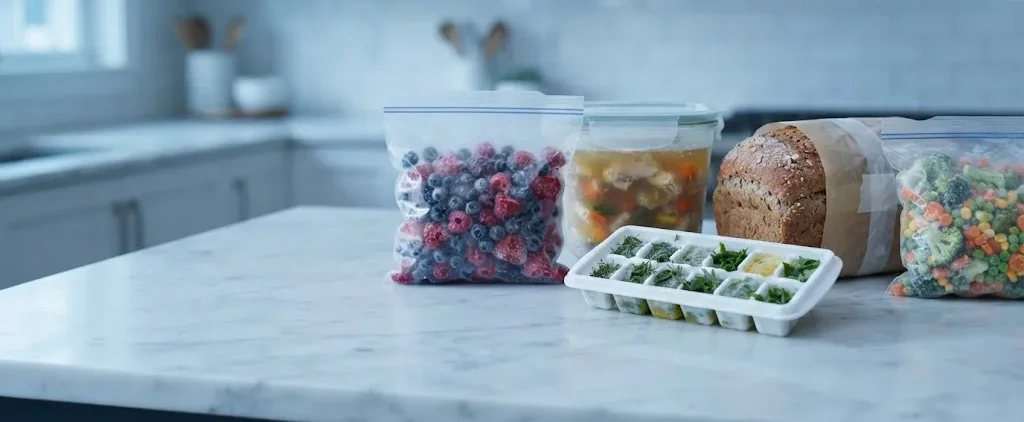
- Freezer bags: press out as much air as you can and freeze them flat so they stack and thaw faster.
- Airtight rigid containers: best for soft or liquid foods. Leave about 1/2 inch of headspace because food expands as it freezes.
- Sheet pan first: freeze pieces in a single layer for an hour or two, then bag them so they don’t clump together.
- Label everything: write the item and the date on every package.
For heavy cream: Leave at least one inch of headspace if freezing in a rigid container, as the cream will expand as it turns to ice.
How to thaw heavy cream
- Transfer the required amount of heavy cream from the freezer to the refrigerator and let it thaw overnight.
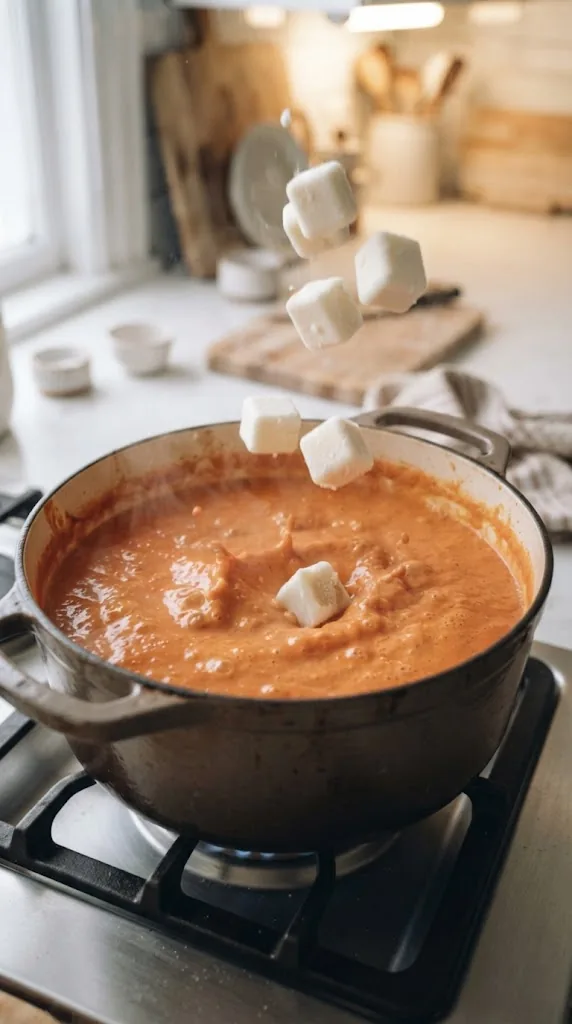
- Drop frozen cubes straight into hot soups and sauces, or use thawed cream in cooked recipes.
How to reheat heavy cream
- Stir the thawed or frozen cream directly into simmering soups or sauces over medium-low heat.
- Heat gently until warmed through, ensuring any cooked dishes reach a safe temperature of 165°F (74°C) if they contain other ingredients like meat.
- Whisk constantly while heating to help incorporate the separated fats back into the liquid.
Best ways to use frozen heavy cream
- Great stirred into creamy potato soup or tomato bisque.
- Wonderful for baking into rich quiches, casseroles, and homemade bread.
- Not for pouring over fresh berries or using in cold coffee where separation is visible.
Fixing the texture: Blend the thawed cream with an immersion blender or use a wire whisk vigorously to help smooth out the grainy separation.
How long heavy cream keeps
| Where | How long |
|---|---|
| Freezer (0°F / -18°C) | 3-4 months |
| Refrigerator (40°F / 4°C) | 1 week after opening |
| Pantry / counter | Not recommended |
Can you refreeze heavy cream?
Yes, heavy cream can be refrozen safely only if it was thawed in the refrigerator and not left at room temperature for more than two hours. However, freezing it a second time will further break down the fat emulsions, resulting in an even more grainy and separated texture that is best suited only for cooking and baking.
- Incorporate the thawed heavy cream into a cooked soup or sauce before freezing the dish.
- Freeze the cream in small portions, such as ice cube trays, so you only thaw what you need.
- Quickly cool any cooked dishes containing the cream and place them in the refrigerator or freezer within two hours.
The rules for every food: Can you refreeze food after thawing?
Watch out for
- Thawed heavy cream will separate and look grainy, but this is normal.
- Avoid whipping thawed heavy cream, as the broken fat emulsions prevent it from holding peaks.
- Give the thawed cream a vigorous whisking or blend it into your dish to help smooth out the texture.
Food safety notes
Always thaw heavy cream safely in the refrigerator and discard any dairy that develops an off odor or mold. Never leave perishable dairy out at room temperature for more than two hours.
Other ways to keep heavy cream
- Store unopened heavy cream in the coldest part of the refrigerator for several weeks.
- Use up extra cream by making homemade butter or incorporating it into a quiche.
Common questions
Can you whip heavy cream after it has been frozen?
No, because the freezing process breaks the fat emulsions in the cream, meaning it will no longer trap air to form whipped cream.
Why does heavy cream look grainy after thawing?
The grainy appearance is caused by the fat separating from the liquid during the freezing and thawing process. Whisking it into hot soups or sauces usually helps smooth it out.
Can I freeze heavy cream right in its original carton?
Yes, if you pour a little out first to leave room for expansion. Ice cube trays are handier, though, since you can thaw just what you need.
Can I freeze heavy cream in a glass jar?
Glass jars are not recommended because the liquid expands when frozen, which can easily crack the glass. Plastic containers or silicone ice cube trays are much safer alternatives.
What should I do if my thawed cream smells sour?
If the cream has a sour smell, unusual discoloration, or mold, it has spoiled and must be discarded immediately rather than used in cooking.
Sources
- USDA FSIS: Freezing and Food Safety
- FoodSafety.gov: FoodKeeper storage times
- National Center for Home Food Preservation: Freezing
Freezer times are for best quality. Food kept at 0°F (-18°C) stays safe indefinitely, but always thaw it in the fridge, in cold water or in the microwave, never on the counter. When in doubt, throw it out. See the USDA freezing guide.