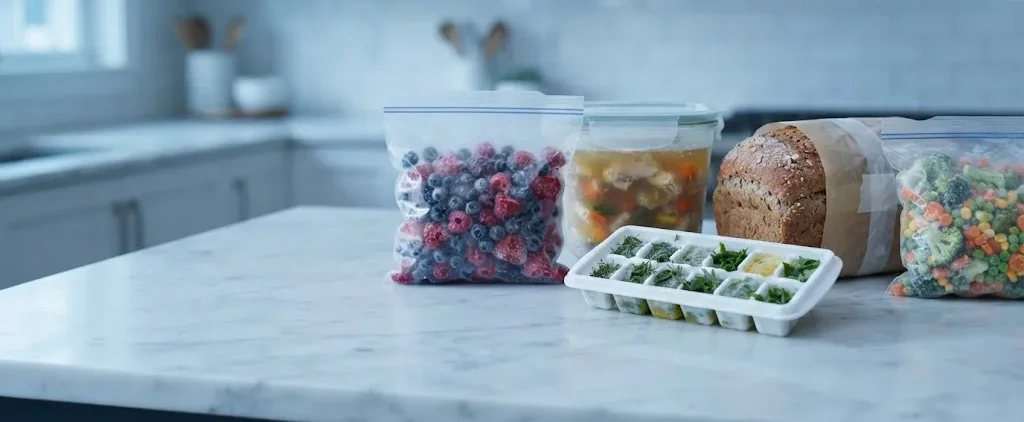
Yes, muffins freeze exceptionally well and retain their moist texture and sweet flavor for months if wrapped properly.
Why
Muffins freeze wonderfully because their baked crumb structure holds up well to cold temperatures without becoming overly soggy. Because they contain fat and sugar, they retain much of their moisture during freezing. As long as you protect them from dry freezer air, they will taste nearly as fresh after thawing as the day they were baked. Proper wrapping prevents freezer burn and keeps the delicate tops from drying out or absorbing unwanted odors from surrounding foods in your freezer.
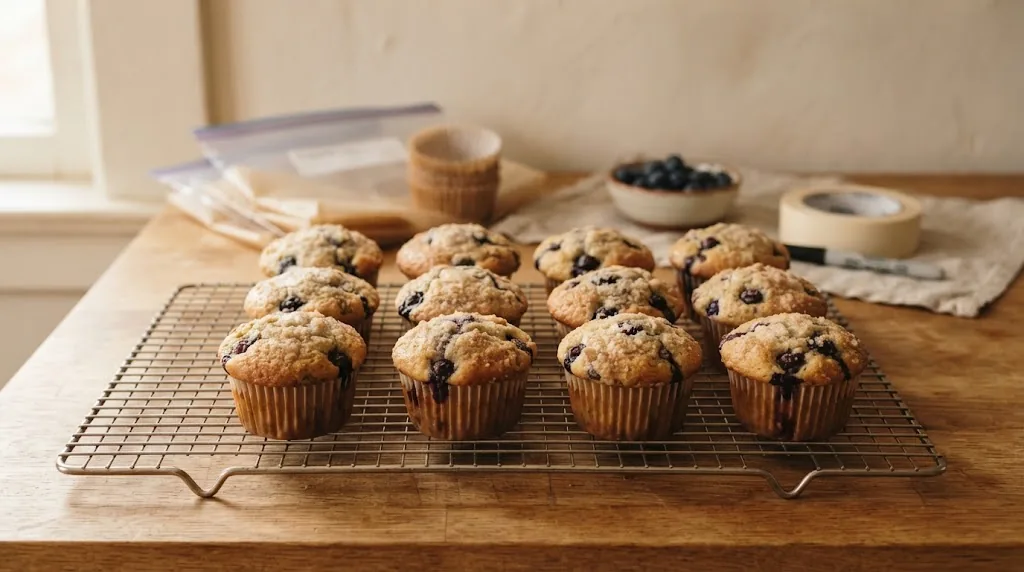
What freezing does to muffins
- Texture: The outer crust may lose a small amount of its crispness and become slightly softer upon thawing.
- Flavor: Spices and fruit mix-ins remain largely unchanged, though very subtle flavor dulling can happen over extended storage.
- Moisture: The crumb can dry out slightly if not wrapped tightly enough to block circulating freezer air.
Types of muffins and how they freeze
- Store-bought muffins: These often contain extra preservatives and packaged moisture barriers that help them retain their softness exceptionally well in the freezer.
- Low-fat muffins: Because they lack the fat content of traditional recipes, low-fat varieties tend to dry out much faster and should be eaten sooner.
How to freeze muffins
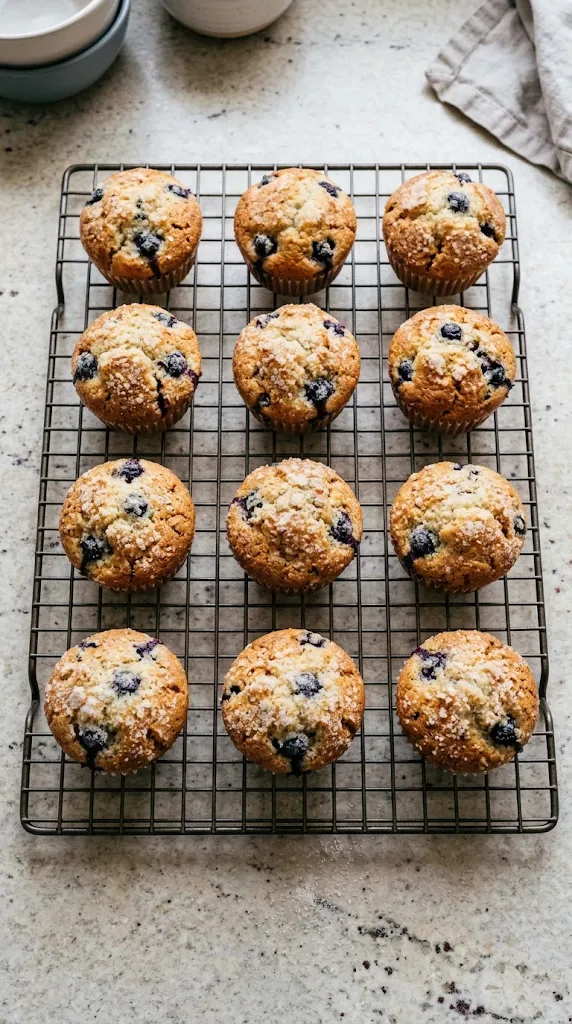
- Let freshly baked muffins cool completely on a wire rack.
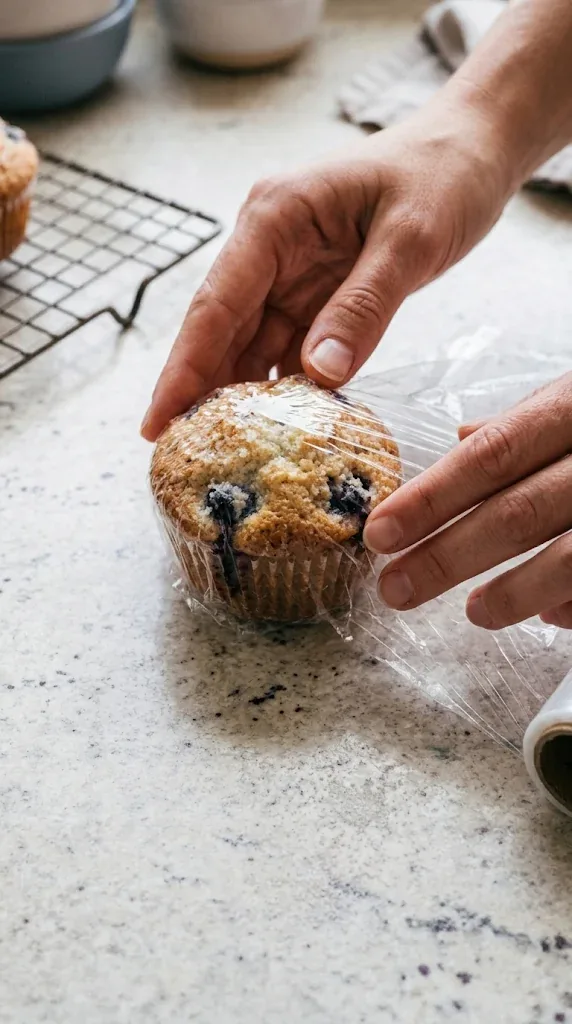
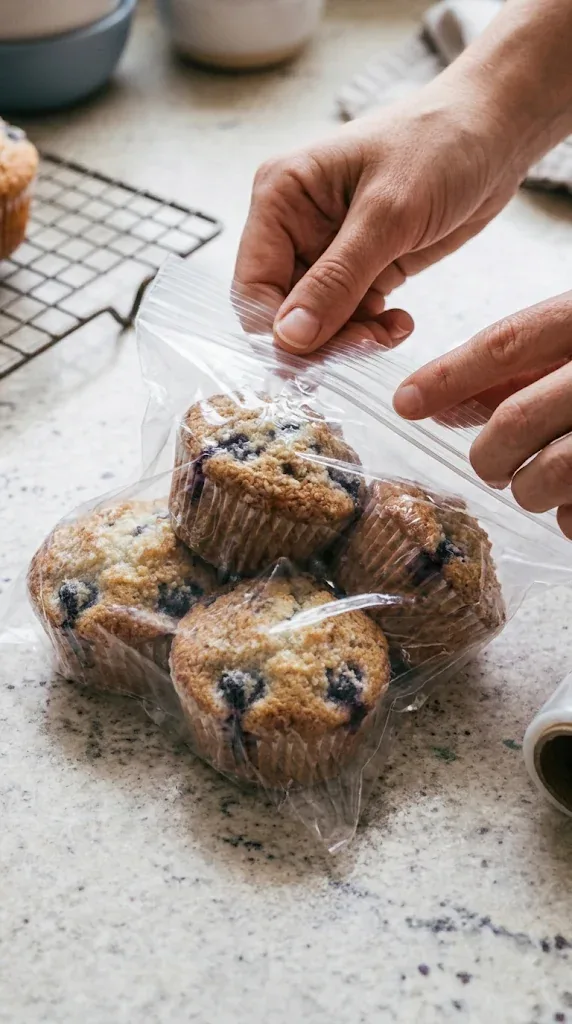
- Wrap each muffin tightly in plastic wrap to seal out air.
- Place the individually wrapped muffins inside a heavy-duty freezer bag or a rigid airtight container.
- Squeeze excess air from the freezer bag and seal it securely.
- Label the package with the name and the date you are freezing them.
Best containers for freezing muffins
- Freezer bags: press out as much air as you can and freeze them flat so they stack and thaw faster.
- Airtight rigid containers: best for soft or liquid foods. Leave about 1/2 inch of headspace because food expands as it freezes.
- Sheet pan first: freeze pieces in a single layer for an hour or two, then bag them so they don’t clump together.
- Label everything: write the item and the date on every package.
For muffins: Wrap each muffin securely in plastic wrap to create an individual moisture barrier before placing them together inside a heavy-duty freezer bag to prevent freezer burn.
How to thaw muffins
- Remove the desired number of muffins from the freezer.
- Unwrap them from the plastic wrap to prevent moisture from getting trapped on the crust.
- Allow them to thaw at room temperature in their wrapping for about one to two hours.
- Alternatively, microwave a single unfrosted muffin on medium power for 20 to 30 seconds until warm.
How to reheat muffins
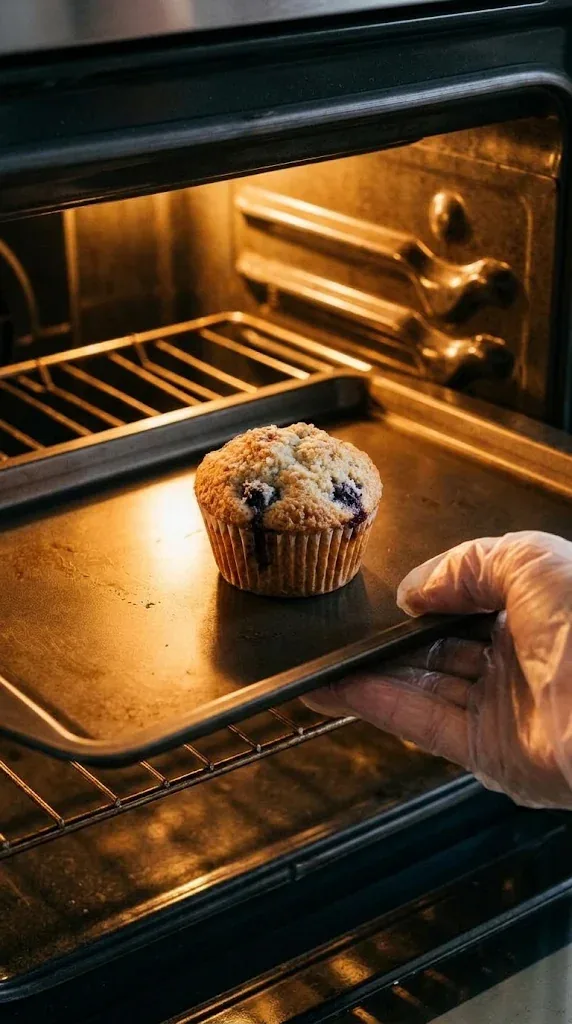
- Preheat your oven to 350 degrees Fahrenheit.
- Remove the plastic wrapping completely from the thawed muffin.
- Place the muffin on a baking sheet and warm it in the oven for about five minutes.
Best ways to use frozen muffins
- Great for quick morning breakfasts served alongside butter or jam.
- Perfect for packing into lunchboxes as a sweet midday snack.
- Not recommended for delicate canape platters due to the slightly softened exterior texture.
Fixing the texture: Warming the thawed muffin in a hot oven for a few minutes helps drive off excess surface moisture and restores a pleasant crumb texture.
How long muffins keeps
| Where | How long |
|---|---|
| Freezer (0°F / -18°C) | 2-3 months |
| Refrigerator (40°F / 4°C) | Up to a week |
| Pantry / counter | Up to three days |
Can you refreeze muffins?
Yes, you can refreeze muffins only if they were thawed safely inside the refrigerator and have not been left out at room temperature for more than two hours. However, a second freeze will cause the crumb to dry out further and degrade the texture of the muffin.
- Slice or portion muffins into individual servings so you only thaw what you plan to eat.
- Check that the thawed muffins show no signs of spoilage or moisture damage before considering a second freeze.
- Consider baking the thawed muffins into a new dish, like a bread pudding, rather than refreezing them plain.
The rules for every food: Can you refreeze food after thawing?
Watch out for
- Avoid freezing muffins with high-moisture toppings like fresh fruit slices or delicate glazes that may turn watery when thawed.
- Ensure muffins are completely cool before wrapping to prevent condensation and ice crystals from forming inside the package.
- Do not leave them uncovered in the freezer, or they will quickly develop severe freezer burn and dry out.
Food safety notes
Ensure muffins are cooled quickly and placed into the refrigerator or freezer within two hours of baking to prevent bacterial growth. Safely thaw frozen muffins in the refrigerator or at room temperature, and only refreeze them if they were thawed safely inside the fridge.
Other ways to keep muffins
- Store them in an airtight container at room temperature for up to three days.
- Keep them in the refrigerator for up to a week to extend shelf life slightly.
- Bake a half batch at a time to reduce the need for long-term storage.
Common questions
Can I freeze muffins with cream cheese fillings?
It is best to avoid freezing muffins with dairy-based fillings or custard centers because dairy can separate, become grainy, and alter the texture significantly upon thawing.
Should I frost muffins before freezing them?
You can freeze frosted muffins, but buttercreams and heavy frostings often stick to the wrapping and can become sticky or watery when thawed. It is usually better to freeze them unfrosted and add toppings after reheating.
How can I make thawed muffins taste freshly baked?
After thawing them to room temperature, warm the unwrapped muffins in a 350 degree Fahrenheit oven for about five minutes to restore a freshly baked crust and soft interior.
Can I freeze raw muffin batter instead of baked muffins?
Yes, you can scoop muffin batter directly into paper-lined muffin tins, flash-freeze them on the tray until solid, and then transfer the unbaked portions to a freezer bag for up to three months. Bake them straight from the freezer by adding a few extra minutes to the baking time.
Do I need to remove the paper muffin liners before freezing?
No, it is best to leave the paper liners on the muffins while freezing and thawing, as they help the baked goods maintain their structural shape and prevent sticking.
Sources
- USDA FSIS: Freezing and Food Safety
- FoodSafety.gov: FoodKeeper storage times
- National Center for Home Food Preservation: Freezing
Freezer times are for best quality. Food kept at 0°F (-18°C) stays safe indefinitely, but always thaw it in the fridge, in cold water or in the microwave, never on the counter. When in doubt, throw it out. See the USDA freezing guide.