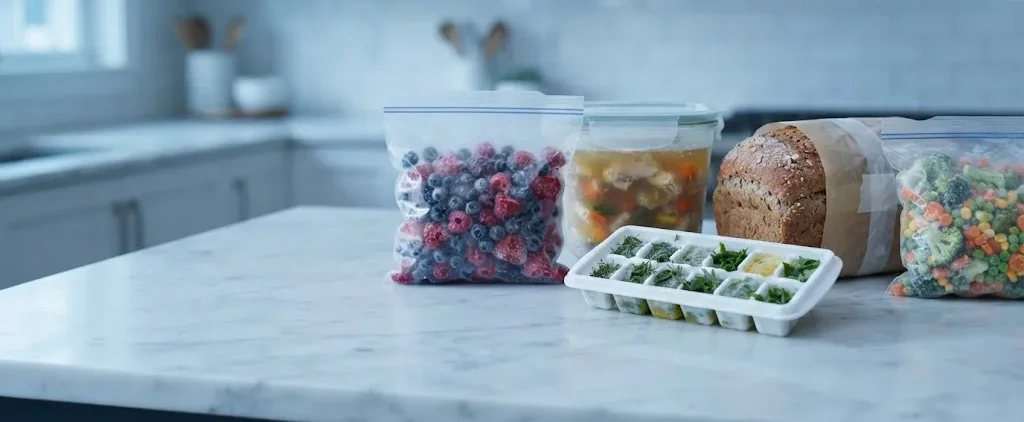
Yes, but freezing severely alters the texture of cottage cheese, making it watery and grainy once thawed.
Why
Cottage cheese has a high moisture content and delicate dairy curds. When frozen, the water inside separates and forms ice crystals, breaking down the emulsion and protein structure. Upon thawing, the curds turn unpleasantly crumbly, dry, and watery rather than smooth and creamy. While it is completely safe to eat after freezing, the drastic change in mouthfeel means it is generally no longer enjoyable to eat straight from the container. It can, however, still be used effectively in recipes where the texture will be thoroughly blended or baked out.
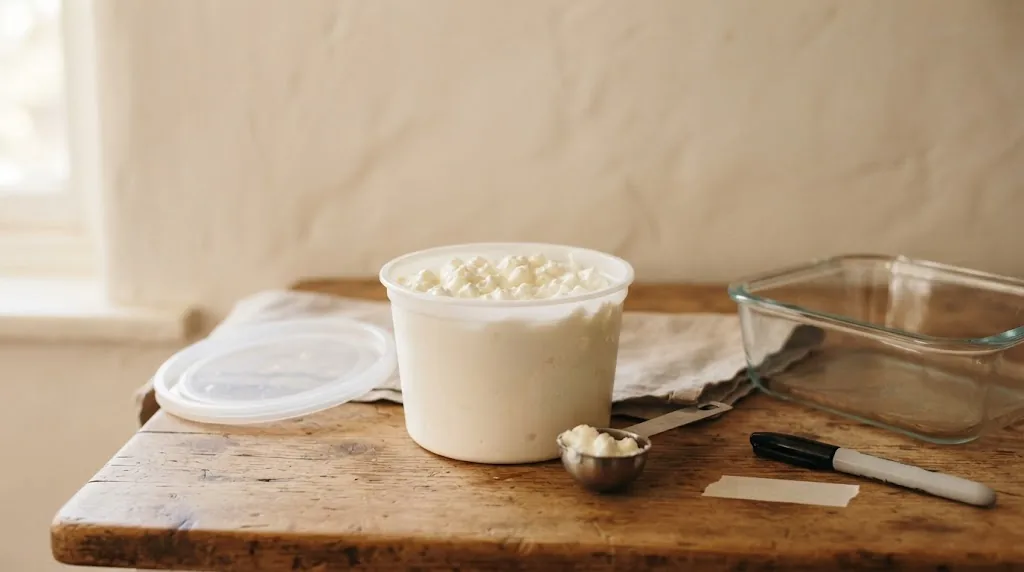
What freezing does to cottage cheese
- Texture: Curds become extremely crumbly, dry, and granular instead of smooth.
- Moisture: Water separates from the dairy solids, creating a watery pool around the cheese.
- Appearance: The uniformity is disrupted, making the product look separated and unappealing.
Types of cottage cheese and how they freeze
- Full-fat cottage cheese: Contains a higher milk fat percentage which provides slightly better structural integrity, though it still suffers from significant separation.
- Low-fat and fat-free cottage cheese: Freezes very poorly because the lack of fat causes even more severe separation and a watery, rubbery consistency upon thawing.
- Lactose-free cottage cheese: Freezes similarly to standard varieties, but enzymatic modifications can sometimes lead to an even mushier texture after thawing.
How to freeze cottage cheese
- Check that your cottage cheese is fresh and properly sealed before freezing.
- Drain any excess pooled liquid from the container to minimize ice crystal formation.
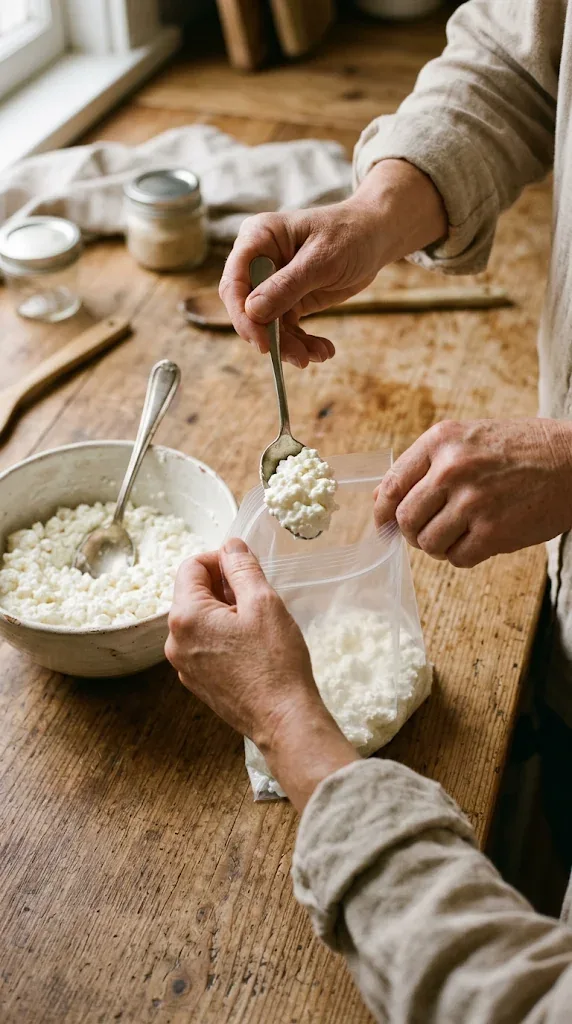
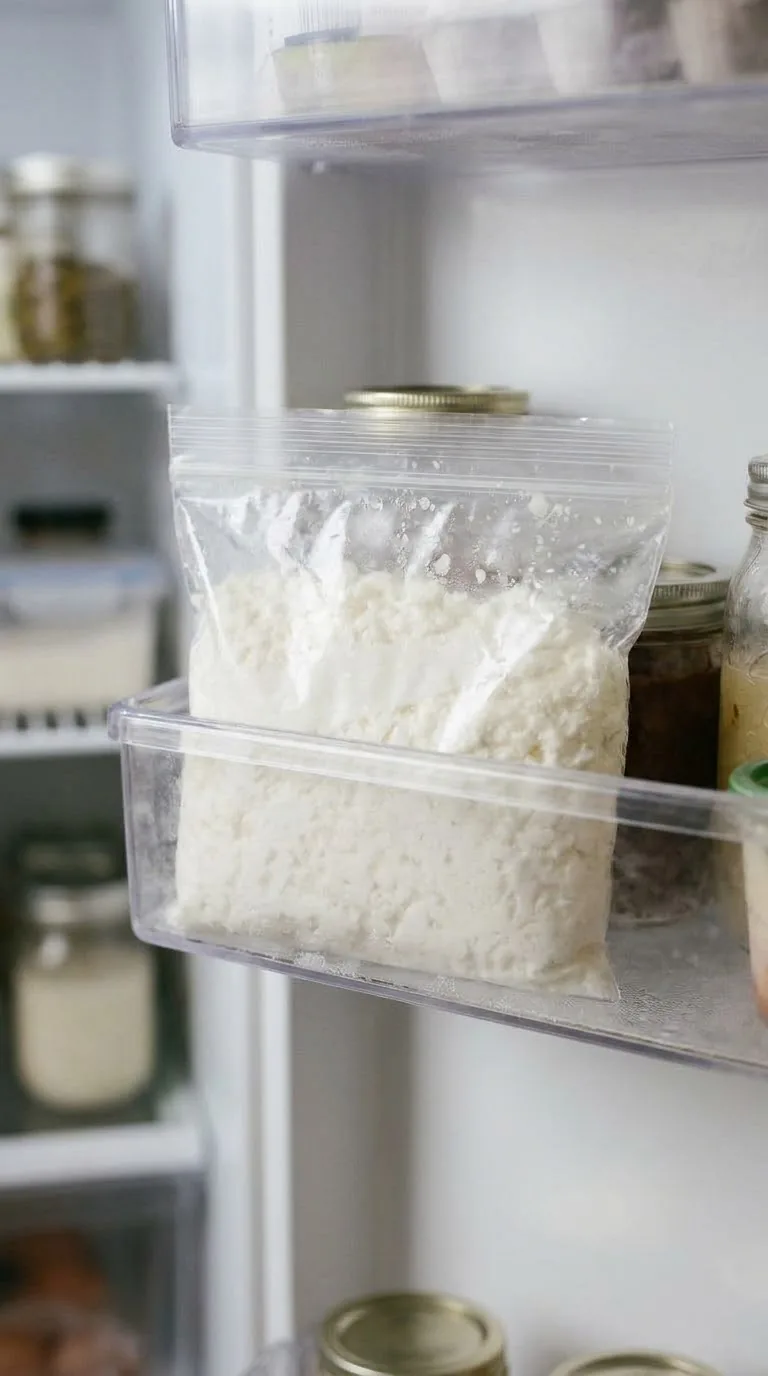
- Portion the cottage cheese into airtight, freezer-safe containers or heavy-duty freezer bags.
- Leave a small amount of headspace in rigid containers to allow for slight expansion.
- Label the packaging with the current date and the name of the item.
Best containers for freezing cottage cheese
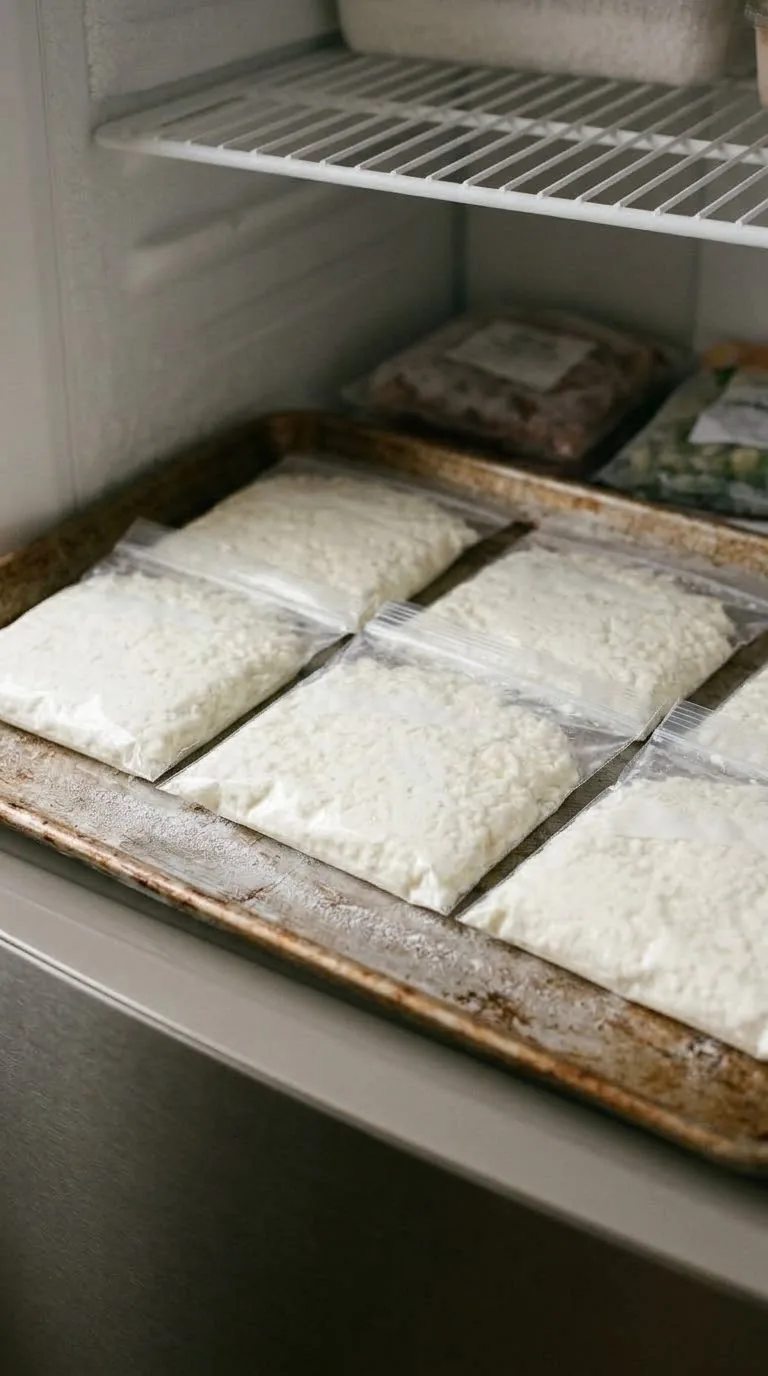
- Freezer bags: press out as much air as you can and freeze them flat so they stack and thaw faster.
- Airtight rigid containers: best for soft or liquid foods. Leave about 1/2 inch of headspace because food expands as it freezes.
- Sheet pan first: freeze pieces in a single layer for an hour or two, then bag them so they don’t clump together.
- Label everything: write the item and the date on every package.
For cottage cheese: Portion cottage cheese into heavy-duty freezer bags with the air pressed out, or use rigid airtight containers leaving a half-inch of headspace for slight expansion.
How to thaw cottage cheese
- Place the frozen cottage cheese in the refrigerator and allow it to thaw slowly overnight.
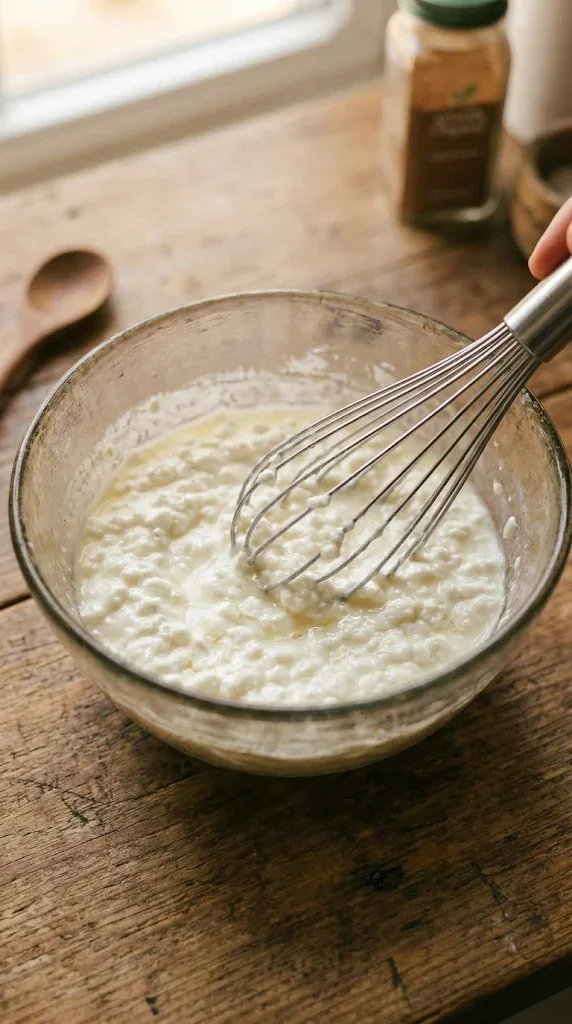
- Stir or whisk the thawed cottage cheese vigorously to help reincorporate some of the separated liquid and smooth out the texture.
- Drain any remaining pooled water before incorporating the cheese into your recipe.
Best ways to use frozen cottage cheese
- Great for blending into pancake and waffle batters
- Works well baked into lasagnas and casseroles
- Good for mixing into smoothies where texture is completely blended away
- Not suitable for eating by the spoonful or topping raw salads
Fixing the texture: Stir the thawed cottage cheese vigorously or run it through a blender to smooth out the grainy curds before using it in baked or blended recipes.
How long cottage cheese keeps
| Where | How long |
|---|---|
| Freezer (0°F / -18°C) | 2-3 months |
| Refrigerator (40°F / 4°C) | 7 days after opening |
| Pantry / counter | Not recommended |
Can you refreeze cottage cheese?
No, you should never refreeze cottage cheese once it has been fully thawed because it will severely degrade the texture even further and increase the risk of bacterial growth. If the cottage cheese was thawed safely in the refrigerator, you can cook it into a recipe like a lasagna or baked casserole, and then freeze that cooked dish.
- Freeze cottage cheese in small, recipe-ready portions so you only thaw what you need at one time.
- Cook or bake thawed cottage cheese into a dish before attempting to freeze it again.
- Never leave thawed cottage cheese at room temperature; keep it refrigerated and use it promptly.
The rules for every food: Can you refreeze food after thawing?
Watch out for
- Expect a noticeable grainy and watery texture change upon thawing.
- Never refreeze cottage cheese once it has been fully thawed.
- Avoid freezing low-fat or fat-free varieties, as they tend to separate even more severely than full-fat options.
Food safety notes
Always thaw cottage cheese safely in the refrigerator overnight. Never refreeze cottage cheese once it has been fully thawed to prevent bacterial growth.
Other ways to keep cottage cheese
- Store unopened containers in the coldest part of your refrigerator well past the printed date if properly sealed.
- Use up extra cottage cheese quickly by blending it into dips, scrambled eggs, or smoothie bowls.
- Substitute with ricotta or cream cheese depending on the specific recipe requirements.
Common questions
Can you freeze cottage cheese in its original tub?
Yes, you can place the unopened original plastic tub directly into the freezer, though transferring it to a freezer-safe bag with excess air removed provides better protection against freezer burn.
Why is my thawed cottage cheese watery and grainy?
Freezing causes the water in the cheese to separate from the dairy solids and form ice crystals. When these melt, the curds lose their moisture and elasticity, resulting in a crumbly and watery consistency.
How can I fix the texture of thawed cottage cheese?
You cannot restore its original creamy texture for direct eating, but you can improve it slightly by stirring it vigorously or blending it until smooth before using it in cooked dishes.
Can I freeze cottage cheese after mixing it into a recipe like lasagna?
Yes, once cottage cheese is baked into a dish like lasagna, the entire cooked dish can be frozen successfully for up to 3 months without the same grainy texture issues.
Does adding salt or cream before freezing help preserve the texture?
No, adding extra ingredients will not prevent ice crystals from forming and breaking down the fragile dairy proteins during the freezing process.
Sources
- USDA FSIS: Freezing and Food Safety
- FoodSafety.gov: FoodKeeper storage times
- National Center for Home Food Preservation: Freezing
Freezer times are for best quality. Food kept at 0°F (-18°C) stays safe indefinitely, but always thaw it in the fridge, in cold water or in the microwave, never on the counter. When in doubt, throw it out. See the USDA freezing guide.