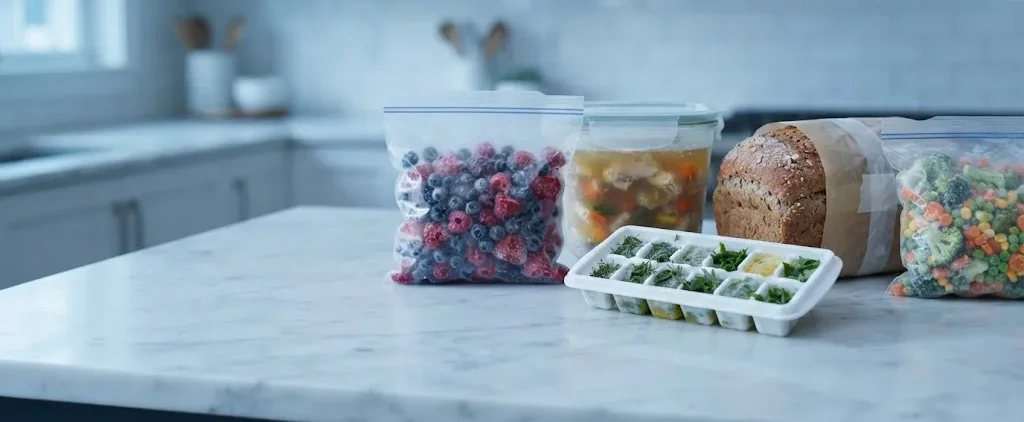
Yes, pancakes freeze exceptionally well and make a quick, convenient breakfast on busy mornings.
Why
Pancakes freeze well because their cooked starch matrix holds up nicely during freezing without losing too much moisture. While the outer edges can dry out slightly if not properly wrapped, freezing stops the staling process and preserves their comforting flavor and soft crumb. Stacking them with parchment paper prevents them from sticking together, ensuring they reheat evenly in a toaster or microwave without getting soggy or tough.
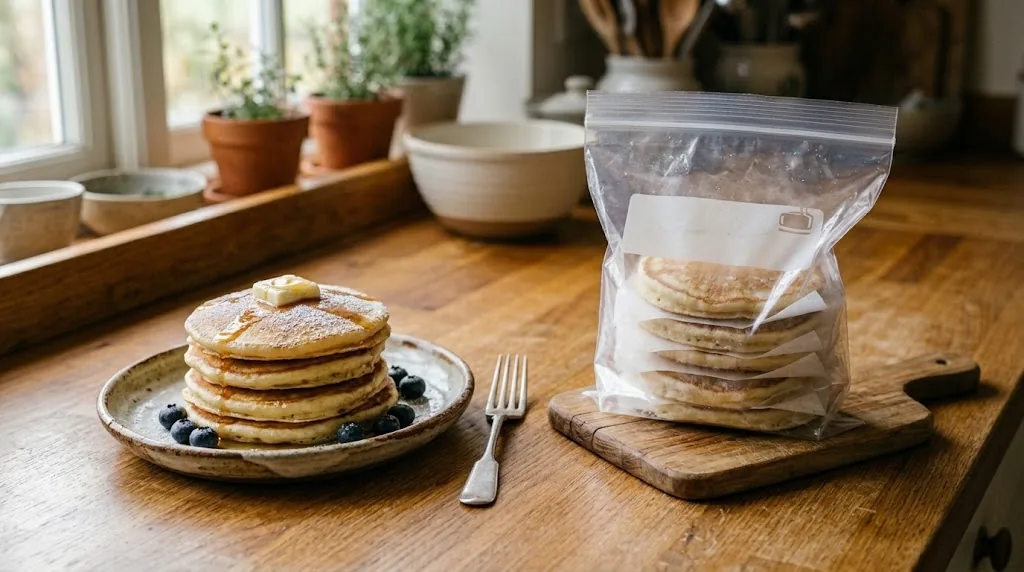
What freezing does to pancakes
- Texture: Can become slightly dry at the outer edges if not tightly sealed against air exposure.
- Moisture: Can develop a slightly firmer crumb compared to freshly cooked batches.
Types of pancakes and how they freeze
- Blueberry or Fruit-Filled Pancakes: Freeze exceptionally well, though fresh fruit pockets may release extra moisture and create small soft spots when reheated.
- Mini Pancakes: Freeze in batches and reheat even faster, making them ideal for kids' breakfast portions in the toaster.
How to freeze pancakes
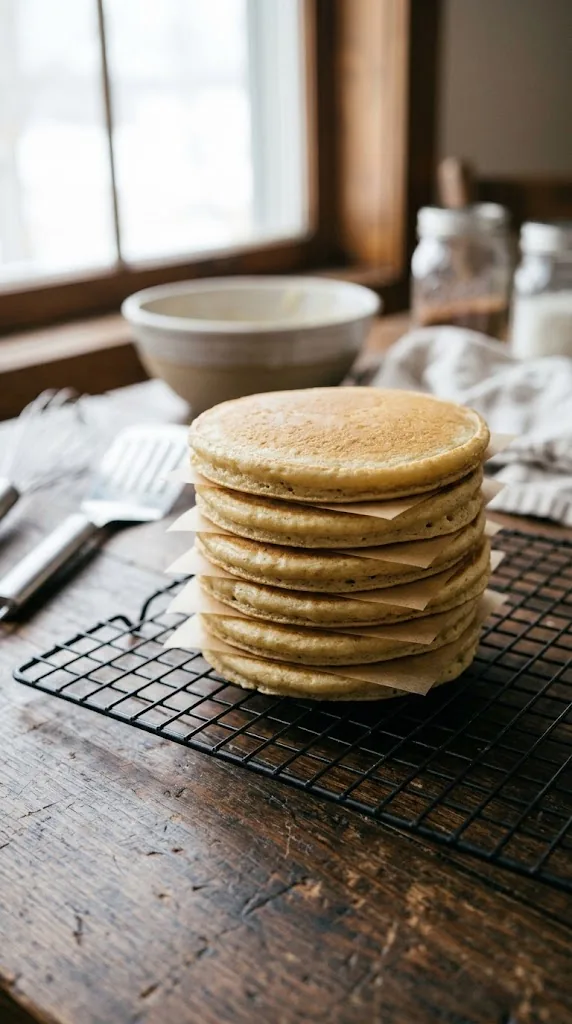
- Allow freshly cooked pancakes to cool completely on a wire rack.
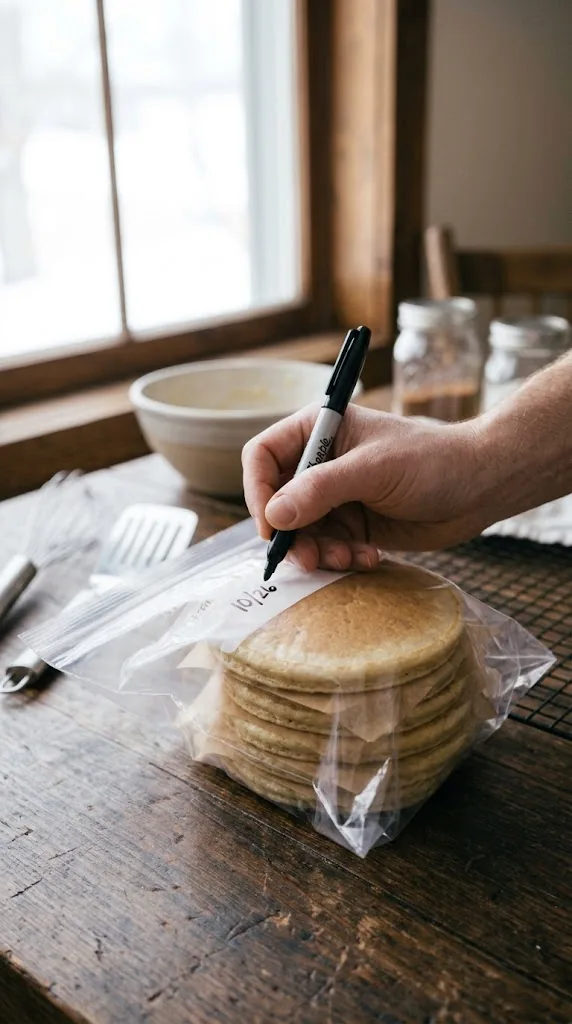
- Place a small piece of parchment paper or wax paper between each pancake to prevent sticking.
- Stack the pancakes in sets of your preferred portion size.
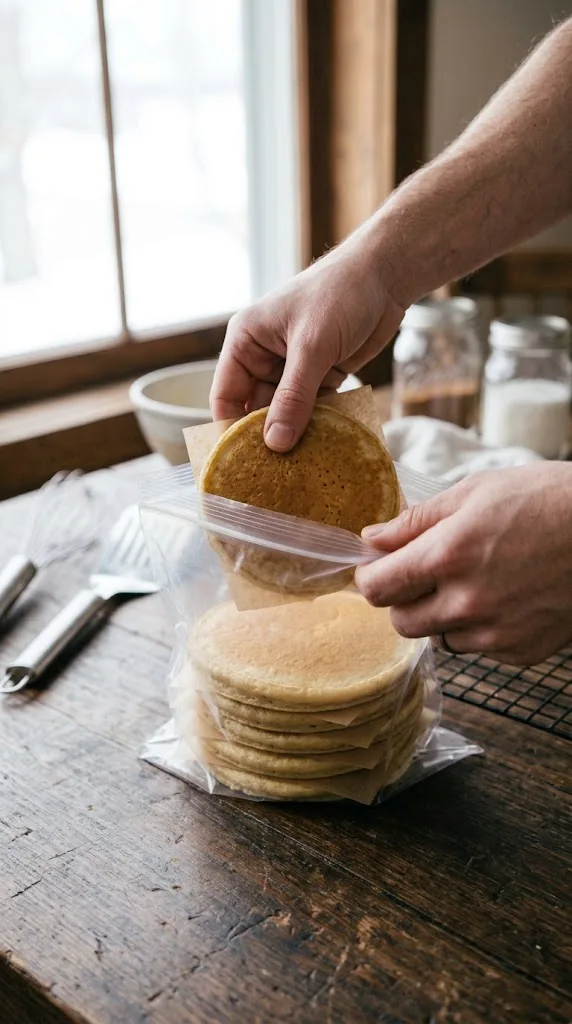
- Slide the stack into a heavy-duty freezer bag or wrap tightly in plastic wrap and aluminum foil.
- Press out as much air as possible before sealing the bag tightly.
- Label the package with the date and freeze for up to 2 months.
Best containers for freezing pancakes
- Freezer bags: press out as much air as you can and freeze them flat so they stack and thaw faster.
- Airtight rigid containers: best for soft or liquid foods. Leave about 1/2 inch of headspace because food expands as it freezes.
- Sheet pan first: freeze pieces in a single layer for an hour or two, then bag them so they don’t clump together.
- Label everything: write the item and the date on every package.
For pancakes: Layer pancakes between sheets of parchment paper and store them in heavy-duty freezer bags with all excess air pressed out.
How to thaw pancakes
- Pop frozen pancakes straight into the toaster or toaster oven on a medium setting until warmed through.
- Alternatively, place one or two pancakes on a microwave-safe plate and heat on high for 30 to 60 seconds.
- For larger batches, warm them uncovered on a baking sheet in a 350 degree Fahrenheit oven for about 10 minutes.
How to reheat pancakes
- Place frozen pancakes directly into a toaster or toaster oven on a medium setting.
- Heat until warmed through and steaming, reaching an internal temperature of 165 degrees Fahrenheit for food safety.
Best ways to use frozen pancakes
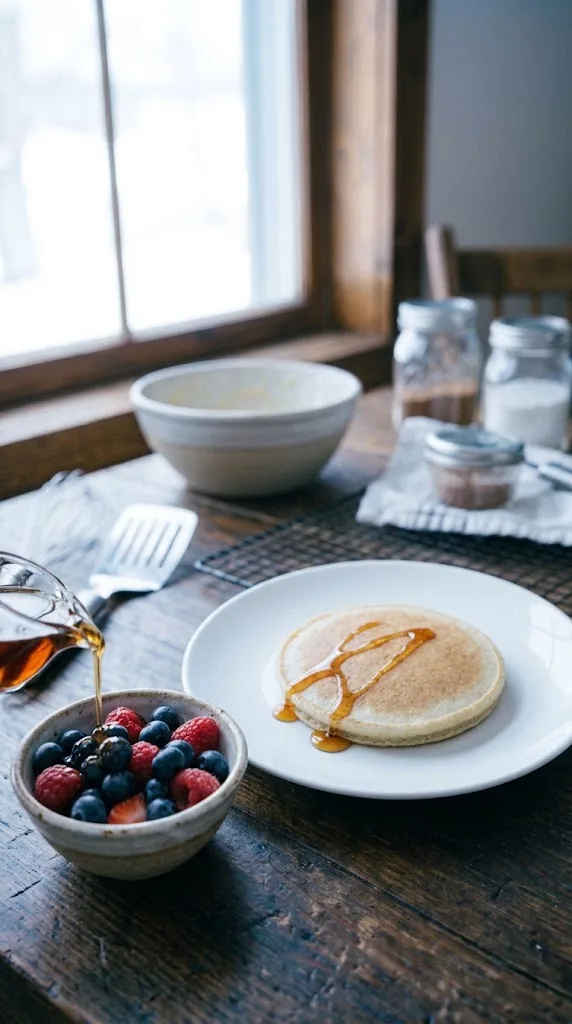
- Great for quick weekday breakfast plates paired with fresh fruit
- Works well for on-the-go snacking after a quick toast
- Not recommended for delicate dessert presentations where a pristine, non-toasted appearance is required
Fixing the texture: If the edges feel slightly dry after reheating, lightly mist the pancake with water before warming or serve with warm maple syrup to restore moisture.
How long pancakes keeps
| Where | How long |
|---|---|
| Freezer (0°F / -18°C) | 2 months |
| Refrigerator (40°F / 4°C) | 3 days |
| Pantry / counter | Not recommended |
Can you refreeze pancakes?
Yes, you can refreeze pancakes if they were thawed safely in the refrigerator and not left out over two hours, though a second freeze will cause the crumb to dry out further and degrade the overall texture. If your pancakes were thawed using a microwave or placed in cold water, they must be cooked thoroughly into a new dish before freezing again.
- Cook or thoroughly reheat thawed pancakes before refreezing them.
- Freeze pancakes in small portions so you only thaw what you need at one time.
- Lightly mist dry pancakes with water before reheating to help restore moisture.
The rules for every food: Can you refreeze food after thawing?
Watch out for
- Freezer burn can occur if pancakes are exposed to air, leading to dry, hard edges.
- Avoid stacking warm pancakes, as condensation will form and create soggy spots that turn icy.
- Do not refreeze pancakes once they have been completely thawed unless you reheat them thoroughly first.
Food safety notes
Always ensure cooked pancakes are cooled quickly and placed in the freezer within two hours of cooking. Reheat leftovers thoroughly to an internal temperature of 165 degrees Fahrenheit.
Other ways to keep pancakes
- Store leftover batter in an airtight container in the refrigerator for up to 2 days.
- Keep cooked pancakes in the refrigerator for up to 3 days and reheat in the toaster.
- Mix up a dry pantry pancake blend ahead of time for instant cooking on demand.
Common questions
Can I freeze homemade and store-bought pancakes the same way?
Yes, both homemade and store-bought pancakes freeze very well. Just ensure store-bought boxed pancakes are transferred to a sealed freezer bag to prevent freezer burn.
Do I need to thaw pancakes before reheating them?
No, you do not need to thaw them. You can heat frozen pancakes directly in a toaster, microwave, or oven for the best texture.
Can I freeze pancakes that already have syrup or butter on them?
It is best to freeze plain pancakes without syrup or butter. Adding toppings before freezing will make the pancakes soggy and difficult to reheat properly.
Can I freeze raw pancake batter instead of cooked pancakes?
It is not recommended to freeze raw batter containing baking powder or baking soda, as the leavening agents lose their potency over time and the resulting pancakes will be flat.
Why are my frozen pancakes turning out rubbery after reheating?
Overheating pancakes in the microwave can zap their moisture and make them rubbery. Try using a toaster or lowering the microwave heating time to maintain a soft crumb.
Sources
- USDA FSIS: Freezing and Food Safety
- FoodSafety.gov: FoodKeeper storage times
- National Center for Home Food Preservation: Freezing
Freezer times are for best quality. Food kept at 0°F (-18°C) stays safe indefinitely, but always thaw it in the fridge, in cold water or in the microwave, never on the counter. When in doubt, throw it out. See the USDA freezing guide.