Yes, but freezing raw basil causes it to turn black, mushy, and lose its bright aroma.
Why
Basil has a very high water content and delicate cell walls. When you freeze fresh basil leaves directly, the water inside expands into ice crystals and ruptures those cells. Once thawed, the leaves collapse, turn dark brown or black, and become a soggy mess. To freeze basil successfully, you need to alter its state first by blanching it briefly or pureeing it into a paste or oil base that protects the leaves from direct air and preserves their flavor compounds.
What freezing does to basil
- Texture: Cell walls rupture during freezing, causing leaves to become limp and soggy.
- Flavor: Volatile aromatic compounds degrade over time, leading to a milder and slightly muted herbal taste.
- Color: Oxidation and cell damage cause the vibrant green pigment to darken into a dull brownish-black.
Types of basil and how they freeze
- Whole fresh leaves: Whole leaves require blanching or oil coating to prevent severe blackening and mushiness when thawed.
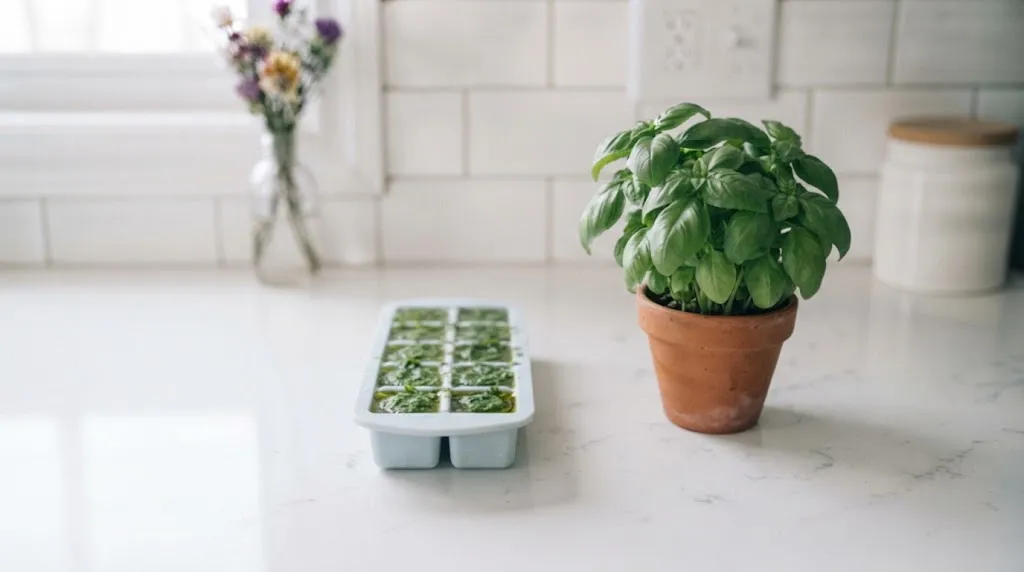
- Basil puree: Pureeing basil with olive oil creates a protective barrier that locks in the bright color and flavor remarkably well.
- Herb butter with basil: Mixing chopped basil into softened butter and freezing it in logs or slices retains quality for up to 4 months.
How to freeze basil
- Wash and dry fresh basil leaves thoroughly.
- Blanch the leaves in boiling water for two seconds, then plunge them into an ice bath.
- Drain and pat the leaves completely dry, or puree them with a little olive oil.
- Pack the leaves flat between sheets of parchment paper or pour the puree into ice cube trays.
- Transfer the frozen cubes or leaves into an airtight freezer bag, squeeze out excess air, and seal.
- Label the bag with the date and freeze for up to 6 months.
Best containers for freezing basil
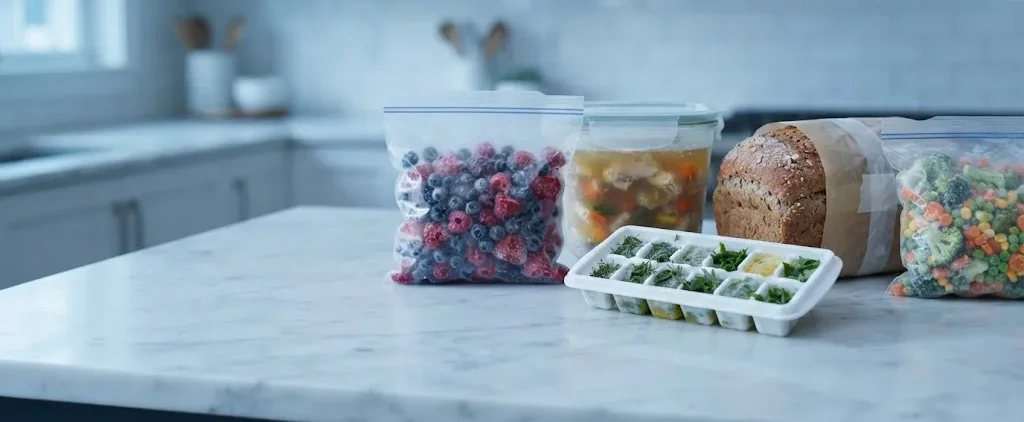
- Freezer bags: press out as much air as you can and freeze them flat so they stack and thaw faster.
- Airtight rigid containers: best for soft or liquid foods. Leave about 1/2 inch of headspace because food expands as it freezes.
- Sheet pan first: freeze pieces in a single layer for an hour or two, then bag them so they don’t clump together.
- Label everything: write the item and the date on every package.
For basil: Pack pureed basil into silicone ice cube trays for easy portioning, then transfer the solid cubes into a heavy-duty freezer bag.
How to thaw basil
- Use frozen basil cubes straight from the freezer into hot dishes without thawing.
- If using oil-packed basil cubes, let them soften slightly in the refrigerator for a few minutes before stirring into recipes.
How to reheat basil
- Drop frozen basil cubes directly into simmering soups, stews, or sauces without prior thawing.
- Stir the melting cubes continuously into the hot dish until fully incorporated and heated through to 165°F (74°C).
Best ways to use frozen basil
- Great for stirring into hot pasta sauces, risottos, and homemade pestos.
- Not suitable for fresh garnishes, caprese salads, or sandwiches due to its limp texture.
Fixing the texture: Because freezing permanently breaks down the cellular structure of basil, there is no way to restore its crisp, fresh texture after thawing.
How long basil keeps
| Where | How long |
|---|---|
| Freezer (0°F / -18°C) | 6 months |
| Refrigerator (40°F / 4°C) | 4 days |
| Pantry / counter | 1 week |
Can you refreeze basil?
Yes, you can refreeze thawed basil only if it was safely defrosted in the refrigerator and never left at room temperature for more than two hours. However, subjecting basil to a second freeze will severely degrade its remaining texture, color, and volatile aromatic compounds, turning the leaves even mushier and muting the flavor further.
- Cook or incorporate the thawed basil into a hot dish before freezing it a second time.
- Portion your basil into small ice cube trays so you only thaw the exact amount you need for a single recipe.
- Ensure any thawed basil is kept cold in the refrigerator and never allowed to sit out on the counter.
The rules for every food: Can you refreeze food after thawing?
Watch out for
- Raw, unblanched leaves will turn black and unappetizing in the freezer.
- Freezing causes basil to lose its crisp texture, making it unsuitable for fresh garnishes or caprese salads.
- Basil absorbs odors from other foods easily, so ensure your storage containers are tightly sealed.
Food safety notes
Ensure basil packed in oil is kept strictly in the freezer or used within 4 days in the refrigerator to prevent anaerobic bacteria growth. Always thaw frozen basil in the refrigerator if not adding it directly to hot cooking dishes.
Other ways to keep basil
- Store fresh stems in a jar of water at room temperature out of direct sunlight.
- Dry the leaves in a dehydrator or low-temperature oven.
- Blend basil with olive oil, keep the mixture in the refrigerator and use it within 4 days, or freeze it.
Common questions
Can I freeze whole basil leaves without blanching them?
You can, but the leaves will quickly turn black, mushy, and lose much of their flavor when they thaw due to cell damage from ice crystals.
Is it better to freeze basil in water or oil?
Freezing basil in olive oil is generally better because the oil coats the leaves and protects them from freezer burn and oxidation, preserving the bright green color and flavor much longer.
Can I use frozen basil in salads?
No, freezing destroys the cell structure of the herb, leaving it limp and soft. Frozen basil should only be used in cooked dishes like soups, stews, and sauces.
Can I dry basil instead of freezing it?
Yes, you can dry basil leaves in a low-temperature dehydrator or oven, though the drying process also diminishes the bright aromatic oils compared to proper oil-freezing.
Why does my frozen basil turn dark even inside the bag?
Exposure to residual oxygen causes oxidation of the plant pigments. Blanching the leaves beforehand or submerging them completely in olive oil helps prevent this discoloration.
Sources
- USDA FSIS: Freezing and Food Safety
- FoodSafety.gov: FoodKeeper storage times
- National Center for Home Food Preservation: Freezing
Freezer times are for best quality. Food kept at 0°F (-18°C) stays safe indefinitely, but always thaw it in the fridge, in cold water or in the microwave, never on the counter. When in doubt, throw it out. See the USDA freezing guide.