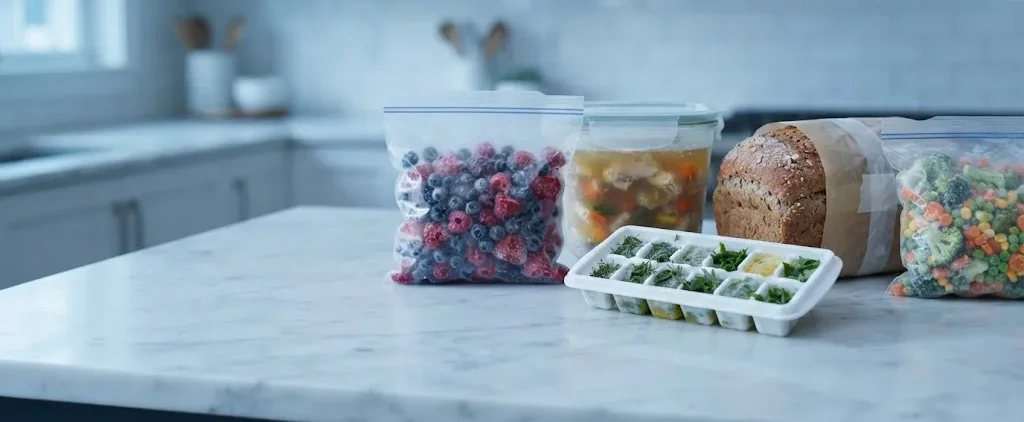
Yes, you can freeze coffee beans, provided they are stored in an airtight, moisture-proof container to protect them from freezer odors and condensation.
Why
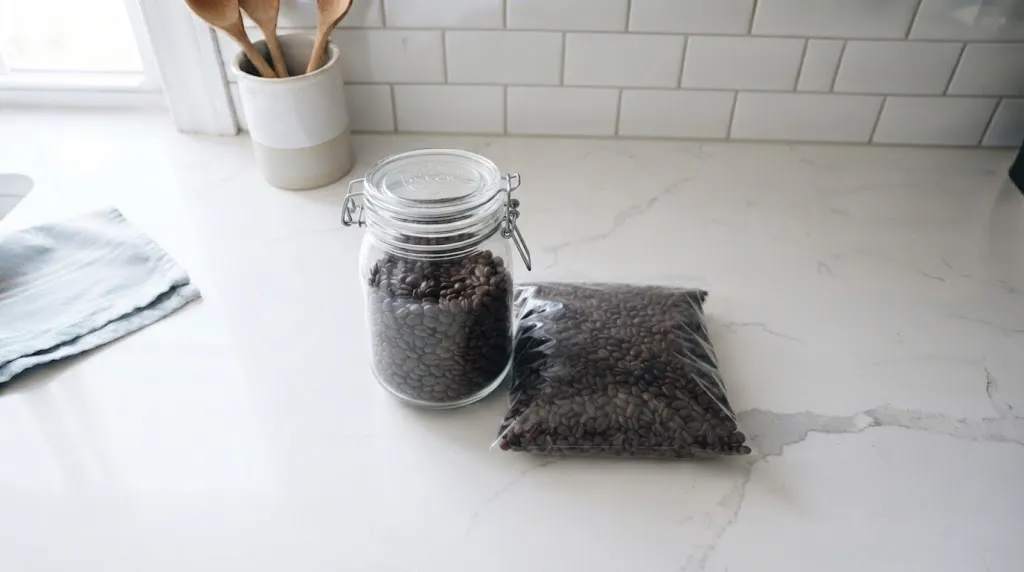
Freezing coffee beans can help preserve their delicate oils and aromatic compounds for a longer period, especially if you buy them in bulk. However, coffee beans are porous and will readily absorb moisture, food odors, and flavors from the freezer. Temperature fluctuations during removal can also cause condensation to form on the beans, which degrades their flavor and quality. For the best results, only freeze whole beans and limit how often you open the container.
What freezing does to coffee beans
- Flavor: Can gradually diminish in intensity over time as aromatic compounds slowly degrade.
- Aroma: May become less pronounced if the packaging allows exposure to air and freezer odors.
Types of coffee beans and how they freeze
- Light roast: Light roast beans are denser and hold onto their delicate origin flavors slightly longer in the freezer than darker roasts.
- Dark roast: Dark roast beans have more surface oils that can oxidize or absorb freezer smells more readily, requiring extra airtight protection.
How to freeze coffee beans
- Purchase whole coffee beans rather than pre-ground beans for the best results.
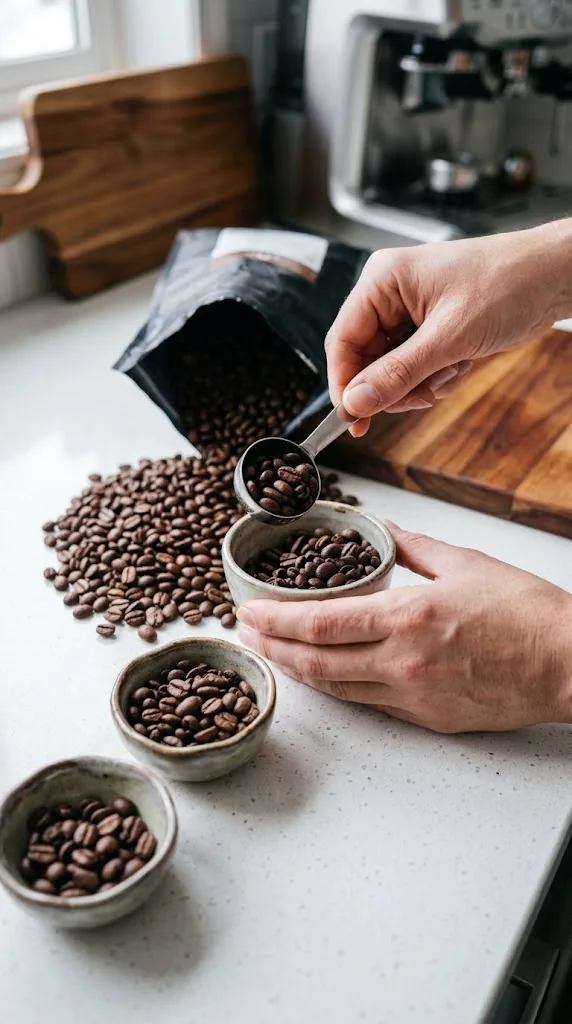
- Portion the beans into amounts you will use within a week or two to avoid repeated freezing and thawing.
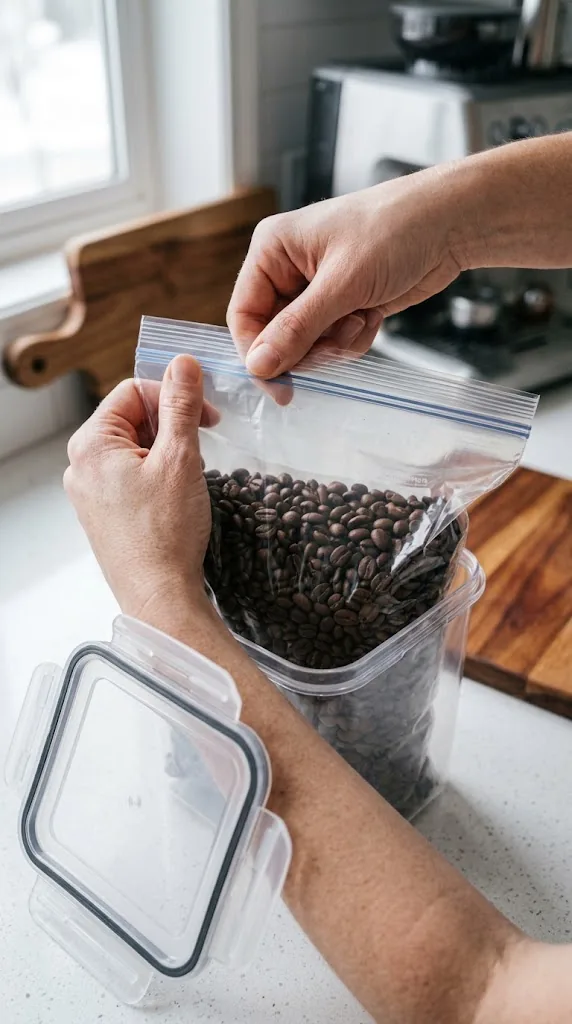
- Transfer the beans into heavy-duty freezer bags or vacuum-sealed bags, squeezing out as much air as possible.
- Place the sealed bags inside an airtight plastic or glass container for an extra layer of protection against odors.
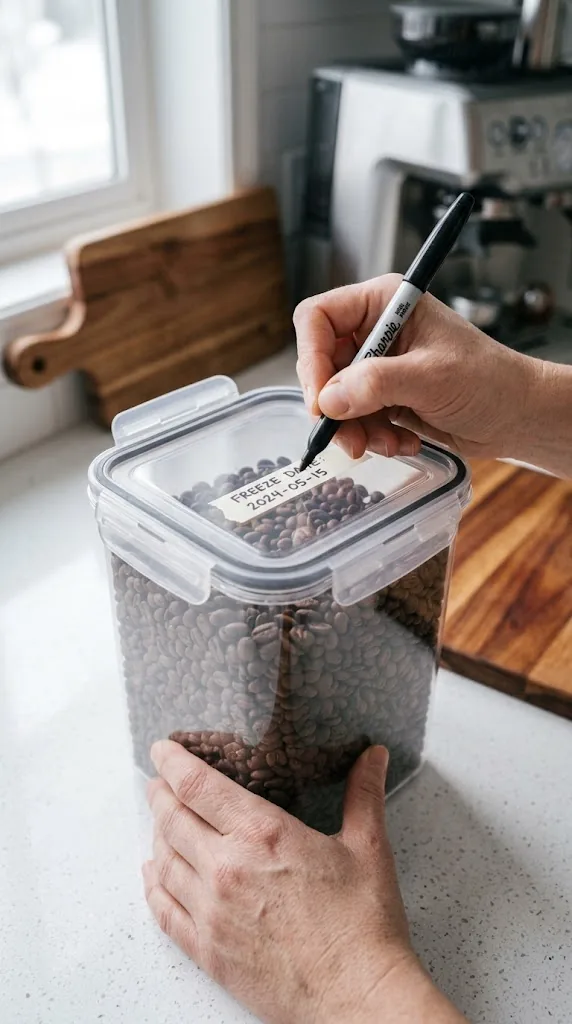
- Label the container with the freezing date to track their storage time.
Best containers for freezing coffee beans
- Freezer bags: press out as much air as you can and freeze them flat so they stack and thaw faster.
- Airtight rigid containers: best for soft or liquid foods. Leave about 1/2 inch of headspace because food expands as it freezes.
- Sheet pan first: freeze pieces in a single layer for an hour or two, then bag them so they don’t clump together.
- Label everything: write the item and the date on every package.
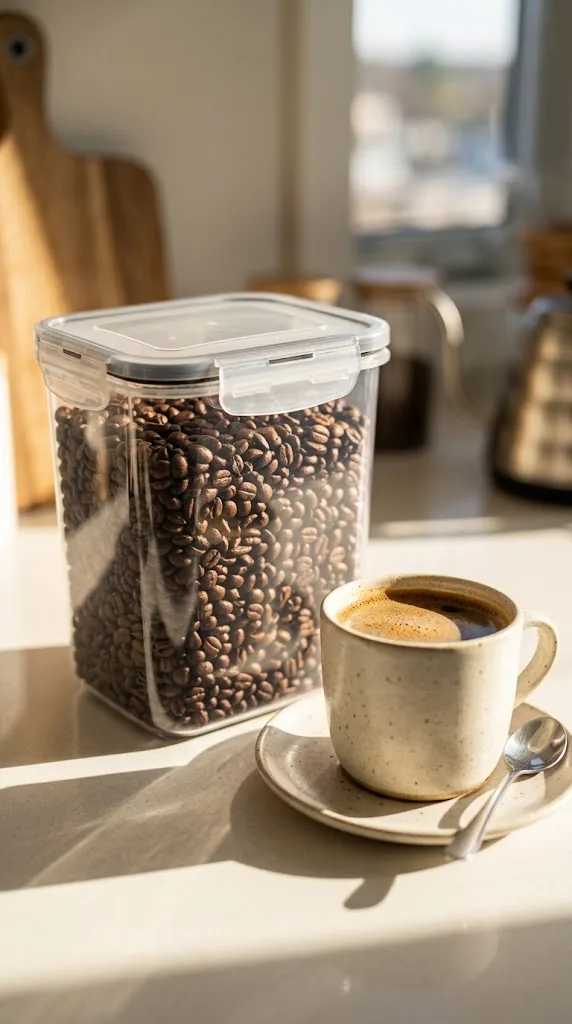
For coffee beans: Use a vacuum-sealed bag inside an opaque, airtight canister to block out both light and freezer odors effectively.
How to thaw coffee beans
- Remove only the portion of beans you need from the freezer.
- Leave the bag or container sealed and let it sit on the counter at room temperature for several hours until it reaches room temperature, preventing condensation from forming directly on cold beans.
- Grind and brew the beans immediately once they reach room temperature.
Best ways to use frozen coffee beans
- Great for brewing hot drip coffee and pour-overs
- Works well for making cold brew coffee concentrate
- Not ideal for delicate single-origin espresso shots where peak aromatic subtlety is required
How long coffee beans keeps
| Where | How long |
|---|---|
| Freezer (0°F / -18°C) | 1-3 months |
| Refrigerator (40°F / 4°C) | Not recommended |
| Pantry / counter | 2 weeks |
Can you refreeze coffee beans?
No, refreezing thawed coffee beans is not recommended. Doing so will severely degrade their remaining flavor and aroma because repeated temperature shifts and exposure to moisture cause the delicate aromatic compounds and oils to break down rapidly.
- Portion your coffee beans into small, weekly amounts before freezing so you only thaw what you need at one time.
- Keep the container sealed while it comes to room temperature to prevent condensation from ruining the beans.
- Grind and brew your thawed coffee beans immediately rather than attempting to freeze them again.
The rules for every food: Can you refreeze food after thawing?
Watch out for
- Avoid opening the freezer container while it is still cold to prevent moisture from condensing on the beans.
- Do not freeze ground coffee, as it loses its flavor compounds and absorbs freezer odors much faster than whole beans.
- Refreezing thawed coffee beans is not recommended as it severely degrades their flavor and aroma.
Food safety notes
Coffee beans are low-moisture dry goods that do not pose biological food safety risks like bacterial growth during freezing, provided they remain dry and free of condensation.
Other ways to keep coffee beans
- Store unopened bags in a cool, dark, and dry pantry away from direct sunlight.
- Keep opened beans in an airtight, opaque container at room temperature for up to two weeks.
- Buy smaller quantities more frequently to ensure you always have fresh coffee on hand.
Common questions
Do I need to let frozen coffee beans thaw before grinding them?
It is best to let the sealed container come to room temperature before opening it to prevent moisture condensation. Once the beans are at room temperature, you can grind and brew them as usual.
Can I freeze ground coffee instead of whole beans?
Freezing ground coffee is not recommended because the increased surface area makes it lose its volatile aromatic oils quickly and absorb unwanted freezer odors.
How can I tell if my frozen coffee beans have gone bad?
Coffee beans rarely spoil in terms of food safety, but they lose their oils and flavor over time. If the beans smell stale, lack a rich aroma, or have absorbed odors from your freezer, they will yield a poor-tasting cup of coffee.
Should I vacuum seal coffee beans before freezing them?
Yes, vacuum sealing is one of the best ways to freeze coffee beans because it removes oxygen, which prevents the volatile oils from oxidizing and keeps out freezer odors.
Does freezing coffee beans change the caffeine content?
No, freezing does not alter or reduce the caffeine content of the coffee beans, as caffeine is chemically stable at freezing temperatures.
Sources
- USDA FSIS: Freezing and Food Safety
- FoodSafety.gov: FoodKeeper storage times
- National Center for Home Food Preservation: Freezing
Freezer times are for best quality. Food kept at 0°F (-18°C) stays safe indefinitely, but always thaw it in the fridge, in cold water or in the microwave, never on the counter. When in doubt, throw it out. See the USDA freezing guide.