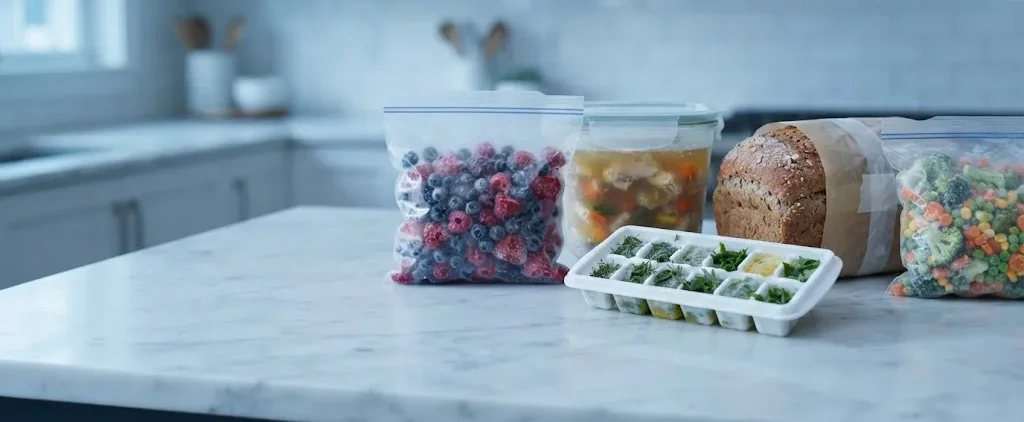
Yes, you can freeze flour to extend its shelf life and protect it from pantry pests.
Why
Freezing flour is an effective way to keep it fresh for long periods, especially whole grain flours that contain natural oils that can turn rancid at room temperature. Because flour has very little moisture content, ice crystals do not form inside the starch granules in a way that damages its chemical structure. When packaged airtight to prevent moisture absorption from the freezer air, flour maintains its baking quality perfectly and is safe to store indefinitely.
What freezing does to flour
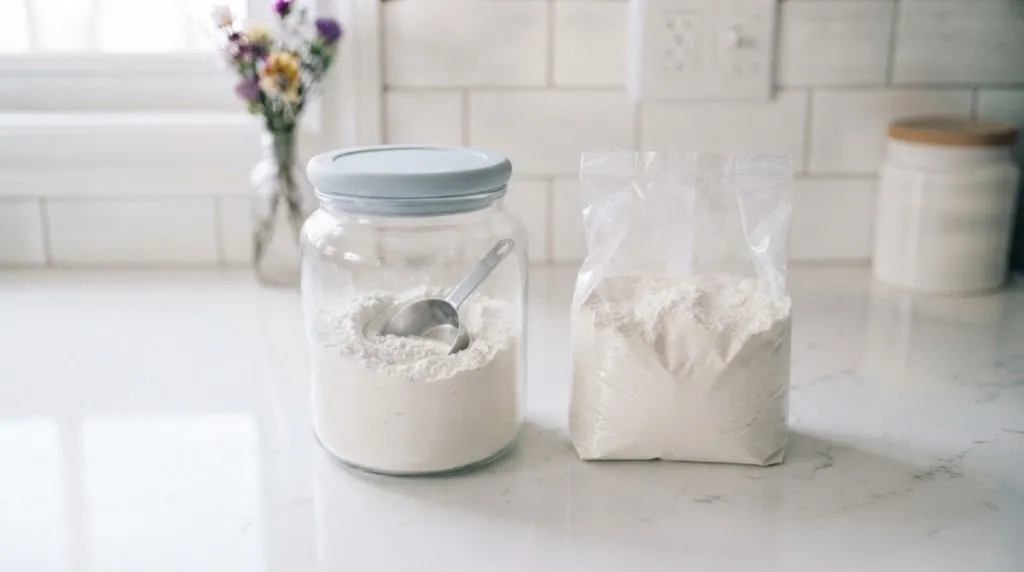
- Texture: No negative change to the granular structure when moisture is kept out.
- Flavor: Preserves the natural oils in whole grain varieties, preventing rancidity.
- Moisture: Retains extremely low water activity, preventing structural ice damage.
Types of flour and how they freeze
- All-Purpose and Bread Flour: These refined white flours freeze exceptionally well due to their low fat content and high stability.
- Whole Wheat Flour: Contains natural wheat germ oils that are prone to spoiling quickly at room temperature, making airtight freezer storage essential.
- Almond Flour: High in nut fats that can turn rancid very quickly, so double-bagging and strict airtight seals are required in the freezer.
How to freeze flour
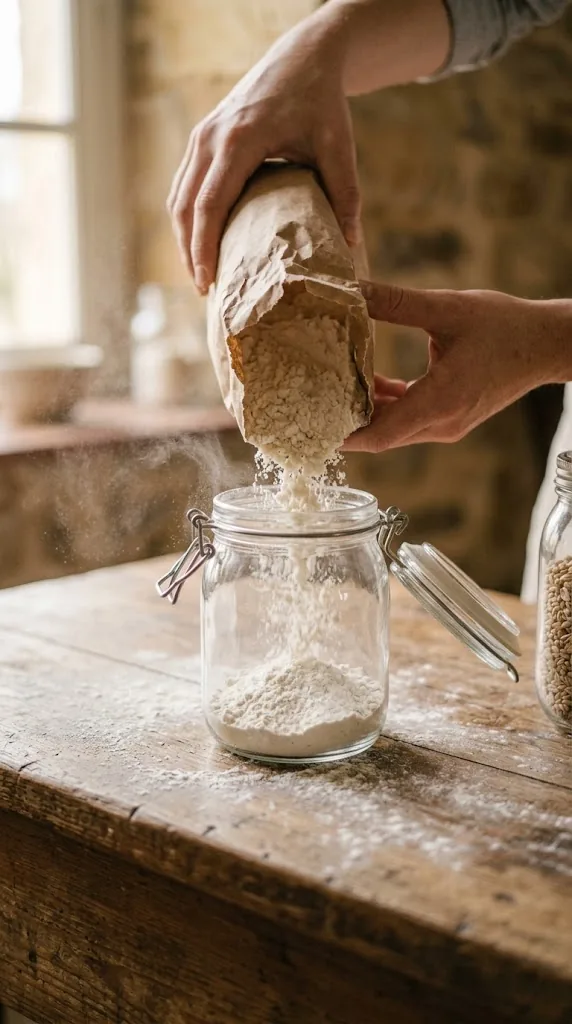
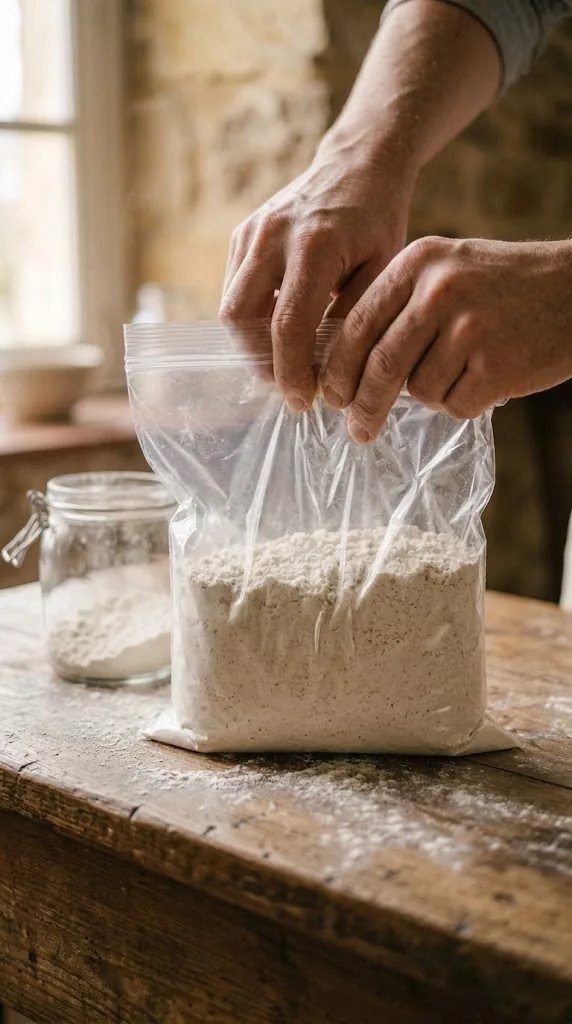
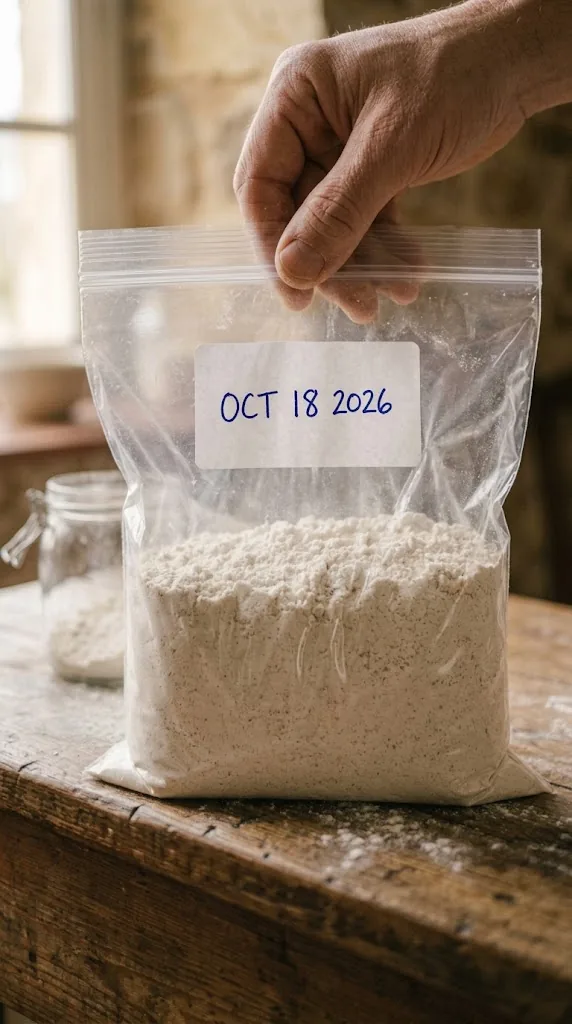
- Check that the original paper packaging is undamaged or transfer the flour into a heavy-duty freezer bag or airtight plastic container.
- Press out as much air as possible if using a bag to prevent freezer burn and condensation.
- Double-bag whole wheat or specialty flours to protect them from absorbing odors from other foods in the freezer.
- Label the container with the date and type of flour.
- Place the flour in the freezer.
Best containers for freezing flour
- Freezer bags: press out as much air as you can and freeze them flat so they stack and thaw faster.
- Airtight rigid containers: best for soft or liquid foods. Leave about 1/2 inch of headspace because food expands as it freezes.
- Sheet pan first: freeze pieces in a single layer for an hour or two, then bag them so they don’t clump together.
- Label everything: write the item and the date on every package.
For flour: Transfer flour into heavy-duty freezer bags after removing excess air, or place original paper bags inside a larger zip-top bag to prevent moisture and odor absorption.
How to thaw flour
- Remove the flour from the freezer and leave it sealed in its container.
- Place it on the counter and allow it to warm up completely to room temperature before opening, which usually takes several hours.
- Wait until the packaging is no longer cold to the touch to prevent condensation from forming inside and creating clumps.
Best ways to use frozen flour
- Great in chewy bread making and yeast doughs after bringing to room temperature
- Works well for thickening hot gravies, soups, and sauces
- Ideal for everyday baking including cakes, cookies, and pastries
- Not recommended for immediate use in delicate batters while still ice cold
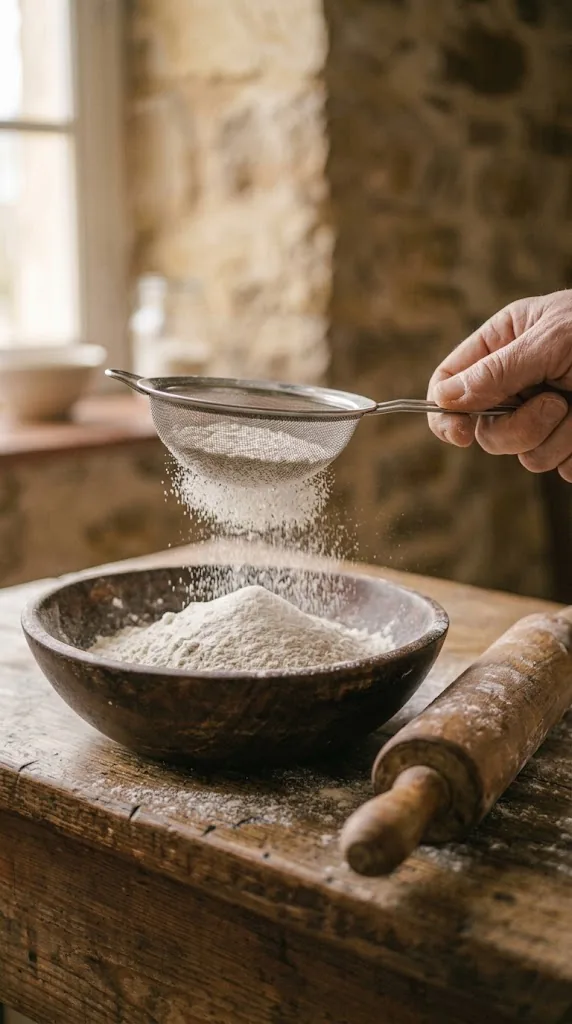
Fixing the texture: If minor lumps form from condensation, simply pass the flour through a fine-mesh sieve before mixing it into your recipe.
How long flour keeps
| Where | How long |
|---|---|
| Freezer (0°F / -18°C) | 1-2 years |
| Refrigerator (40°F / 4°C) | 6 months |
| Pantry / counter | 3-8 months depending on variety |
Can you refreeze flour?
Yes, you can refreeze flour as long as it was thawed properly in the refrigerator and has not been left out at room temperature for more than two hours. However, repeatedly freezing and thawing flour can degrade its baking quality and increase the risk of moisture absorption.
- Portion your flour into smaller airtight containers or bags before freezing so you only thaw what you need.
- Check the thawed flour thoroughly for dryness and normal odor before returning it to the freezer.
- Bake the flour into a recipe first before refreezing if you are unsure about its texture or moisture exposure.
The rules for every food: Can you refreeze food after thawing?
Watch out for
- Always let the flour come completely to room temperature before opening the package to avoid moisture condensation.
- Whole grain flours absorb strong odors easily, so ensure your container is genuinely airtight.
- Flour that has been exposed to moisture in the freezer may develop mold or clumps.
- Never use warm or hot methods to speed up the thawing process.
Food safety notes
Always allow frozen flour packages to warm up completely to room temperature while still sealed to prevent condensation from creating moisture pockets that could foster mold growth.
Other ways to keep flour
- Store in a cool, dark, and dry pantry in an airtight glass or plastic container for everyday use.
- Keep in the refrigerator for up to six months to maintain freshness without deep freezing.
- Buy smaller quantities if you do not bake frequently to avoid long-term storage issues.
Common questions
Do I need to sift flour after taking it out of the freezer?
You generally do not need to sift flour after freezing as long as you let it come to room temperature completely sealed. If any moisture got inside and caused clumps, sifting can help break them up before baking.
Can I use flour straight from the freezer for baking?
It is best to let flour warm up to room temperature before measuring and using it. Cold flour can alter the temperature and texture of your dough or batter, particularly in delicate baked goods.
How do I know if frozen flour has gone bad?
Check the flour for any unusual or sour odors once it reaches room temperature, as well as signs of moisture or mold. Whole wheat flour is especially prone to developing an off smell if the natural oils have gone rancid.
Do I need to kill pantry bugs in flour by freezing it?
Yes, placing newly purchased flour in the freezer for at least 48 hours is a common and effective method to kill any microscopic insect eggs or weevils present in the grain.
Can I put flour directly into the freezer in its original paper bag?
While you can freeze it in the original paper packaging for short periods, paper is porous and will allow moisture and freezer odors to penetrate, so overbagging in plastic is strongly recommended.
Sources
- USDA FSIS: Freezing and Food Safety
- FoodSafety.gov: FoodKeeper storage times
- National Center for Home Food Preservation: Freezing
Freezer times are for best quality. Food kept at 0°F (-18°C) stays safe indefinitely, but always thaw it in the fridge, in cold water or in the microwave, never on the counter. When in doubt, throw it out. See the USDA freezing guide.