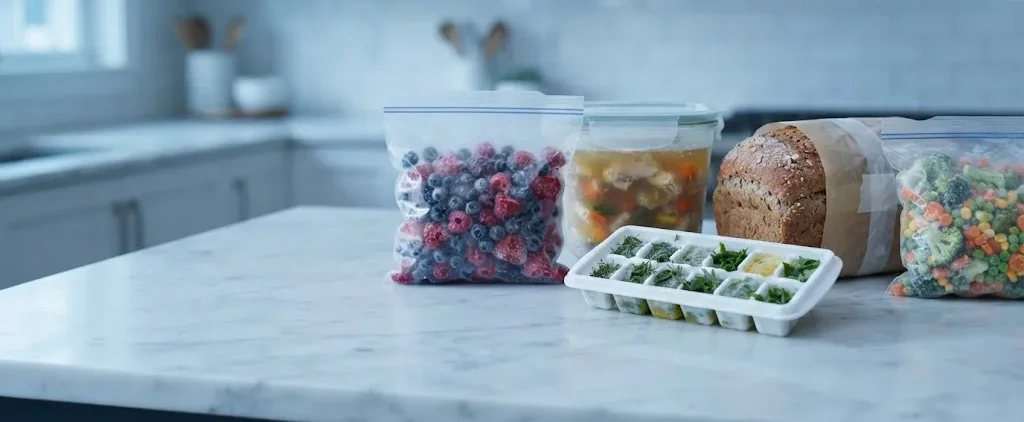
Yes, you can freeze pizza, both leftover slices and whole homemade pies. Reheat it in the oven for the crispiest crust.
Why
Pizza freezes wonderfully because the cooked crust, sauce, cheese, and toppings hold up well to freezing temperatures. When stored properly in airtight packaging, the moisture is locked in, preventing severe freezer burn. While the crust may lose a bit of its fresh crispness, it retains its delicious flavor and reheats reliably, making it a fantastic way to save leftover slices or prepare homemade pies ahead of time for quick weeknight meals.

What freezing does to pizza
- Texture: Crust may lose some of its oven-fresh crispness and become slightly softer.
- Flavor: High-fat toppings like pepperoni may taste slightly more concentrated or oily after freezing.
- Moisture: Trapped steam during reheating can make the surface of the cheese and sauce slightly wetter.
Types of pizza and how they freeze
- Homemade vs Store-Bought: Homemade pizza freezes well once fully cooled and wrapped tightly, while many store-bought frozen pizzas include commercial dough conditioners and specialized packaging that help them retain structure slightly better.
- Whole Pies vs Individual Slices: Individual slices freeze faster and offer more flexibility for quick meals, whereas whole homemade pies require flash-freezing on a baking sheet before final wrapping to keep toppings from sticking.
How to freeze pizza
- Cool leftover pizza and get it into the freezer within 2 hours.
- Slice the pizza into individual portions if you plan to eat it in small batches.
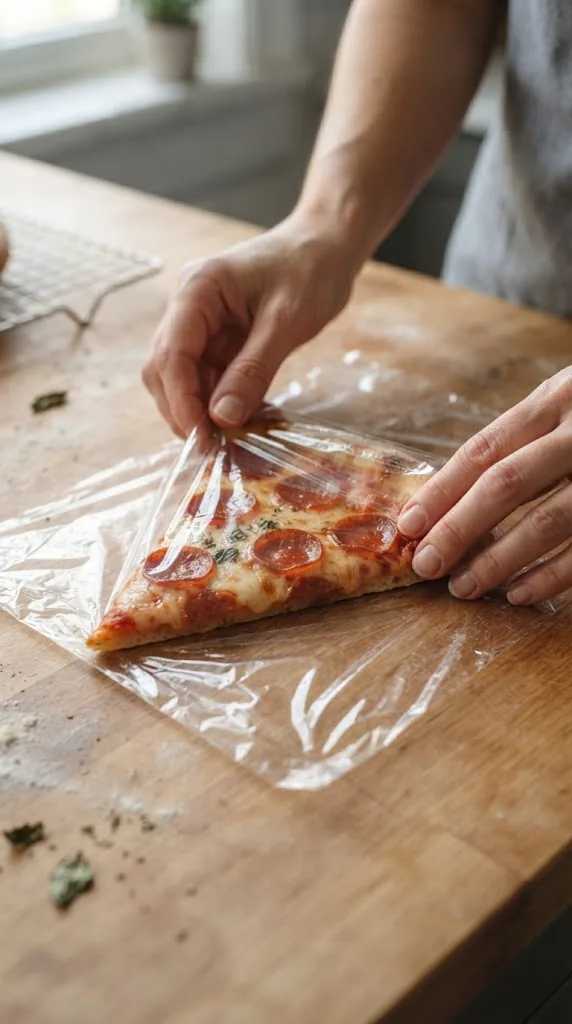
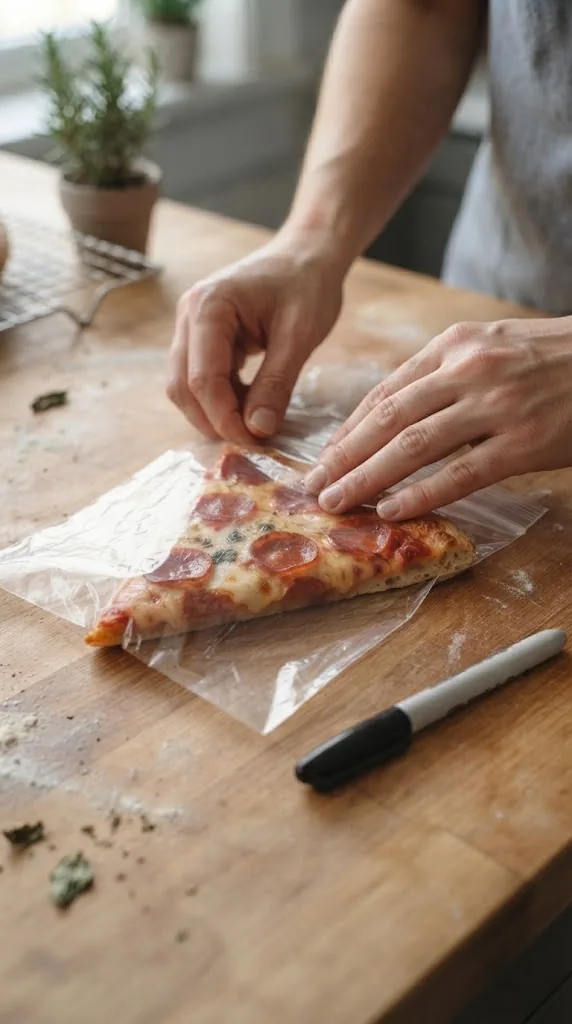
- Wrap each slice tightly in plastic wrap, then place them inside a heavy-duty freezer bag or wrap them in aluminum foil.
- Press out as much air as possible from the packaging to prevent freezer burn.
- Label the package with the date and freeze for up to two months.

Best containers for freezing pizza
- Freezer bags: press out as much air as you can and freeze them flat so they stack and thaw faster.
- Airtight rigid containers: best for soft or liquid foods. Leave about 1/2 inch of headspace because food expands as it freezes.
- Sheet pan first: freeze pieces in a single layer for an hour or two, then bag them so they don’t clump together.
- Label everything: write the item and the date on every package.
For pizza: Wrap individual slices tightly in plastic wrap to prevent freezer burn, then place them inside a heavy-duty freezer bag with excess air pressed out.
How to thaw pizza
- Reheat it straight from frozen in the oven or toaster oven for the best texture.
- Thaw it in the refrigerator overnight if you prefer to thaw it before reheating.
- Use the microwave's defrost setting and reheat it right away.
How to reheat pizza
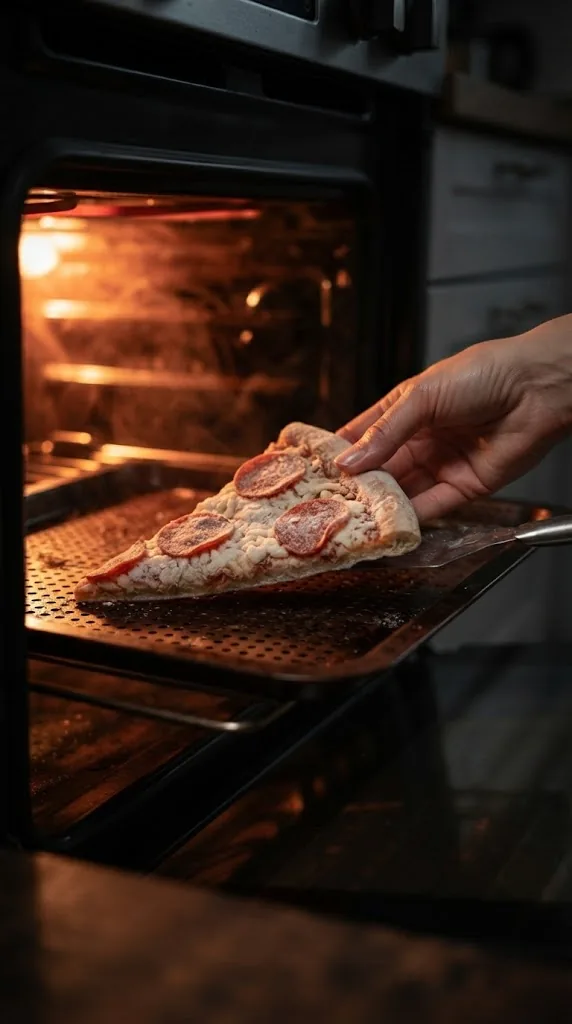
- Preheat your oven or toaster oven to 400 degrees Fahrenheit.
- Place the frozen pizza slice directly on the center oven rack or a baking sheet.
- Bake for 10 to 15 minutes until the cheese is melted and bubbling, ensuring it reaches 165°F (74°C).
Best ways to use frozen pizza
- Great for quick weeknight dinners straight from the freezer
- Ideal for single-serving lunches packed with minimal effort
- Not suitable for serving cold at room temperature if previously frozen without proper crisping
Fixing the texture: Restore a crisp crust by placing the frozen slice directly on a hot skillet for a few minutes before transferring it to the oven.
How long pizza keeps
| Where | How long |
|---|---|
| Freezer (0°F / -18°C) | 1-2 months |
| Refrigerator (40°F / 4°C) | 3-4 days |
| Pantry / counter | Not recommended |
Can you refreeze pizza?
Yes, you can refreeze pizza as long as it was thawed safely in the refrigerator and never left at room temperature for more than two hours. However, freezing pizza a second time will significantly degrade the texture, making the crust much drier and the toppings tougher.
- Bake or reheat the thawed pizza fully before attempting to freeze it again.
- Portion the pizza into individual slices so you only thaw what you plan to eat.
- Wrap each slice tightly in plastic wrap and a freezer bag to minimize further moisture loss.
The rules for every food: Can you refreeze food after thawing?
Watch out for
- Crust can become slightly soggy if moisture is not allowed to escape during reheating.
- Freezer burn can occur if slices are not wrapped tightly enough in plastic or foil.
- High-fat toppings like pepperoni can release excess oil during the reheating process.
Food safety notes
Always cool leftover pizza quickly by dividing it into shallow containers and getting it into the refrigerator or freezer within 2 hours of cooking to prevent bacterial growth.
Other ways to keep pizza
- Store it in an airtight container in the refrigerator for up to 4 days.
- Reheat slices in a hot skillet on the stove to restore a crispy crust.
Common questions
Can you freeze raw pizza dough?
Yes, you can freeze raw pizza dough after the first rise. Coat it in a little oil, wrap it tightly in plastic wrap, and freeze it for up to three months.
How do you reheat frozen pizza for the best crust?
Reheat frozen pizza directly in a preheated oven or toaster oven at 400 degrees Fahrenheit for about 10 to 15 minutes. Avoid the microwave if you want a crispy crust.
Can you freeze pizza with all types of toppings?
Most cooked toppings freeze well, but fresh greens like lettuce or watery vegetables like fresh tomatoes should be added after baking and thawing.
Can you freeze pizza with stuffed crust?
Yes, pizza with a cheese- or garlic-butter-stuffed crust freezes well, though the dairy inside the crust may become slightly denser after freezing and reheating.
Should you remove the cardboard circle under store-bought pizza before freezing?
Yes, remove any non-moisture-resistant cardboard or paper packaging before freezing to prevent trapped condensation and cardboard flavors from affecting the crust.
Sources
- USDA FSIS: Freezing and Food Safety
- FoodSafety.gov: FoodKeeper storage times
- National Center for Home Food Preservation: Freezing
Freezer times are for best quality. Food kept at 0°F (-18°C) stays safe indefinitely, but always thaw it in the fridge, in cold water or in the microwave, never on the counter. When in doubt, throw it out. See the USDA freezing guide.