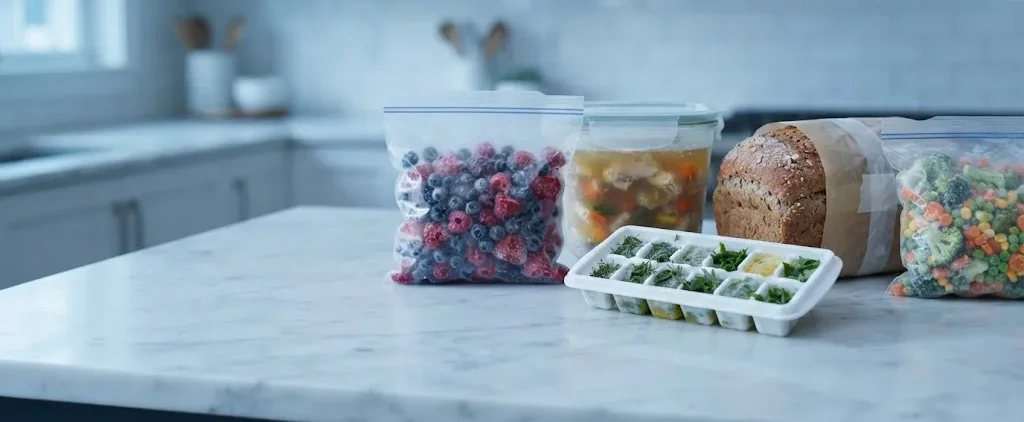
Yes, but pears require proper prep and are best frozen for baking or smoothies because raw freezing makes them mushy.
Why
Pears have a high water content and a delicate cellular structure. When frozen, the water inside expands and forms large ice crystals that puncture the cell walls. Once thawed, the fruit loses its crisp snap and becomes soft and mealy. While this texture change ruins them for fresh snacking, they still work wonderfully in cooked dishes, purees, or baked goods where texture matters less than flavor.
What freezing does to pears
- Texture: Cell walls rupture from expanding ice crystals, resulting in a soft, mushy product upon thawing.
- Flavor: Natural sweetness and delicate aromatics remain intact, though slightly diluted if packed in water.
- Color: Enzymatic browning occurs rapidly upon exposure to air unless pre-treated with ascorbic acid or lemon juice.
Types of pears and how they freeze
- Bosc pears: These denser, more rustic pears hold their shape slightly better during freezing and baking than softer varieties like Bartlett.
- Bartlett pears: Juicier and softer when ripe, these turn significantly softer in the freezer and are best reserved strictly for smooth purees and beverages.
How to freeze pears
- Select firm, ripe pears and wash them thoroughly.
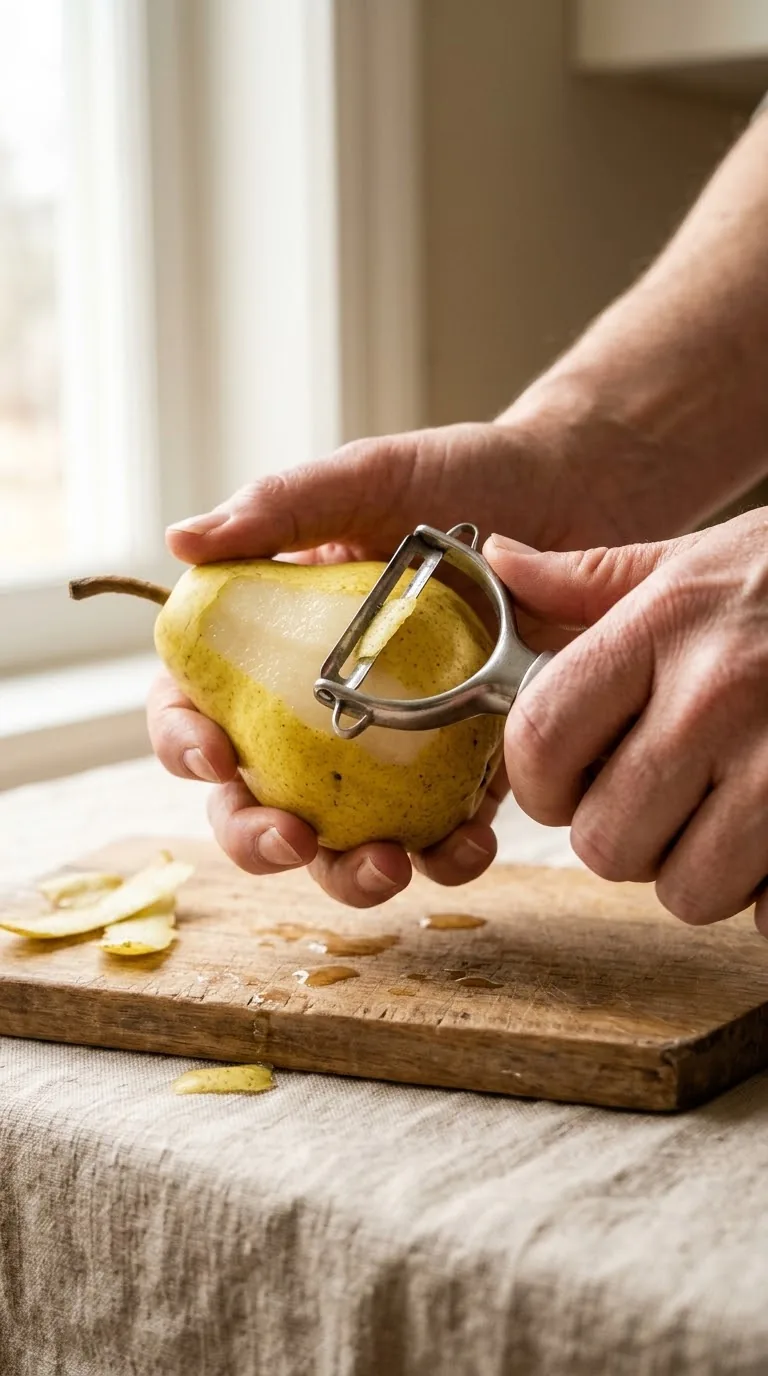
- Peel, core, and slice the pears into halves, quarters, or bite-sized pieces.
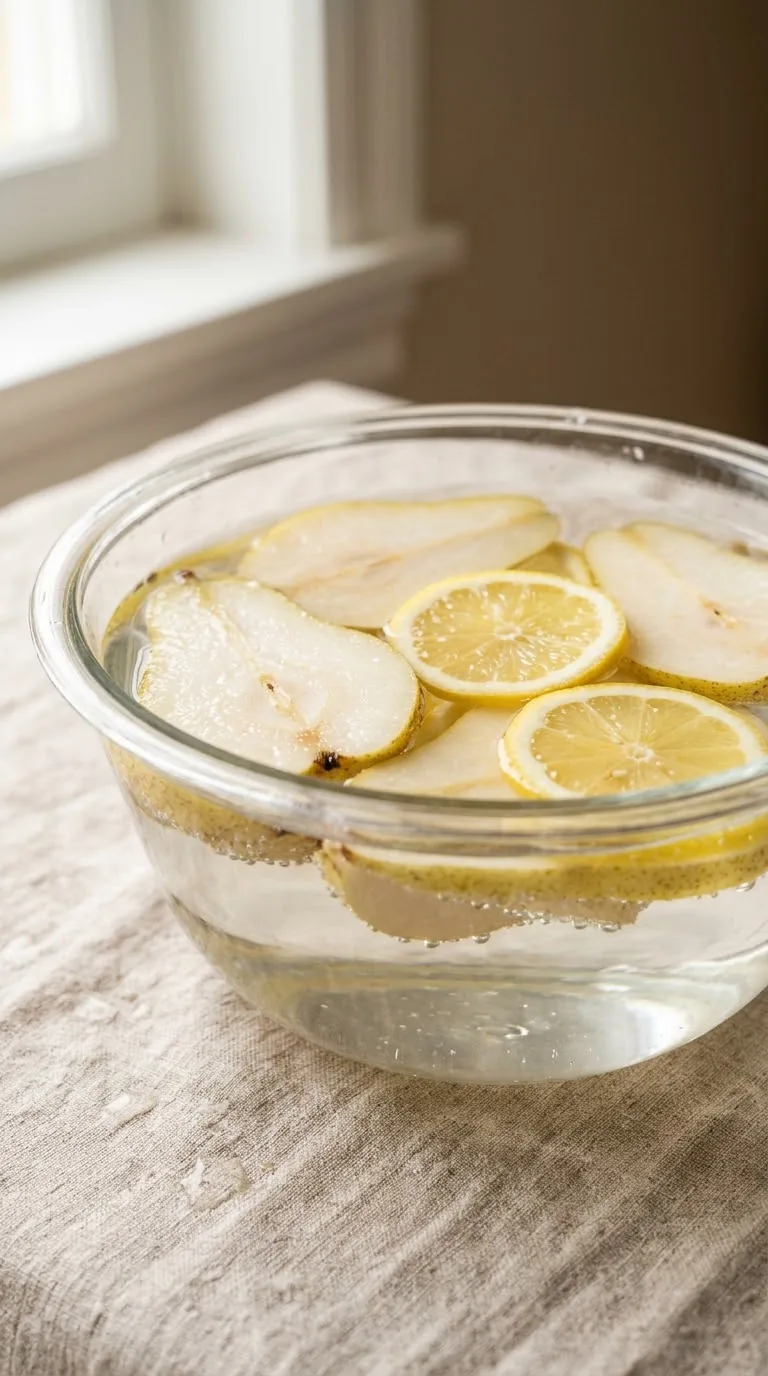
- Treat the slices with an ascorbic acid solution or lemon juice mixed with water to prevent browning.
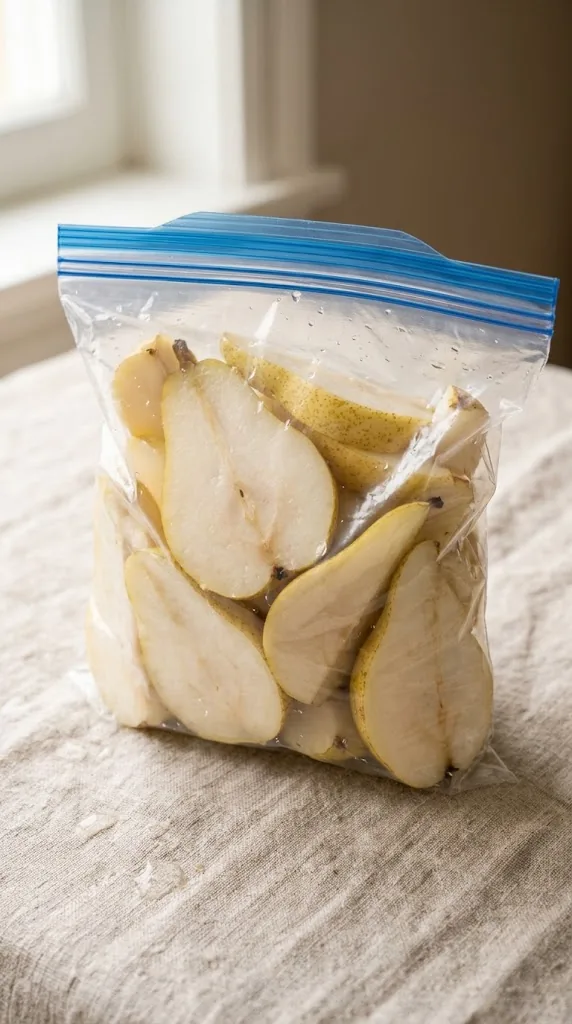
- Pack the pear slices tightly into freezer-safe containers or bags, leaving half an inch of headspace.
- Cover the fruit in a sugar syrup or water infused with a little lemon juice, or pack them dry.
- Seal tightly, label with the date, and freeze immediately.
Best containers for freezing pears
- Freezer bags: press out as much air as you can and freeze them flat so they stack and thaw faster.
- Airtight rigid containers: best for soft or liquid foods. Leave about 1/2 inch of headspace because food expands as it freezes.
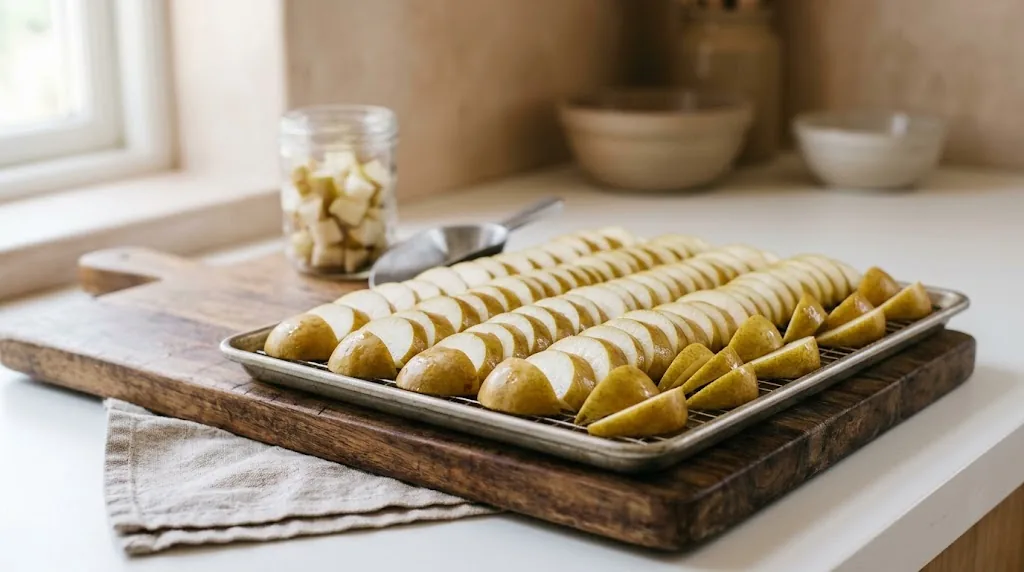
- Sheet pan first: freeze pieces in a single layer for an hour or two, then bag them so they don’t clump together.
- Label everything: write the item and the date on every package.
For pears: Pack slices tightly into rigid freezer containers or heavy-duty freezer bags, leaving half an inch of headspace to allow for liquid expansion.
How to thaw pears
- Place the container of pears in the refrigerator overnight until completely thawed.
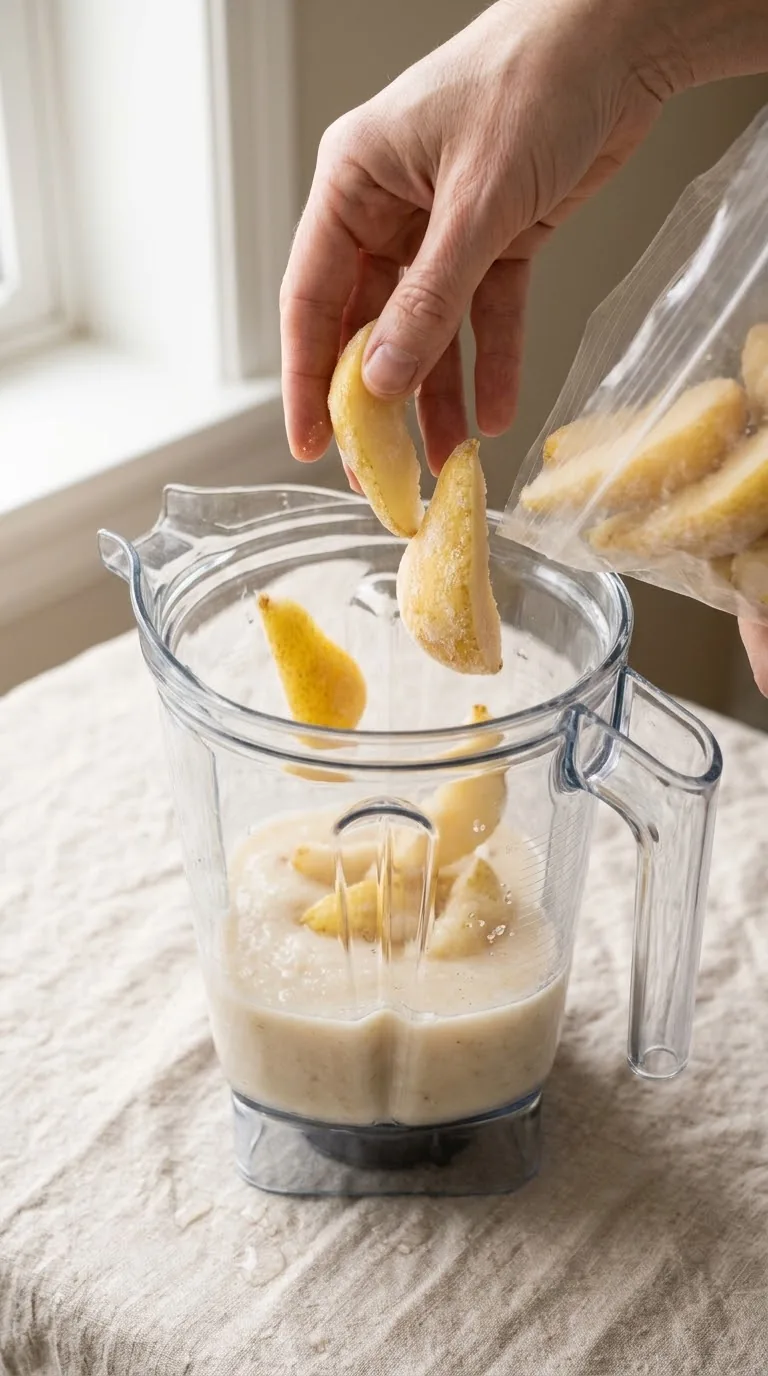
- Use frozen pear slices directly in smoothies without thawing.
- Add frozen or partially thawed pears directly into pies, crumbles, or sauces before cooking.
Best ways to use frozen pears
- Great in spiced pear crumbles, crisps, and upside-down cakes
- Blends seamlessly into morning fruit smoothies and protein shakes
- Not for fresh fruit salads, cheese platters, or raw snacking due to the mushy thaw
Fixing the texture: There is no reliable fix to restore the crisp snap of a frozen pear, so embrace the softened texture in blended or baked recipes.
How long pears keeps
| Where | How long |
|---|---|
| Freezer (0°F / -18°C) | 10-12 months |
| Refrigerator (40°F / 4°C) | 3 to 5 days |
| Pantry / counter | 1 to 7 days depending on ripeness |
Can you refreeze pears?
Yes, you can safely refreeze pears only if they were thawed in the refrigerator and still look and smell fresh. However, a second freeze will cause the delicate cellular structure to break down further, making the thawed fruit even mushier and softer than before.
- Cook or bake the thawed pears into a sauce or crisp before refreezing them to help mask the extremely soft texture.
- Freeze pears in smaller, single-use portions so you only thaw what you need for a recipe.
- If you cooked the thawed pears into a dish, cool them quickly in shallow containers and refrigerate or freeze within two hours.
The rules for every food: Can you refreeze food after thawing?
Watch out for
- Raw frozen pears turn very mushy and watery once thawed.
- Unpeeled pears can develop a tough, unpleasant skin texture during freezing.
- Without an anti-darkening treatment like lemon juice, the fruit will turn brown and unappealing.
- Freezer burn can alter the sweet flavor profile if they are not sealed airtight.
Food safety notes
Always thaw frozen pears safely in the refrigerator. Pears that have been thawed in the fridge can be safely refrozen if they still look and smell fresh, though the texture will soften further.
Other ways to keep pears
- Store firm pears at room temperature to ripen, then move to the refrigerator crisper drawer.
- Canning sliced pears in sugar syrup using a tested recipe.
- Dehydrating pear slices in a food dehydrator for a chewy dried snack.
Common questions
Can I freeze pears without peeling them?
You can, but the skins often become tough and leathery during the freezing and thawing process. For the best culinary results, it is recommended to peel and core them first.
Do I need to use sugar when freezing pears?
No, you can freeze them without sugar in plain water or dry-packed, but packing them in a light sugar syrup helps retain their sweet flavor, color, and firmness much better.
Can I refreeze thawed pears?
You can safely refreeze them only if they were thawed in the refrigerator and still smell and look fresh, though the texture will become even softer the second time around.
Can I freeze pears whole?
Freezing whole pears is generally not recommended because they are difficult to core and peel after thawing, and the trapped moisture leads to rapid degradation.
Why do my frozen pears taste bitter or metallic?
This usually happens due to freezer burn from inadequate sealing or from using untreated metal utensils and containers that react with the fruit acids. Always use airtight freezer-safe packaging.
Sources
- USDA FSIS: Freezing and Food Safety
- FoodSafety.gov: FoodKeeper storage times
- National Center for Home Food Preservation: Freezing
Freezer times are for best quality. Food kept at 0°F (-18°C) stays safe indefinitely, but always thaw it in the fridge, in cold water or in the microwave, never on the counter. When in doubt, throw it out. See the USDA freezing guide.