Yes, you can freeze steak very successfully.
Why
Steak freezes exceptionally well because its dense muscle structure and relatively low moisture content minimize the damage caused by ice crystal formation. When wrapped tightly to exclude air, raw steak maintains its structural integrity, flavor, and tenderness for many months. While the freezing process can cause a very slight loss of moisture upon thawing, proper packaging ensures that freezer burn is prevented, preserving the quality of the beef for cooking.
What freezing does to steak
- Moisture: Freezing can cause minute amounts of water to escape, leading to minor juice loss upon thawing.
- Texture: Cell walls can experience very slight structural changes, though dense muscle fibers largely protect against mushiness.
Types of steak and how they freeze
- Marinated steak: Steaks soaked in a marinade freeze wonderfully because the oil and acid help protect the meat from freezer burn and retain moisture.
- Cooked steak: Cooked steak is more prone to drying out during freezing, so it should be sliced and stored directly in its cooking juices or a sauce.
How to freeze steak
- Trim excess external fat to reduce the risk of rancidity during prolonged freezer storage.
- Wrap each steak tightly in plastic wrap, pressing out as much air as possible.
- Place the wrapped steaks inside a heavy-duty freezer bag or wrap them in heavy-duty aluminum foil.
- Squeeze out excess air from the freezer bag and seal it securely.
- Label the package with the name of the cut and the date of freezing.
Best containers for freezing steak
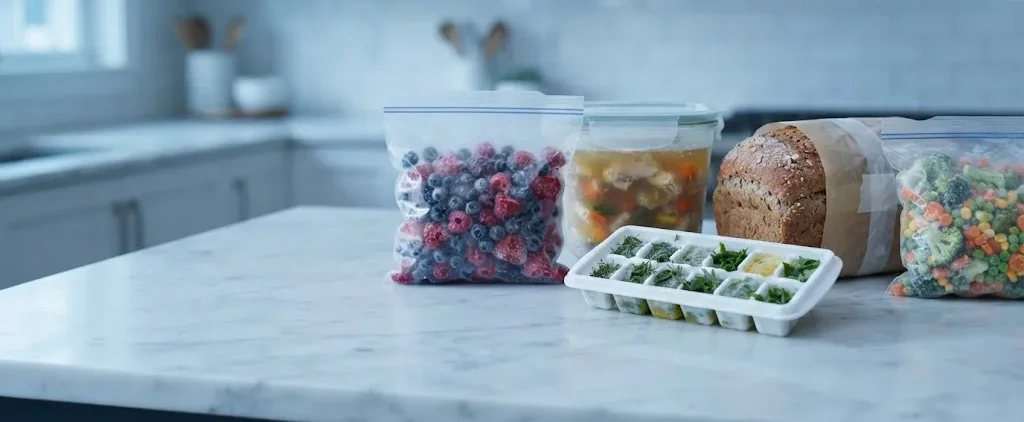
- Freezer bags: press out as much air as you can and freeze them flat so they stack and thaw faster.
- Airtight rigid containers: best for soft or liquid foods. Leave about 1/2 inch of headspace because food expands as it freezes.
- Sheet pan first: freeze pieces in a single layer for an hour or two, then bag them so they don’t clump together.
- Label everything: write the item and the date on every package.
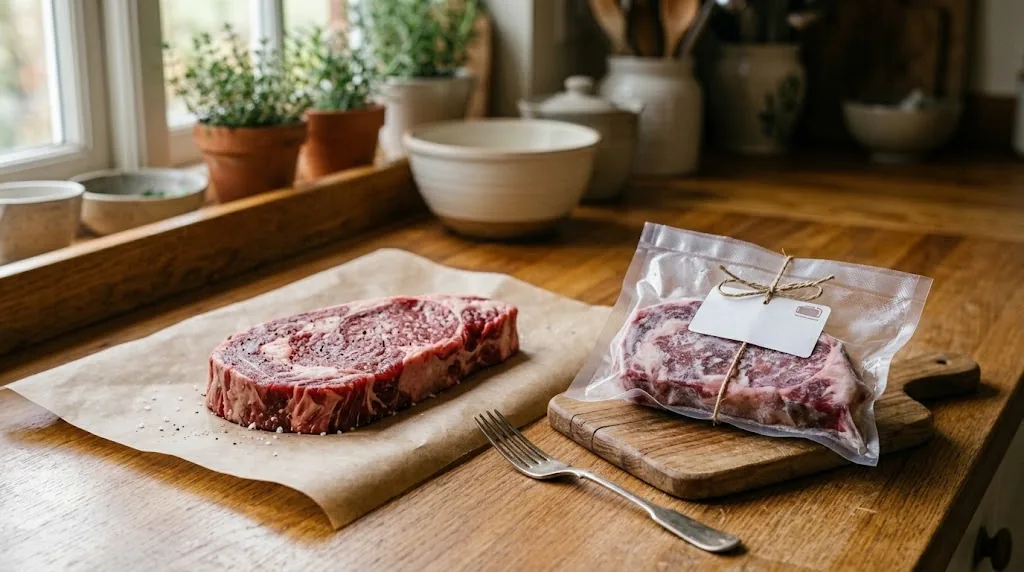
For steak: For the absolute best results, vacuum-seal the steak to eliminate all air pockets, or double-wrap each cut tightly in plastic wrap followed by a heavy-duty aluminum foil layer.
How to thaw steak
- Place the packaged steak on a plate in the refrigerator and allow it to thaw slowly for 12 to 24 hours.
- Alternatively, submerge the sealed steak in cold tap water, changing the water every 30 minutes until fully thawed.
- Cook the thawed steak immediately after it has finished defrosting.
How to reheat steak
- Pat the thawed steak completely dry with paper towels to ensure a proper sear.
- Heat a cast-iron skillet over high heat with a small amount of oil.
- Cook the steak for 1 to 2 minutes per side until warmed through and desired temperature is reached.
Best ways to use frozen steak
- Great for quick weeknight pan-searing and quick stovetop meals
- Ideal for slicing thinly into stir-fries, fajitas, and steak salads
- Not recommended for delicate preparations where absolute peak rare texture is required
Fixing the texture: Letting the thawed steak rest at room temperature for about 20 to 30 minutes before cooking helps relax the muscle fibers and promotes a more even texture.
How long steak keeps
| Where | How long |
|---|---|
| Freezer (0°F / -18°C) | 6-12 months |
| Refrigerator (40°F / 4°C) | 3 to 5 days for fresh raw steak, or up to 4 days for cooked leftover steak |
| Pantry / counter | Not recommended |
Can you refreeze steak?
Yes, you can refreeze raw steak safely as long as it was thawed properly in the refrigerator and has not spent more than two hours in the danger zone. However, subjecting steak to a second round of freezing will result in additional moisture loss and a noticeably drier, tougher texture when finally cooked.
- Cook the thawed steak into a dish like a casserole or stir-fry before refreezing it, as cooked meat handles secondary freezing better than raw cuts.
- Freeze leftover steak in small, meal-sized portions so you only thaw what you need for a single serving.
The rules for every food: Can you refreeze food after thawing?
Watch out for
- Inadequate wrapping can lead to dry spots and freezer burn, affecting the meat's texture and flavor.
- Never thaw steak on the counter at room temperature, as this encourages rapid bacterial growth in the danger zone.
- Do not refreeze raw steak unless it was safely defrosted in the refrigerator.
Food safety notes
Always thaw raw steak safely in the refrigerator, and if you wish to refreeze it after cooking, ensure it was properly defrosted this way first. Cook leftover or pre-cooked frozen steak dishes to an internal temperature of 165°F (74°C) before consuming.
Other ways to keep steak
- Store fresh steak in the coldest part of your refrigerator for up to 3 to 5 days.
- Cook the steak immediately and store the cooked leftovers in the refrigerator for up to 4 days.
- Cure or salt the beef using tested preservation methods if you do not plan to freeze it.
Common questions
Can I freeze steak in its original store packaging?
Store packaging is typically permeable to air and can lead to freezer burn. It is best to remove the steak from its original plastic tray and wrap it tightly in plastic wrap and a heavy-duty freezer bag or foil.
Is it better to freeze steak raw or cooked?
Raw steak freezes better than cooked steak because cooking dries out the meat fibers. When reheated after freezing, cooked steak can easily become tough and dry.
How can I tell if frozen steak has gone bad?
While food kept constantly at 0°F remains safe indefinitely, freezer burn indicates a loss of quality. Once thawed, check for an off odor, a slimy texture, or an unusual discoloration, and discard the meat if any of these signs are present.
Can I freeze a steak that is past its expiration date if it smells fine?
No, freezing stops bacterial growth but it does not kill existing bacteria or reverse spoilage. If a steak has already passed its safe refrigeration window or shows signs of spoilage, it should be discarded rather than frozen.
Does freezing steak make it more tender?
While the formation of ice crystals can break down muscle fibers to a very minor degree, the effect is negligible and freezing is not an effective tenderizing method. Using mechanical tenderizers or marinades prior to freezing is a much more reliable way to improve tenderness.
Sources
- USDA FSIS: Freezing and Food Safety
- FoodSafety.gov: FoodKeeper storage times
- National Center for Home Food Preservation: Freezing
Freezer times are for best quality. Food kept at 0°F (-18°C) stays safe indefinitely, but always thaw it in the fridge, in cold water or in the microwave, never on the counter. When in doubt, throw it out. See the USDA freezing guide.