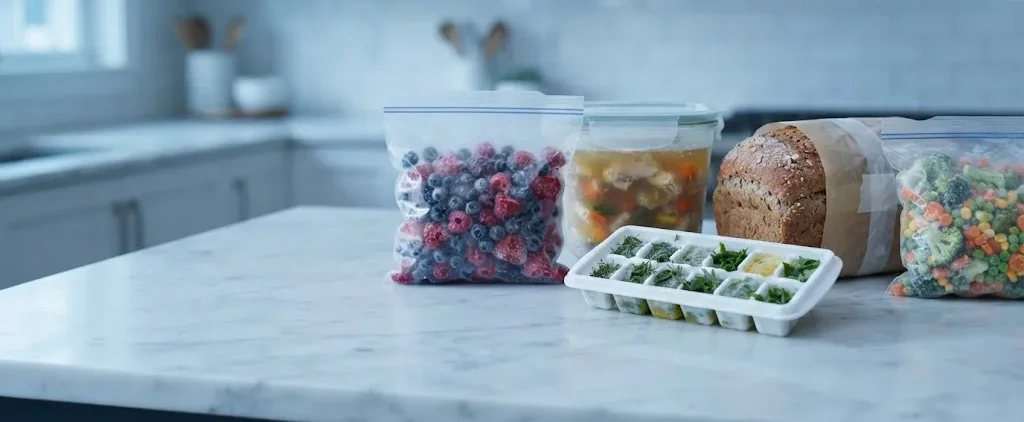
Yes, you can freeze pesto, and it actually holds up remarkably well in the freezer.
Why
Pesto freezes exceptionally well because its main ingredients—fresh basil, garlic, pine nuts, hard cheese, and olive oil—are naturally high in fat and low in water content. While the bright green color may darken slightly over time due to oxidation, the flavor remains vibrant and rich. Freezing stops the degradation of the fresh herbs and prevents the cheese from spoiling, though the oil may slightly separate upon thawing and require a quick stir.
What freezing does to pesto
- Color: May develop a slightly darker, brownish hue as the basil leaves oxidize over time in the freezer.
- Flavor: Retains most of its vibrant herbal and garlic taste, though exceptionally fresh notes may mellow slightly.
- Texture: Olive oil can separate from the herb solids, resulting in a somewhat oily layer that requires reblending upon thawing.
Types of pesto and how they freeze
- Homemade vs Store-Bought: Homemade pesto lacks preservatives and oxidizes faster, so it benefits greatly from an oil seal on top. Commercial pesto often includes stabilizers that help retain its color and consistency better during freezing.
- Nut-Free Pesto: Pesto made with seeds like sunflower or pumpkin seeds freezes just as well as traditional pine nut versions, maintaining a stable texture throughout storage.
How to freeze pesto
- Prepare your homemade pesto without adding the cheese if you want maximum longevity, though freezing with cheese is still safe and common.
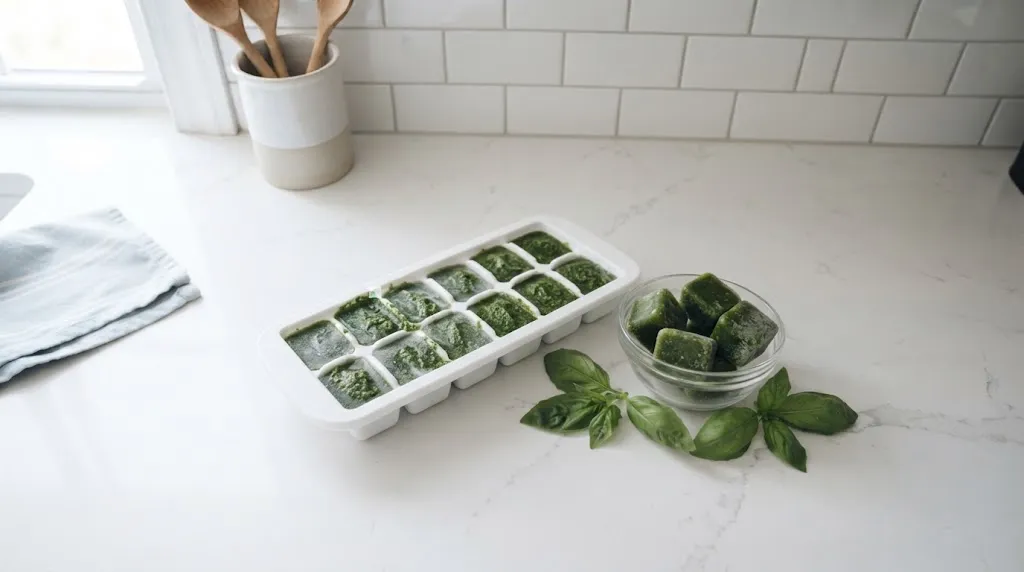
- Portion the pesto into ice cube trays for easy single-serving amounts.
- Freeze the trays until solid, then pop the cubes out.
- Transfer the pesto cubes into a heavy-duty freezer bag or airtight container.
- Pour a thin layer of olive oil over the top of the container to seal out air and prevent browning.
- Label the bag or container with the date and freeze for up to 6 months.
Best containers for freezing pesto
- Freezer bags: press out as much air as you can and freeze them flat so they stack and thaw faster.
- Airtight rigid containers: best for soft or liquid foods. Leave about 1/2 inch of headspace because food expands as it freezes.
- Sheet pan first: freeze pieces in a single layer for an hour or two, then bag them so they don’t clump together.
- Label everything: write the item and the date on every package.
For pesto: Portioning pesto into ice cube trays allows you to freeze individual servings that can be easily transferred into a heavy-duty freezer bag for compact storage.
How to thaw pesto
- Transfer the desired amount of frozen pesto from the freezer to the refrigerator and let it thaw overnight.
- Alternatively, seal the cubes in a small bag and submerge it in cold water, changing the water every 30 minutes.
- You can also drop frozen pesto cubes straight into warm freshly cooked pasta, where the residual heat will quickly thaw and warm it.
- Give the thawed pesto a good stir to reincorporate any separated olive oil before serving.
How to reheat pesto
- Stir frozen or thawed pesto directly into hot freshly cooked pasta, letting the residual heat warm it through gently.
- Warm gently on the stovetop over low heat if needed for a warm sauce, avoiding high heat to prevent the cheese and oil from separating.
Best ways to use frozen pesto
- Great stirred directly into hot pasta or grain bowls
- Excellent swirled into warm vegetable soups just before serving
- Not ideal for spreading raw on delicate sandwich bread if the oil separation has not been fully stirred back in
Fixing the texture: Vigorously stir or whisk the thawed pesto for a few seconds to emulsify the separated olive oil back into the herb and cheese mixture.
How long pesto keeps
| Where | How long |
|---|---|
| Freezer (0°F / -18°C) | 6 months |
| Refrigerator (40°F / 4°C) | 1 week |
| Pantry / counter | Not recommended |
Can you refreeze pesto?
Yes, you can safely refreeze pesto only if it was thawed in the refrigerator and never left out in the temperature danger zone for more than two hours. However, repeatedly freezing pesto will cause the delicate herb flavors to degrade and the olive oil to separate further.
- Cook or bake the thawed pesto into a hot dish before refreezing it.
- Freeze pesto in small individual portions so you only thaw what you plan to use.
The rules for every food: Can you refreeze food after thawing?
Watch out for
- Pesto can turn a dull brownish-green color in the freezer due to oxidation, though it is still safe and delicious to eat.
- Leave a little headspace in rigid containers as liquids can expand slightly when frozen.
- Don't thaw pesto on the counter. Homemade pesto made with garlic in oil should stay cold.
Food safety notes
Because homemade pesto contains garlic submerged in oil, it carries a very low risk of botulism if left at room temperature. Always thaw pesto safely in the refrigerator and never leave it out on the counter to thaw.
Other ways to keep pesto
- Store fresh pesto in an airtight jar in the refrigerator for up to one week by pouring a thin layer of olive oil on top to block air.
- Preserve excess basil by making an infused herbal oil instead.
- Keep fresh basil stems in a glass of water on the counter, like cut flowers, for a few days.
Common questions
Can I freeze pesto with cheese in it?
Yes, you can freeze pesto that already contains Parmesan or Pecorino cheese. While freezing can slightly alter the texture of hard cheeses, it blends back in smoothly once thawed and stirred.
Why did my frozen pesto turn brown?
Pesto turns brown when the fresh basil oxidizes upon contact with air. To minimize this, press plastic wrap directly onto the surface of the pesto or pour a thin layer of olive oil over it before sealing.
Can I refreeze thawed pesto?
You can safely refreeze pesto only if it was thawed safely in the refrigerator and has not spent time in the temperature danger zone. However, quality and flavor will degrade each time you refreeze it.
Can I freeze vegan pesto that does not contain cheese?
Yes, vegan pesto freezes exceptionally well. Without dairy cheese present, the flavor profile remains very stable, and it often holds its bright green color slightly longer.
Does freezing pesto ruin the pine nuts?
No, the high fat content of pine nuts actually protects them well during freezing. As long as the pesto is sealed tightly to prevent freezer burn, the nuts will maintain their rich flavor.
Sources
- USDA FSIS: Freezing and Food Safety
- FoodSafety.gov: FoodKeeper storage times
- National Center for Home Food Preservation: Freezing
Freezer times are for best quality. Food kept at 0°F (-18°C) stays safe indefinitely, but always thaw it in the fridge, in cold water or in the microwave, never on the counter. When in doubt, throw it out. See the USDA freezing guide.