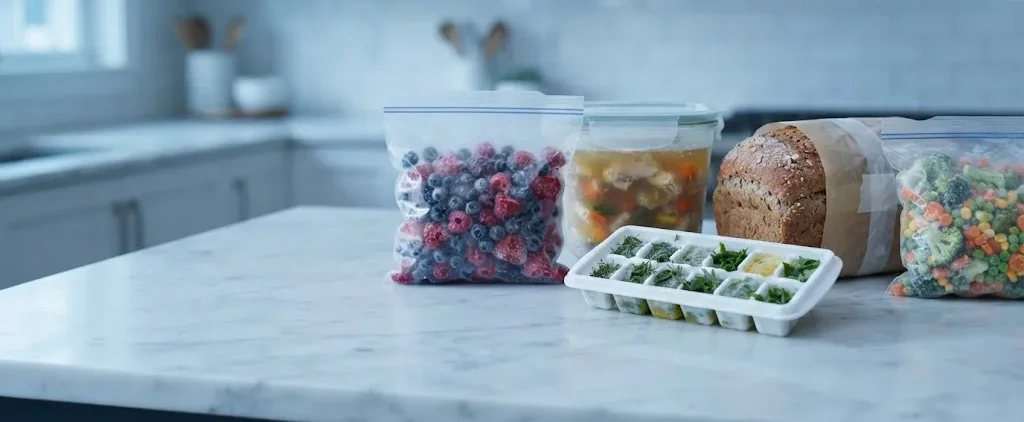
Yes, chili freezes exceptionally well, making it a fantastic dish to batch-cook and save for later meals.
Why
Chili is primarily composed of liquids, cooked meats, beans, and vegetables, all of which tolerate freezing wonderfully. Because it is already a blended, cooked dish, the formation of ice crystals does not negatively impact its structure the way it might with fresh produce or raw meat. While beans can sometimes become slightly softer after thawing, the spices, tomatoes, and rich sauce tend to hold their flavor and consistency extremely well, ensuring a delicious meal months down the line.
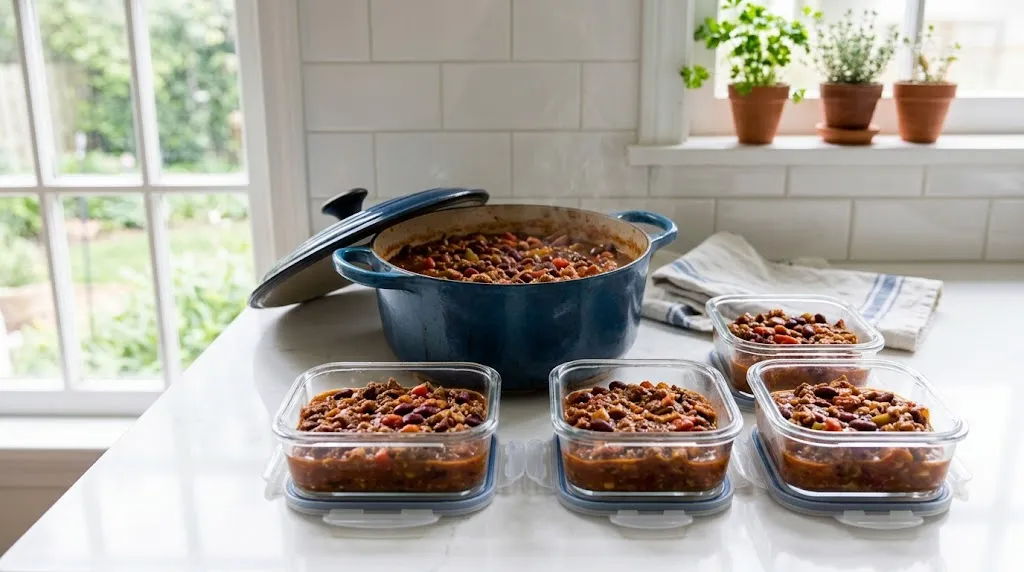
What freezing does to chili
- Texture: Beans and meat may become slightly softer or absorb more liquid during the freezing process.
- Flavor: Spices and aromatics tend to meld and deepen further, sometimes making the chili taste even better after storage.
Types of chili and how they freeze
- Vegetarian Chili: Vegetarian and bean-heavy varieties freeze exceptionally well because they lack meat fats that can separate over time.
- Cream-Based Chili: White chilis containing heavy cream or cream cheese should be frozen before adding the dairy, as milk fats tend to curdle and separate.
How to freeze chili
- Cool the chili quickly in shallow containers and freeze it within 2 hours of cooking.
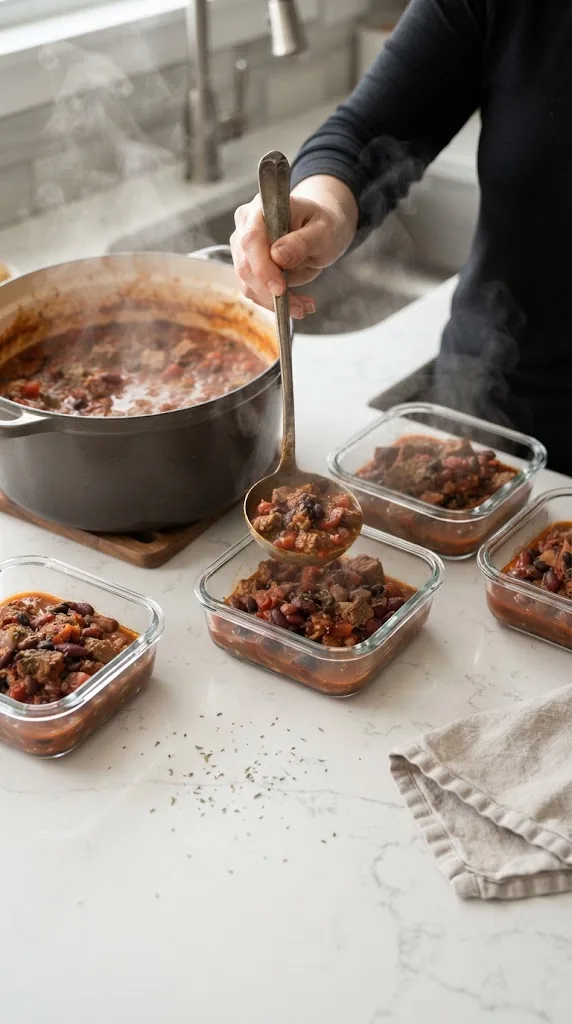
- Portion the chili into airtight freezer-safe containers or heavy-duty freezer bags.
- Leave about one inch of headspace at the top of the container to allow for expansion as it freezes.
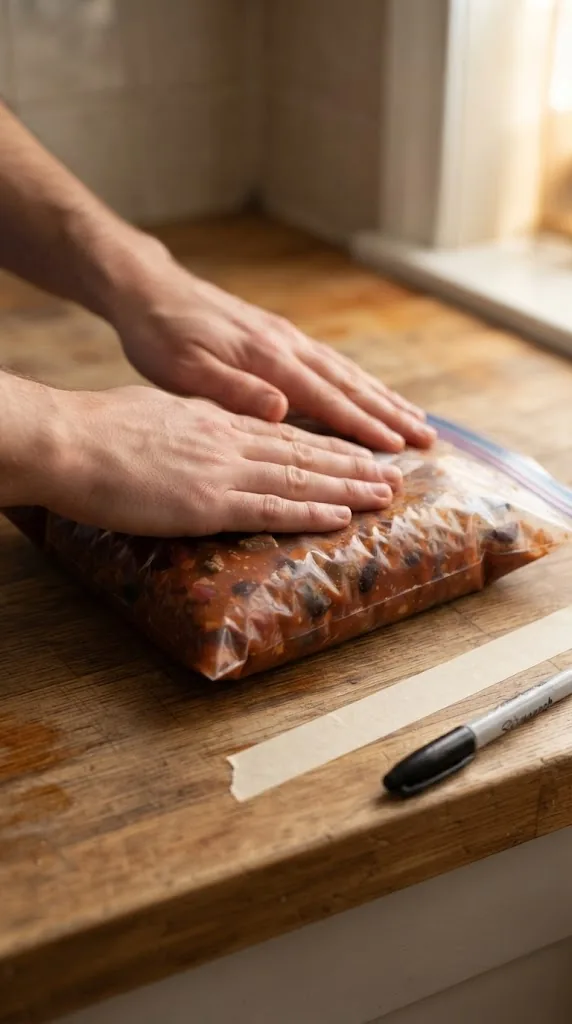
- Press out as much air as possible if using freezer bags to prevent freezer burn.
- Label the containers or bags with the current date and freezer contents.
Best containers for freezing chili
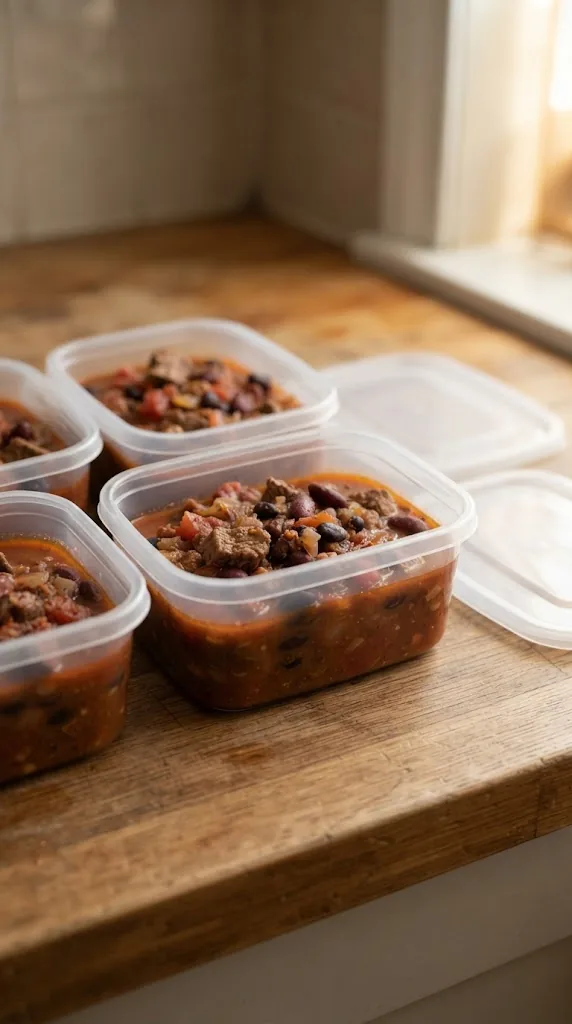
- Freezer bags: press out as much air as you can and freeze them flat so they stack and thaw faster.
- Airtight rigid containers: best for soft or liquid foods. Leave about 1/2 inch of headspace because food expands as it freezes.
- Sheet pan first: freeze pieces in a single layer for an hour or two, then bag them so they don’t clump together.
- Label everything: write the item and the date on every package.
For chili: Portion chili into heavy-duty freezer bags laid flat to save space, or use rigid airtight containers leaving one inch of headspace for expansion.
How to thaw chili
- Place the frozen chili in the refrigerator overnight until completely thawed.
- Alternatively, submerge the sealed freezer bag in cold water, changing the water every 30 minutes.
- You can also use the microwave on the defrost setting, stirring frequently, and heat the chili right away.
- Heat the thawed chili thoroughly on the stovetop or in the microwave until piping hot before serving.
How to reheat chili
- Transfer the thawed chili to a saucepan over medium heat.
- Stir occasionally and bring to a simmer, adding a splash of water or broth if it is too thick.
- Heat thoroughly until the internal temperature reaches 165°F (74°C) before serving.
Best ways to use frozen chili
- Great for topping baked potatoes or hot dogs
- Wonderful as a filling for savory stuffed peppers
- Not ideal for cold pasta salads or delicate canape toppings
Fixing the texture: Stir the chili thoroughly while reheating over the stovetop to reincorporate any separated moisture and restore a uniform consistency.
How long chili keeps
| Where | How long |
|---|---|
| Freezer (0°F / -18°C) | 3-6 months |
| Refrigerator (40°F / 4°C) | 3-4 days |
| Pantry / counter | Not recommended |
Can you refreeze chili?
Yes, you can safely refreeze chili as long as it was thawed properly in the refrigerator and never left out at room temperature for more than two hours. However, repeating the freezing process will cause the beans, meat, and vegetables to degrade further in texture, making the chili softer and potentially mushy.
- Thaw only the amount of chili you plan to consume to avoid unnecessary multiple freezes.
- Thoroughly cook or reheat the chili before placing any leftovers back into the freezer.
- Portion the chili into small, shallow containers to ensure it chills quickly and evenly.
The rules for every food: Can you refreeze food after thawing?
Watch out for
- Potatoes in chili can become slightly grainy or mushy after freezing and thawing.
- Leaving insufficient headspace in glass or rigid containers can cause them to crack during expansion.
- Chill a big batch in the fridge before freezing so it doesn't warm up the food around it.
- Do not leave chili at room temperature during the thawing process to maintain food safety.
Food safety notes
Always thaw chili safely in the refrigerator overnight rather than on the kitchen counter to prevent harmful bacterial growth.
Other ways to keep chili
- Store in an airtight container in the refrigerator for up to 4 days.
- Pressure can it with a tested recipe for shelf-stable storage.
Common questions
Can I freeze chili that contains dairy like sour cream or cheese?
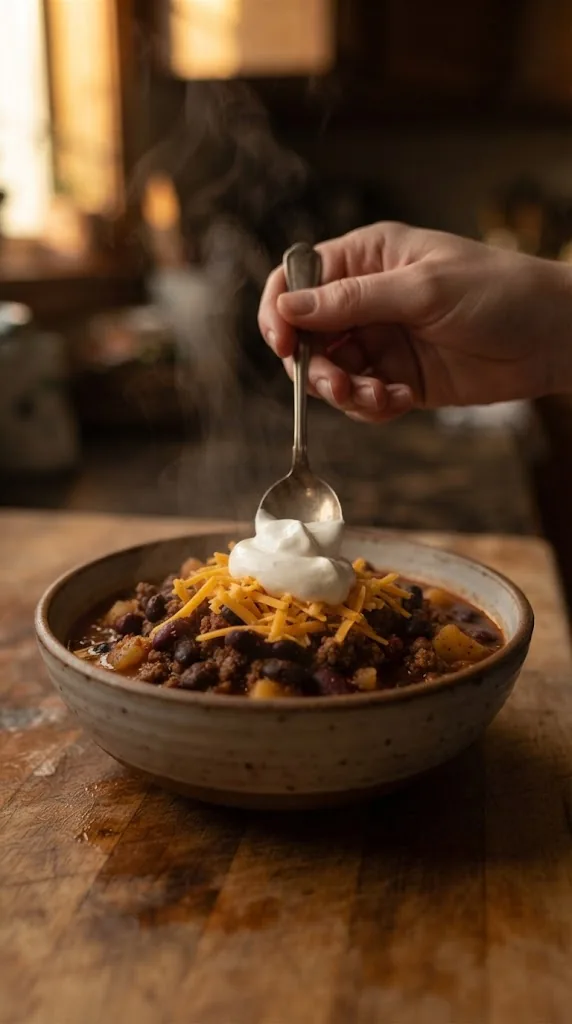
It is best to freeze chili without added dairy toppings, as cream and cheese can separate and become grainy when thawed. Stir fresh dairy into your chili after it has been reheated.
Can I refreeze thawed chili?
You can safely refreeze chili if it was thawed properly in the refrigerator and has not been left at room temperature. However, the texture and quality of the beans and meat may degrade slightly with each freeze.
How can I tell if frozen chili has gone bad?
If the chili develops a sour odor, unusual discoloration, or shows signs of freezer burn such as dry patches, it is best to discard it. Food kept constantly frozen at zero degrees remains safe indefinitely, but quality declines over time.
Can I freeze chili with pasta already mixed into it?
It is generally better to freeze chili without pasta, as noodles tend to absorb too much liquid and become mushy upon thawing. If you like pasta in your chili, cook a fresh batch and stir it in after the frozen chili has been reheated.
Why did my frozen chili develop a layer of oil on top?
When meats with higher fat content are used, the fats can separate and rise to the surface during freezing and reheating. Simply skim off the excess oil with a spoon after the chili is fully heated.
Sources
- USDA FSIS: Freezing and Food Safety
- FoodSafety.gov: FoodKeeper storage times
- National Center for Home Food Preservation: Freezing
Freezer times are for best quality. Food kept at 0°F (-18°C) stays safe indefinitely, but always thaw it in the fridge, in cold water or in the microwave, never on the counter. When in doubt, throw it out. See the USDA freezing guide.